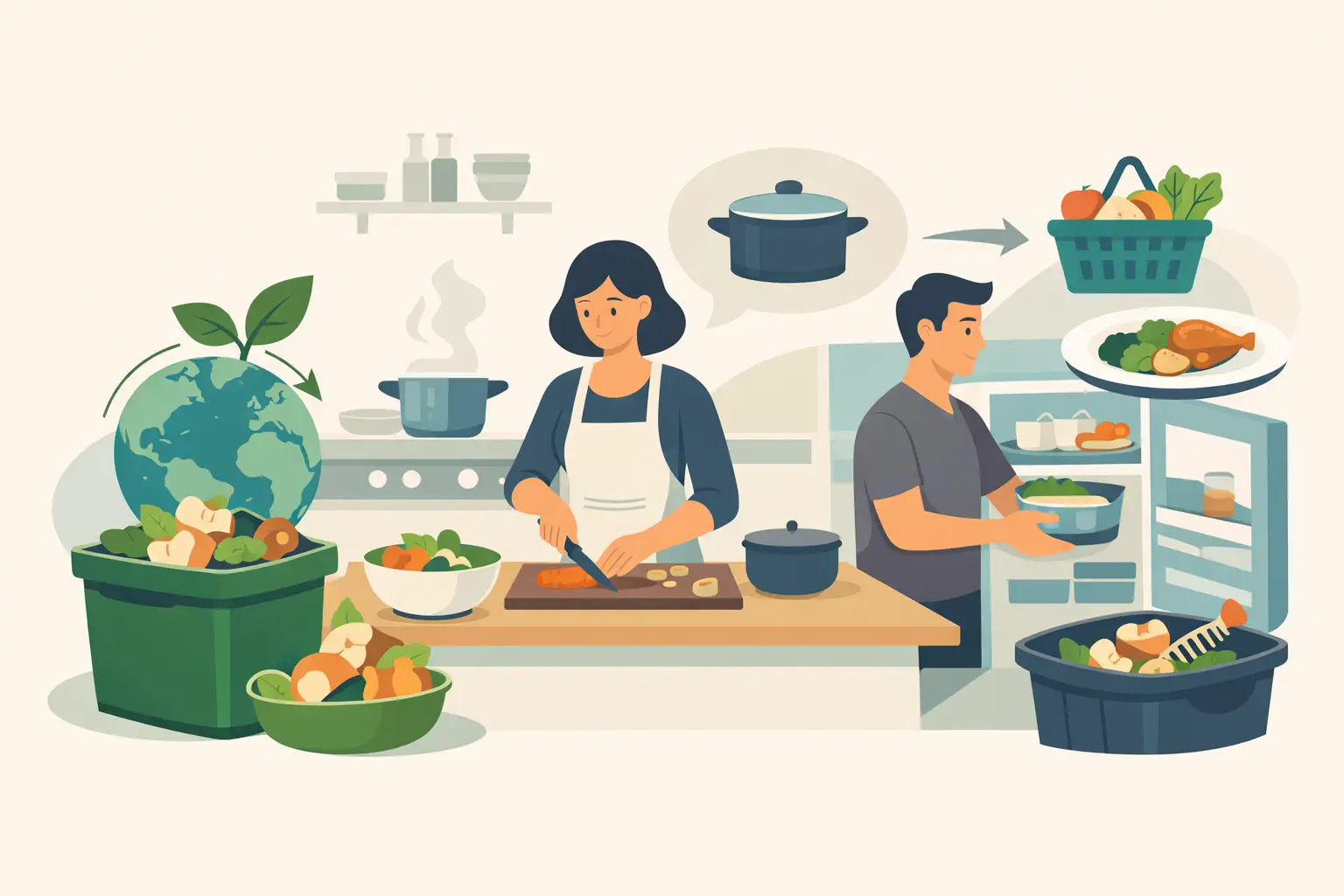
The half bag of spinach behind the milk, the two lonely tortillas, the chicken you meant to cook on Tuesday - this is where grocery money quietly disappears. Reducing household food waste does not require a perfect meal plan or a refrigerator organized like a showroom. It starts with making the next meal from what needs attention first.
For most households, food waste is less about carelessness than friction. You get home late, forget what you bought, and search for dinner ideas that assume a fully stocked pantry. A few small systems can remove that friction, helping you spend less, cook with more confidence, and get more meals from every grocery trip.
Reducing Household Food Waste Starts Before Cooking
The best time to prevent waste is when groceries enter the kitchen. A quick five-minute reset makes ingredients easier to see and use.
Put foods with a short window of freshness where they are visible. This could mean berries, salad greens, fresh herbs, opened yogurt, or leftover vegetables. Save the back of the fridge for unopened items and longer-lasting staples. Visibility matters because the ingredients you see are the ingredients you are likely to cook.
It also helps to separate food by urgency, not just category. Keep a small "use first" section in the fridge, freezer, or pantry. It does not need labels, bins, or a color-coded system. One shelf or one clear container is enough. Before planning dinner, check that spot first.
Dates deserve a little context, too. Many package dates signal quality, not an automatic safety deadline. A yogurt that is one day past a best-by date may still be fine, while delicate greens can spoil well before the printed date if stored poorly. Use your senses for foods where that is appropriate: look for mold, smell for off odors, and notice unusual texture. When in doubt, especially with meat, seafood, or prepared foods that have been stored too long, throw it out. Saving money is never worth a foodborne illness.
Shop for Real Life, Not an Ideal Week
An ambitious grocery cart can create an ambitious amount of waste. Before shopping, take a fast inventory of produce, leftovers, and freezer items. Then plan around the meals your actual week can support.
If you know you will have two late nights, do not buy ingredients that require several separate cooking projects. Choose a few flexible items instead: rotisserie chicken, eggs, canned beans, frozen vegetables, bagged salad, tortillas, rice, or pasta. These can become different meals without demanding much time.
A useful approach is to buy perishables in tiers. Choose a few foods for the first half of the week, such as fish, berries, or tender greens. Add sturdier ingredients for later, such as carrots, cabbage, apples, potatoes, and citrus. Frozen produce fills the gaps without creating a countdown clock.
Buying in bulk can still make sense, but only when the math includes waste. A larger package of herbs is not a bargain if you use one tablespoon and toss the rest. If a warehouse-size item works for your household, portion and freeze it right away, split it with a neighbor, or plan two meals that use it in different ways.
Make One Flexible Meal Each Week
Strict meal plans can be useful, but they often fall apart when schedules change. A better safety net is one flexible meal built around ingredients that need using. Think of it as a weekly clean-out-the-fridge dinner, not a random collection of leftovers.
A grain bowl, fried rice, frittata, soup, pasta, quesadilla, or sheet-pan meal can handle a surprising mix of ingredients. Roasted broccoli can go into pasta. A small amount of cooked chicken can become tacos. Soft tomatoes can become a quick sauce. Slightly wilted spinach is often perfect in eggs, soup, or a smoothie.
The goal is not to force every ingredient into one dish. Flavors still need to work together. Instead, choose a base, add a protein if you have one, then use vegetables that cook at roughly the same speed. Finish with a sauce, cheese, herbs, or a pantry seasoning that pulls everything together.
When you are stuck, start with the most perishable ingredient and ask a simpler question than "What should I make for dinner?" Ask, "What can I make with this zucchini, these mushrooms, and what I already have?" Ingredient-first cooking turns a vague decision into a manageable one. Quicine is designed around that exact shift: useful meal ideas based on the food already in your kitchen.
Store Food for the Way You Cook
Better storage is not about buying a cabinet full of containers. It is about matching food to the conditions it needs and reducing the chance that it gets forgotten.
Keep herbs like parsley and cilantro in a glass with a little water, loosely covered in the fridge. Store berries dry and unwashed until you are ready to eat them. Wrap leafy greens in a towel or paper towel to absorb excess moisture. Keep onions, potatoes, and garlic in a cool, dark, well-ventilated place, but store them separately because onions can speed up potato sprouting.
Some produce lasts longer outside the fridge until it ripens. Tomatoes often taste better at room temperature. Avocados, bananas, peaches, and pears can ripen on the counter, then move to the fridge to slow the process once they are ready. There are exceptions based on your kitchen temperature and how quickly you plan to use them, so let your schedule guide the choice.
Leftovers need a clearer routine. Cool and refrigerate them promptly, store them in shallow containers when possible, and put a date on anything you may not recognize tomorrow. Plan to eat refrigerated leftovers within a few days. If that is unlikely, freeze them while they are still in good shape rather than waiting until they feel like a last resort.
Use the Freezer Earlier
The freezer is most useful before food feels questionable. Freeze bread when you notice you will not finish it. Freeze ripe bananas in pieces for smoothies or baking. Freeze grated cheese, cooked rice, broth, tomato paste in spoonfuls, and extra portions of soups or sauces.
Portioning is the difference between a helpful freezer and a frozen mystery drawer. Freeze food in meal-size amounts and label it with the item and date. You do not need a detailed inventory, but a simple note on the container prevents the familiar question: Is this chili, pasta sauce, or something nobody remembers?
Remember that freezing protects quality best when food is fresh. It does not reverse spoilage. If chicken, leftovers, or produce have already sat too long, freezing is not a reset button.
Give Leftovers a New Job
Leftovers are easier to eat when they do not look like a repeat dinner. Instead of reheating the same meal, change the format. Roast vegetables can become a grain bowl or sandwich filling. Cooked rice can become crispy rice cakes or fried rice. A small amount of taco filling can go into a baked potato, omelet, or quesadilla.
This is especially useful for families and anyone who gets bored with repetition. The ingredient stays the same, but the meal feels different. Keep a few dependable transformation tools on hand: eggs, tortillas, broth, pasta, canned beans, shredded cheese, and a few sauces or seasonings you genuinely enjoy.
You can also schedule a leftover lunch before the week gets away from you. Put it on your calendar if necessary. A lunch that is already cooked is not just a waste-reduction move. It is one fewer decision during a busy day.
Build a Routine You Will Actually Keep
The most effective food-waste strategy is the one that survives a rushed Wednesday. Start small: check the fridge before shopping, create a use-first spot, and make one flexible meal each week. Once those habits feel normal, add freezer portions or a regular leftover lunch.
Avoid turning this into a test of discipline. Some weeks will include takeout, changing plans, and food that simply does not get used. That happens. The practical goal is not zero waste at any cost. It is fewer forgotten ingredients, less unnecessary spending, and more meals that work with the life you are living.
Tonight, open the fridge before opening a recipe app. Pick one ingredient that needs to be used, then let it lead dinner. That small decision can make your kitchen feel calmer, your groceries go further, and tomorrow's meal a little easier.