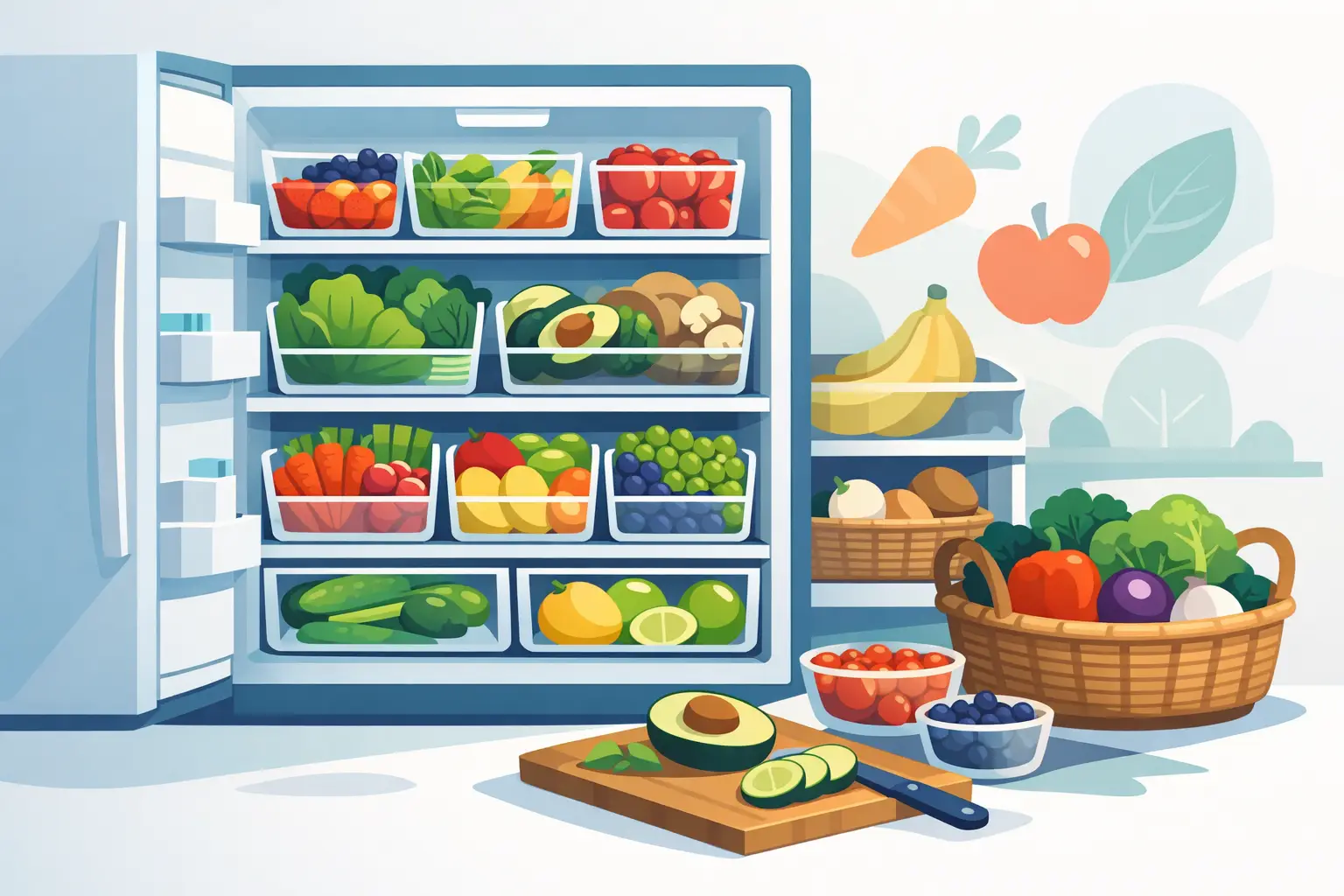
That bag of spinach is easy to forget when it disappears behind yogurt, leftovers, and a half-used jar of sauce. Learning how to organize refrigerator produce is less about making your fridge look perfect and more about giving each ingredient the conditions it needs to last - and making it visible enough to use.
A few small zones can prevent slimy greens, soft berries, and the familiar discovery of a cucumber that has been there far too long. The goal is simple: see what you have, store it correctly, and use the most delicate items first.
Start With a Clean, Visible Produce System
Before putting away a grocery haul, take two minutes to check what is already in the fridge. Pull older produce forward, discard anything moldy or leaking, and wipe up moisture in the drawers. One spoiled item can speed up deterioration around it, especially in a tightly packed crisper.
Avoid treating the refrigerator as long-term storage for every fruit and vegetable. Buy what fits your week, then give each item a clear home. A crowded fridge restricts airflow, hides ingredients, and makes it harder to notice what needs to be cooked.
It helps to create three simple groups: produce to use soon, produce for later in the week, and ingredients that should stay on the counter. Put the use-soon group at eye level or in a front-facing bin. This is the produce that should shape tonight's salad, pasta, stir-fry, or smoothie.
How to Organize Refrigerator Produce by Humidity
Crisper drawers are not interchangeable. Their main job is to manage moisture, which matters because some produce wilts when air is too dry while other items break down faster when trapped in excess humidity.
Use the high-humidity drawer, usually with the vent mostly closed, for vegetables that lose water quickly. Leafy greens, broccoli, carrots, celery, cucumbers, green beans, and peppers generally do best here. The closed vent holds moisture in, helping these vegetables stay crisp.
Use the low-humidity drawer, with the vent more open, for many fruits. Apples, pears, grapes, stone fruit, and ripe avocados benefit from more airflow. This setting also lets out ethylene gas, a natural ripening gas produced by certain fruits.
Drawer labels and vent designs vary, so think of the setting rather than relying on the label. Closed means more humidity. Open means less humidity and more ventilation. If your fridge has only one drawer, use it for greens and crisp vegetables, then keep fruits in a separate open container on a shelf.
Keep Ethylene Producers Away From Sensitive Produce
Apples, bananas, avocados, pears, peaches, plums, nectarines, melons, and tomatoes can release ethylene as they ripen. That is useful when you want firm fruit to ripen, but not when it is sitting next to broccoli or salad greens.
Keep ethylene-producing fruit in its own drawer or bin when possible. Store ethylene-sensitive vegetables, including leafy greens, carrots, cucumbers, broccoli, cabbage, and green beans, separately. You do not need a complicated chart on the fridge door. A dedicated fruit zone and vegetable zone will solve most of the problem.
Wash Less, Dry More
Most produce lasts longer when it is washed just before eating or cooking. Water left in a container creates a humid environment where berries and greens can spoil faster.
There are exceptions when washing ahead genuinely makes you more likely to use the food. If prepped produce means you will actually reach for it, wash it thoroughly, dry it very well, and store it with a dry paper towel or clean kitchen towel to absorb excess moisture. Replace the towel if it becomes damp.
Berries deserve extra care. Leave them unwashed, remove any crushed or moldy berries right away, and store them in a breathable container lined with a paper towel. Do not pack them tightly. They are a use-first item, so place them where you will see them at breakfast or snack time.
For greens, remove rubber bands or twist ties, discard damaged leaves, and keep them loosely wrapped with a towel in a container or bag. The towel manages moisture without crushing the leaves. If you buy clamshell salad greens, adding a dry towel inside can extend their useful life.
Keep Some Produce Out of the Refrigerator
A better produce system includes the counter and pantry, not just the fridge. Refrigerating everything can make some ingredients lose flavor or develop an unpleasant texture.
Keep tomatoes at room temperature until they are fully ripe, then refrigerate only if you need a few extra days. Let chilled tomatoes sit at room temperature before eating for better flavor. Store bananas, whole melons, peaches, nectarines, pears, and avocados on the counter until ripe. Once ripe, many of these fruits can move to the refrigerator to slow further softening.
Potatoes, sweet potatoes, onions, garlic, and winter squash belong in a cool, dark, dry place rather than the fridge. Keep potatoes and onions apart, since they can make each other spoil faster. Basil is another common exception: store it on the counter like a bouquet, loosely covered, instead of chilling it.
Mushrooms do belong in the refrigerator, but they need airflow. Keep them in their paper bag or transfer them to one. Plastic can trap moisture and make them slimy.
Build a “Use First” Zone That Works on Busy Nights
The most useful organizing tool is not a matching bin. It is a visible cue that answers: what should I cook next?
Use one clear container, small basket, or open section of a shelf for produce that is ripe, cut, delicate, or nearing its best-by window. Add half an onion, a handful of herbs, or the remaining bell pepper there too. These are not scraps to ignore. They are ingredients for an omelet, grain bowl, soup, sheet-pan dinner, or quick pasta sauce.
Keep this zone near leftovers if that is where you look when deciding what to eat. When the ingredients that need attention are in the same visual area, meal planning becomes easier. A quick fridge check can lead to a practical dinner instead of another grocery run.
If your household tends to buy a lot at once, label a bin “Use First” with removable tape. The label is not about being rigid. It is a small prompt that reduces decision fatigue and keeps good food from becoming forgotten food.
Organize Produce Around How You Actually Cook
There is no single perfect refrigerator layout. If you make smoothies most mornings, keep greens, berries, and ripe fruit together in an easy-to-reach area. If weeknight dinners usually start with chopped vegetables, place cooking vegetables in the front of the crisper and reserve the back for sturdier items such as carrots and cabbage.
Families may need a snack-ready section with washed, dry grapes, sliced peppers, and baby carrots. A smaller household may benefit more from buying less produce at once and freezing what will not be used. The right setup is the one that makes your next meal easier.
Once or twice a week, do a short produce reset. Move aging items into the use-first zone, check for moisture, and choose one meal that uses the most perishable ingredients. Quicine can help turn that quick inventory into meal ideas based on what is already waiting in your fridge.
A well-organized produce drawer does not need to look like a grocery display. It just needs to help you notice the spinach, use the berries, and cook the vegetables you paid for while they are still at their best.