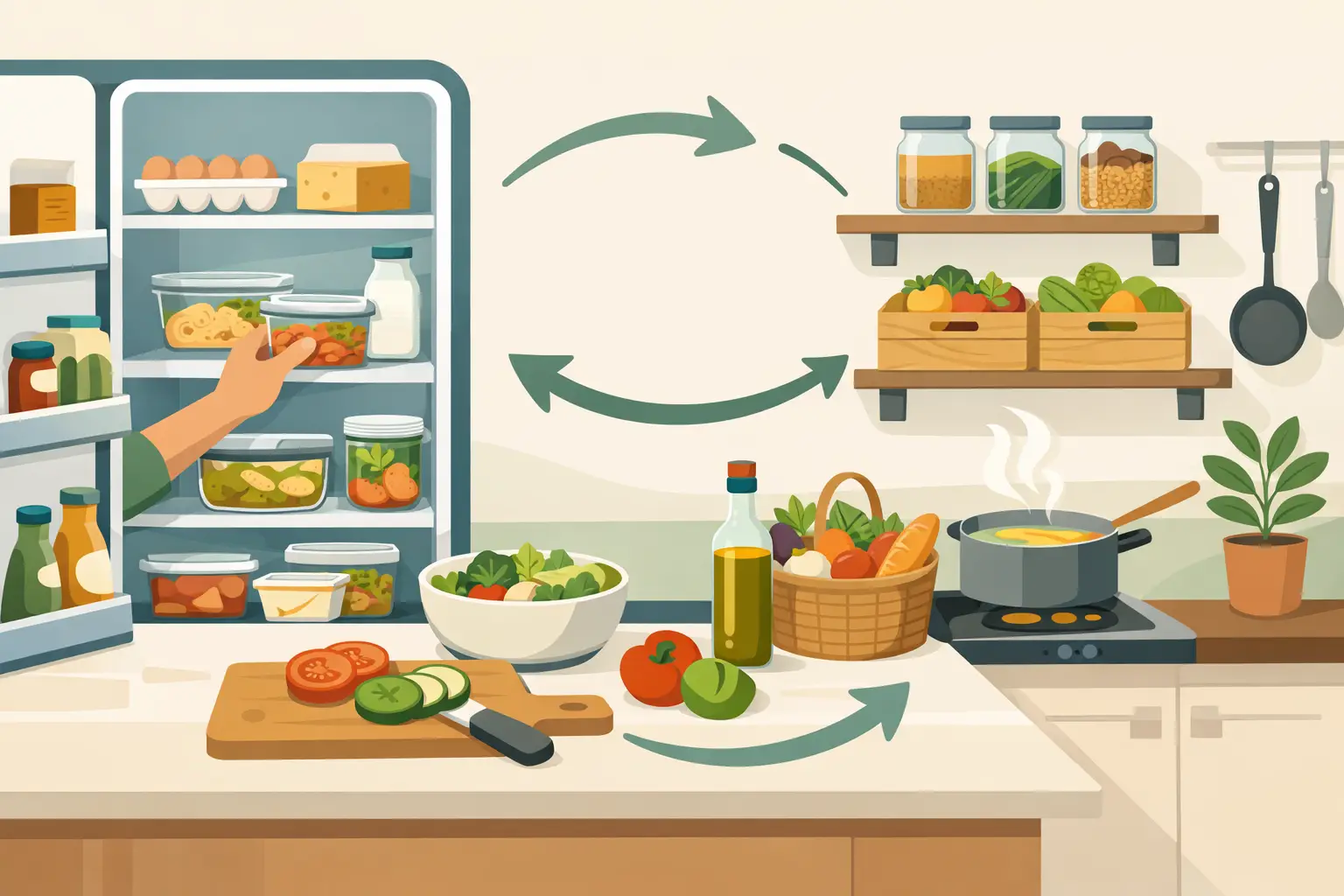
That bag of spinach did not go bad because you bought too much. More often, it disappeared behind newer groceries. The FIFO method for home kitchen storage fixes that small but expensive problem: put older food where you will see and use it first.
FIFO stands for first in, first out. It is a stock-rotation system used in restaurants and grocery stores, but it works just as well in an apartment fridge, a family pantry, or a shared student kitchen. You do not need bins, labels on every item, or a perfect meal plan. You need a consistent place for older food to go.
What the FIFO method means at home
First in, first out means the food you bought or cooked first should be used first. When you bring home a new carton of yogurt, it goes behind the yogurt already in the refrigerator. When you make a new batch of rice, it goes behind yesterday's leftovers. The older item stays in front, where it has the best chance of becoming lunch, dinner, or a snack.
The point is not to treat every printed date as a deadline. Many date labels refer to quality, not safety. FIFO is mainly a visibility system. It helps you notice what needs a plan before it becomes a fuzzy, wilted, or mystery-container problem.
This approach is especially useful for people who shop once a week, cook for one or two people, or order groceries online. Those routines can make it easy to bring in more food before the last round has been used. A five-minute reset after shopping can protect a surprising amount of your grocery budget.
Set up FIFO in your home kitchen
Start with the refrigerator, since produce, dairy, deli items, leftovers, and fresh proteins are where waste adds up quickly. Clear one easy-to-reach shelf or section near the front. Think of it as your use-first zone.
Place foods with the shortest practical window there: opened sauces, leftover meals, cut fruit, herbs, cooked grains, soft vegetables, and dairy you opened earlier in the week. Newer versions of the same item go behind them. You do not have to move every item in the fridge. Rotate only foods that are easy to forget or likely to spoil.
For a simple setup, give each area one job:
- The front of the fridge is for use-first food and leftovers.
- The middle shelves hold everyday items such as milk, eggs, and yogurt.
- The crisper drawers hold produce, organized loosely by what needs attention soon.
- The freezer holds labeled portions for food you cannot use in time.
The same logic applies to your pantry. Put the older pasta, canned beans, cereal, and snacks in front. Slide new purchases behind them. When you open a package, keep it visible instead of burying it among unopened ones.
Avoid over-organizing on day one. Matching containers and detailed labels can look satisfying, but they are not required for FIFO to work. A system you can maintain on a busy Tuesday is better than a system that only works after a full pantry makeover.
Add dates only where they solve a real problem
Dates are most useful on leftovers, opened packages, and freezer portions. A small piece of masking tape with the date is enough. Labeling helps you answer two practical questions: What is this, and when did I make or open it?
For leftovers, store food in shallow containers so it cools quickly and is easy to spot. Refrigerate perishable food promptly, and when in doubt about whether something has been stored safely, do not rely on FIFO or a smell test alone. FIFO helps prevent waste, but it does not make unsafe food safe.
Turn your use-first zone into meals
A visible older ingredient still needs a purpose. Before deciding what to cook, look at the use-first zone and choose one or two ingredients to build around. This makes dinner planning smaller and faster: you are not starting with every recipe on the internet. You are starting with the food already asking to be used.
A soft bell pepper, half a carton of mushrooms, and cooked rice can become a skillet meal. Wilting greens can go into eggs, soup, pasta, or a smoothie, depending on their condition. Leftover chicken can become tacos, grain bowls, fried rice, or a quick salad. The goal is not a picture-perfect recipe. It is a useful next meal.
Try a short check before grocery shopping: open the fridge, scan the front, and decide what should be eaten in the next two days. Then buy around that plan. If you already have carrots, salad greens, and an open jar of pesto, you may only need a protein and one or two supporting ingredients instead of an entirely new set of groceries.
Ingredient-first cooking makes FIFO much easier because it turns food rotation into a source of ideas. Quicine can help when you have ingredients that need using but do not want to spend 20 minutes searching for a recipe that fits.
Use FIFO differently for produce, pantry food, and the freezer
Not every food needs the same pace. Delicate produce deserves frequent attention. Berries, leafy greens, herbs, mushrooms, and ripe avocados should be used early or preserved quickly. If you see they will not make it into this week's meals, freeze berries for smoothies, blend herbs into a sauce, or cook vegetables into soup or a sauce base.
Sturdier produce gives you more flexibility. Potatoes, onions, carrots, cabbage, apples, and citrus can wait longer when stored properly. Keep an eye on condition rather than forcing yourself to use food simply because it was purchased first. A firm cabbage can wait while tender spinach gets priority.
Dry pantry goods usually need a slower FIFO rhythm. Rotate them when you restock, then give your pantry a quick scan once a month. Check for items that are open, nearly empty, or approaching their best-quality date. This is also a good time to group partial bags together so you do not open a third package of rice or flour by accident.
The freezer is your backup plan, not a food graveyard. Freeze food in portions you will realistically use, and put newer packages behind older ones. Labeling matters more here because frozen food can become unrecognizable quickly. When you plan next week's meals, choose one freezer item to move into the refrigerator to thaw safely.
Common FIFO mistakes that create more friction
The biggest mistake is treating FIFO as a rule that must be followed perfectly. Sometimes you want a fresh salad, even though there is an older can of beans in the pantry. That is fine. The system should guide your decisions, not make meals feel restrictive.
Another mistake is rotating food without checking its condition. First in does not always mean first out if one item is still fresh and another is damaged or already ripe. Use your senses and common sense. Prioritize the ingredient that is most likely to decline next.
It also helps to avoid buying duplicates before checking what is already open. An extra jar of salsa may be harmless. A second bag of salad greens, bunch of cilantro, or tub of sour cream can create a race against time. A quick inventory before shopping is often more valuable than a detailed list built from memory.
Finally, do not let leftovers become invisible. Put them at eye level, not behind tall bottles or takeout containers. Aim to use them within a few days, or freeze them while they are still in good shape. A leftover night can be as simple as bowls, wraps, or a mix-and-match plate.
Make the habit stick in five minutes
The best time to reset your FIFO system is right after unloading groceries. Put new items behind older ones, move use-first foods forward, and make a quick mental note of what needs attention. If something is unlikely to be used soon, freeze it or adjust your next meal around it.
Then give the fridge one brief scan before you plan dinner. With repetition, FIFO stops feeling like organization and starts feeling like an easier answer to the daily question of what to cook. Your next meal is often already in the front of the fridge.