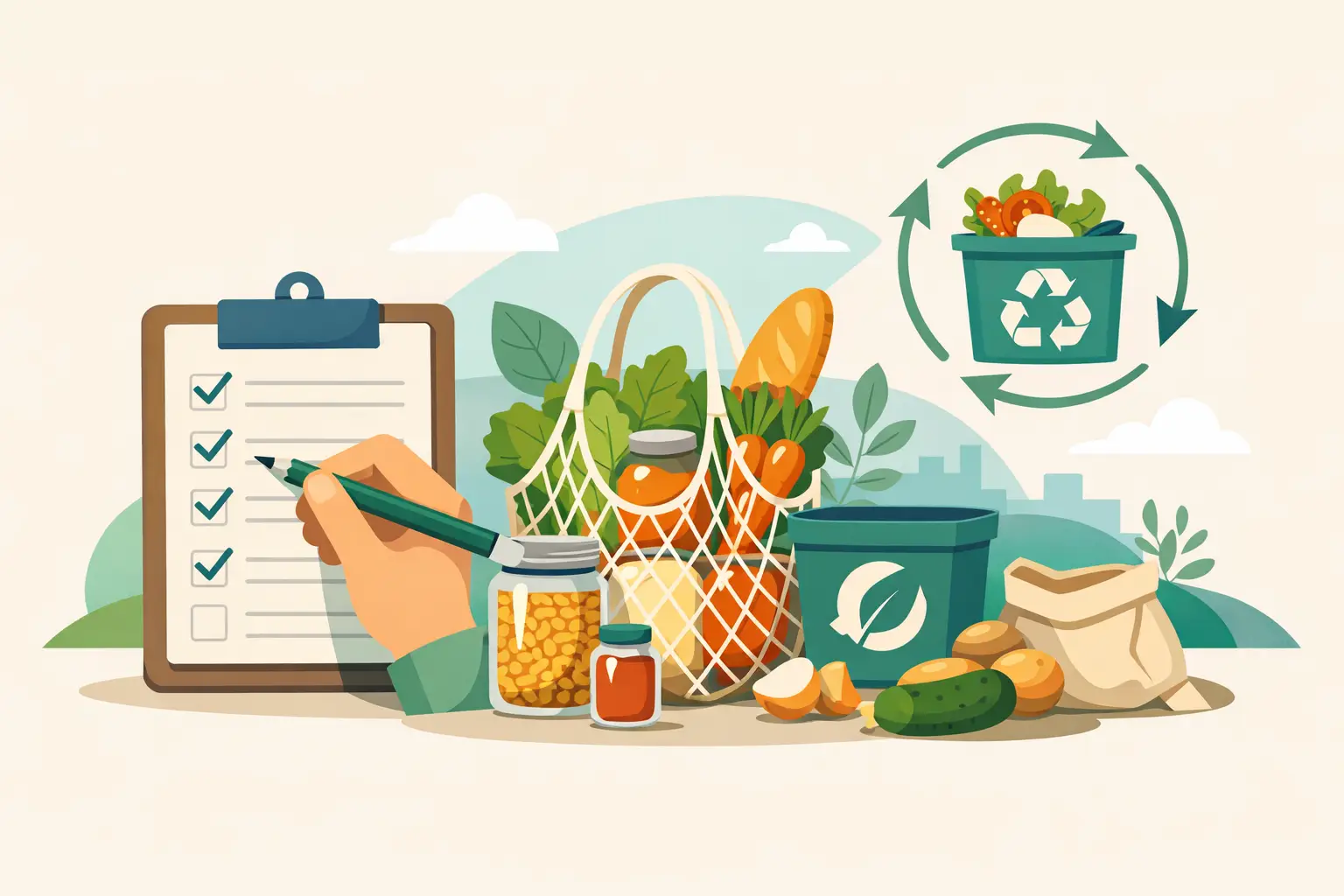
A grocery list to reduce waste is not a stricter version of shopping. It is a better match between what you buy and what your week actually looks like. If Tuesday is packed, a cart full of ambitious ingredients will not solve dinner. A few flexible foods that work across several quick meals will.
The goal is simple: buy food with a job. That job can be a planned meal, an easy backup dinner, a lunch, or a freezer option for later. When every ingredient has a likely use, fewer groceries get buried in the refrigerator and forgotten.
Why grocery lists often create waste
Most food waste starts before you get to the store. You shop while hungry, buy ingredients for five different recipes, and assume you will have more time and energy than you do. Then a busy week turns the spinach slimy, the herbs wilt, and the specialty sauce sits untouched in the door of the fridge.
This is not a discipline problem. It is a planning mismatch. A useful list accounts for your schedule, the food already in your kitchen, and the meals you are genuinely likely to cook.
It also leaves room for change. Maybe you planned tacos but want pasta instead. That is fine if the ingredients overlap. Rigid meal plans can look efficient on paper but create waste when real life interrupts them.
Build a grocery list to reduce waste
Start with your kitchen, not a recipe search. Spend two minutes checking the refrigerator, freezer, and pantry before writing anything down. Look for produce that needs attention, opened containers, leftovers, and ingredients close to their best-by date.
Then build your list around those foods. If you already have half a bag of carrots, do not buy another bag because a recipe calls for two. Plan a meal that uses the carrots you have, then buy only what completes it.
Plan three anchor meals, not seven perfect dinners
For many households, three planned dinners are enough. Choose meals that share ingredients, then rely on leftovers, freezer meals, breakfast-for-dinner, or a simple pantry meal on the other nights.
For example, chicken, bell peppers, and a bag of greens can become sheet-pan chicken one night, quesadillas another night, and grain bowls for lunch. A bunch of cilantro can finish tacos, stir into rice, and brighten a soup. One purchase, several uses.
This approach works especially well when your schedule changes often. You are not committing to a different shopping list for every meal. You are giving yourself ingredients that can move between meals without becoming a problem.
Buy quantities based on use, not package size
A larger package is only a bargain if you will use it. Family packs, warehouse-size produce, and multi-buy promotions can lower the price per ounce while increasing the amount you throw away.
Ask a practical question before adding anything: Can we use this before it declines in quality, freeze it, or carry it into next week? If the answer is no, buy less. This is particularly useful for salad greens, berries, fresh herbs, avocados, bakery items, and prepared foods.
For produce, mix quick-use and long-lasting options. Buy a small amount of tender produce for the first few days, such as berries or arugula, then add sturdier vegetables like cabbage, carrots, broccoli, onions, or sweet potatoes for later in the week. You still get variety without putting every perishable item on the same countdown.
Give each fresh ingredient a backup use
Every fresh item on your list should have a primary meal and a backup plan. A backup does not need to be exciting. It needs to be easy enough to happen.
Spinach can go into eggs, pasta, soup, smoothies, or a grilled cheese. Mushrooms work in omelets, rice bowls, pasta sauce, or quesadillas. Soft tomatoes can become a quick sauce. Overripe bananas can be frozen for smoothies or baked into muffins.
This small habit changes the way you shop. Instead of thinking, “I need basil for one recipe,” you think, “Will I use basil twice, or should I choose parsley, dried herbs, or no herbs at all?” Sometimes the best waste-reducing choice is skipping the ingredient that only improves one meal slightly.
Choose flexible staples that prevent last-minute takeout
Waste reduction is easier when your kitchen can absorb an unplanned day. Keep a modest set of foods that pair with whatever needs using first: pasta, rice, tortillas, canned beans, eggs, broth, frozen vegetables, shredded cheese, and a few sauces or seasonings you enjoy.
These are not meant to replace fresh food. They give fresh food a landing place. Wilting greens can go into a bean soup. A lonely zucchini can join pasta. Leftover roast chicken can become tacos with canned beans and tortillas.
Frozen produce deserves a place on a waste-conscious list, too. It is picked and frozen for long storage, and you can use only the amount you need. Frozen berries, spinach, corn, peas, and vegetable blends are especially useful when you want produce available without another race against spoilage.
Convenience foods can also reduce waste when they fit your routine. Pre-cut vegetables cost more per pound, but they may be the smarter purchase if they make you much more likely to cook. The lowest-cost ingredient is not a bargain if it stays untouched until it is unusable.
Put your list in order of urgency
Your list should reflect when you expect to use food. Buy delicate items for meals early in the week and durable items for later. If you shop on Sunday, use fish, tender herbs, ripe fruit, and salad greens first. Save root vegetables, cabbage, frozen foods, and pantry meals for the days when plans are less predictable.
When you get home, make that order visible. Place ingredients for the next meal where you will see them. Move older yogurt, leftovers, and open jars toward the front of the refrigerator. Store new items behind them when it makes sense.
A refrigerator is not just storage. It is a visual reminder system. Food hidden in opaque containers or packed behind newer groceries is far more likely to be wasted.
Turn leftovers into planned ingredients
Leftovers are easier to use when you stop treating them as a repeat of last night’s dinner. Cooked vegetables can become fried rice, a frittata, soup, or wraps. Extra grains can become a lunch bowl. Small amounts of meat, beans, or roasted vegetables can be combined into quesadillas, salads, or a quick skillet meal.
When cooking, make a deliberate choice: cook exactly enough, or make enough extra for a specific next meal. Unplanned excess is where leftovers become clutter. Planned leftovers are ingredients with a head start.
Label containers if your household tends to forget what is inside. A simple date and description helps you make faster decisions later. Follow storage guidance and use your judgment for safety, but do not rely on a smell test alone to decide whether food is safe.
Make the list a weekly kitchen habit
The best system is the one you will repeat. Before each shopping trip, check what is on hand, choose a few overlapping meals, and add only the ingredients that fill the gaps. Over time, you will notice which foods your household uses quickly and which ones repeatedly end up in the trash.
A kitchen assistant such as Quicine can make this step easier by turning the ingredients you already have into meal ideas. That means less searching for a perfect recipe and more useful answers to the question already in front of you: what can I cook with this?
Your list does not need to be flawless. Start with one change on your next trip: buy one fewer highly perishable item, and give every fresh ingredient a second possible use. Small, repeatable decisions are what keep good food on the plate instead of in the bin.