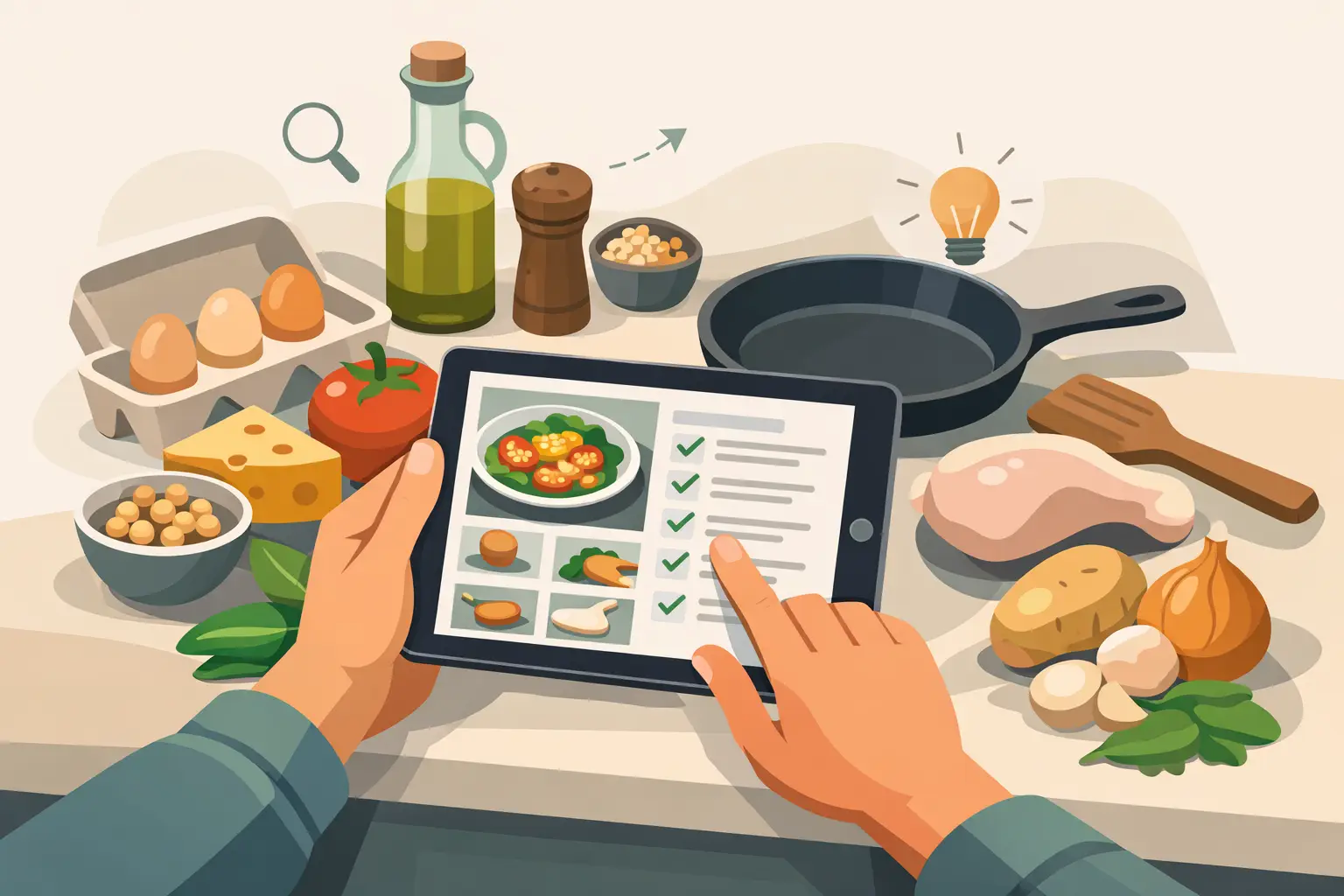
The bell pepper is getting soft. There is half a carton of eggs, a cup of cooked rice, and a jar of salsa in the refrigerator. You do not need a grocery run or a perfect recipe. You need recipes with ingredients you have that make a real dinner from the food already asking to be used.
That shift makes weeknight cooking easier. Instead of starting with a recipe and buying for it, start with the ingredients most likely to spoil, then choose a meal format that can flex around them. It saves money, cuts waste, and removes the 5 p.m. question: what can I make?
Start recipes with ingredients you have by triaging your food
Before searching for ideas, take a two-minute inventory. Put food into three simple groups: use now, use soon, and shelf-stable. This is not about creating a perfectly organized pantry. It is about spotting the items that need a job first.
Use now includes delicate greens, herbs, cut produce, ripe fruit, cooked leftovers, and opened dairy. Use soon might be carrots, cabbage, unopened yogurt, or a package of tortillas. Shelf-stable foods such as beans, pasta, canned tomatoes, rice, broth, spices, and flour can fill gaps around the more urgent ingredients.
Check condition, not just dates. A best-by date often signals quality, not automatic spoilage. On the other hand, mold, a bad odor, a swollen package, or a slimy texture are clear reasons to discard food. When in doubt about safety, do not try to rescue it.
The goal is simple: build tonight's meal around one or two use-now ingredients. If spinach and chicken are the priority, they lead the plan. Rice, pasta, tortillas, eggs, or canned beans become the supporting cast.
Choose a meal format, not a strict recipe
Most home cooking becomes faster when you stop looking for an exact ingredient match. A meal format gives you useful structure while leaving room for what is in your kitchen.
A skillet meal works well for cooked grains, vegetables, eggs, beans, ground meat, or small pieces of leftover chicken. Start with oil and aromatics if you have them, add vegetables from firmest to quickest-cooking, then add your protein and starch. Finish with a bold flavor such as soy sauce, salsa, hot sauce, lemon, pesto, cheese, or a fried egg.
A soup, stew, or curry is a good answer for vegetables that are a little tired but still safe to eat. Sauté onion, garlic, or ginger if available, add vegetables and a liquid, then use beans, lentils, shredded meat, pasta, or grains to make it filling. Broth is useful, but water plus a bouillon cube, canned tomatoes, coconut milk, or even a spoonful of miso can create a strong base.
For a tray bake, toss vegetables and protein with oil, salt, and a seasoning blend, then roast until browned. Potatoes, carrots, cauliflower, onions, sausage, chicken thighs, chickpeas, and tofu all work here. Add a simple sauce or yogurt at the end if the meal needs brightness.
Egg-based meals are especially forgiving. Scrambled eggs, frittatas, omelets, and breakfast tacos can absorb a surprising range of leftovers. Cook watery vegetables first so they release moisture before they meet the eggs. A small amount of cheese, herbs, salsa, or leftover roasted vegetables can make the result feel intentional rather than improvised.
Build flavor from what you already own
A short flavor formula prevents ingredient-first meals from tasting random. Use a base, a savory element, an acid, and a finishing touch. You do not need all four, but they help you diagnose what a dish needs.
Your base can be onion, garlic, scallions, celery, ginger, butter, or simply olive oil. Savory elements include salt, soy sauce, Parmesan, miso, tomato paste, broth, olives, or canned beans. Acid might be lemon, vinegar, pickled jalapeños, salsa, yogurt, or a splash of pickle brine. Finish with black pepper, herbs, chili flakes, toasted nuts, cheese, or a drizzle of olive oil.
For example, plain leftover rice and broccoli can go in several directions. Use soy sauce, ginger, and an egg for fried rice. Add broth, miso, and scallions for a quick soup. Mix in cheese and eggs, then bake it for a rice casserole. The ingredients have not changed much. The flavor direction has.
Make smart substitutions without forcing them
Substitutions work best when they preserve an ingredient's role. Replace a leafy green with another leafy green, a canned bean with another canned bean, or one cooked grain with another. This is more reliable than replacing ingredients based only on color or appearance.
Some swaps need a little adjustment. Frozen vegetables release more water than fresh, so cook them longer before adding sauces. Canned beans are already tender, while dried lentils need time and liquid. Greek yogurt can stand in for sour cream in many cold sauces, but it may split if boiled hard. Milk can loosen a sauce, but it will not behave like heavy cream.
If a recipe calls for a specific fresh herb, do not let that stop you. Parsley, cilantro, basil, dill, and scallions each change the final flavor, but most add freshness. Dried herbs are stronger and benefit from early cooking, while tender fresh herbs are usually better added near the end.
The trade-off is that an exact substitution is not always possible. Baking is less flexible than savory cooking because flour, eggs, fat, and leavening each affect structure. For dinner, though, you have more room to adapt than most recipes suggest.
Three fast combinations to keep in your back pocket
When the refrigerator is sparse, a few dependable combinations can get dinner moving.
Vegetable and bean tacos: Warm canned beans with salsa, cumin, and a little water. Sauté any vegetables that need using, then pile everything into tortillas. Add cheese, yogurt, avocado, hot sauce, or shredded cabbage if you have them.
Clean-out-the-fridge fried rice: Cook chopped vegetables in a hot skillet, add cold cooked rice, then season with soy sauce or another salty sauce. Push the mixture aside, scramble an egg in the pan, and combine. Leftover chicken, tofu, shrimp, or beans can go in at the end.
Flexible pasta with greens: Cook pasta and reserve some cooking water. Sauté garlic or onion with any quick-cooking vegetables, add greens, then toss with pasta, beans or leftover protein, and a sauce. Tomato sauce, pesto, olive oil and Parmesan, or yogurt with lemon can all work.
These are not rigid recipes. Think of them as reliable containers for food that might otherwise be forgotten.
Use leftovers on purpose
Leftovers are easiest to use when you change their form. Roast chicken can become tacos, soup, salad, fried rice, or a grain bowl. Cooked vegetables can go into eggs, blended soup, pasta sauce, or a quesadilla. A small amount of cooked rice can become a crispy skillet cake or a filling for stuffed peppers.
Store leftovers where you will see them, ideally in clear containers, and label them if your household tends to lose track. Cool cooked food promptly, refrigerate it, and reheat it thoroughly. If you are not likely to eat it within a few days, freeze it while it is still in good condition rather than waiting until it is questionable.
This is also where a personal kitchen assistant such as Quicine can help: enter the ingredients you have, prioritize the ones that need using, and get meal ideas that fit your actual kitchen instead of an idealized shopping list.
Keep a small set of rescue ingredients
Ingredient-first cooking does not mean never buying groceries. A few flexible staples make it much easier to turn odds and ends into meals. Keep the foods your household genuinely uses, rather than stocking a pantry for someone else's cooking style.
Helpful options include canned beans, eggs, pasta or rice, tortillas, canned tomatoes, broth or bouillon, onions, garlic, frozen vegetables, a flavorful sauce, and one or two cheeses. With these on hand, a lonely zucchini or a container of leftover chicken has somewhere to go.
The best recipes with ingredients you have are rarely the ones that use every last item. They are the ones that use the most perishable food well, leave you satisfied, and make tomorrow's kitchen a little easier to manage. Start with what needs attention, choose a flexible format, and let dinner be useful before it is perfect.