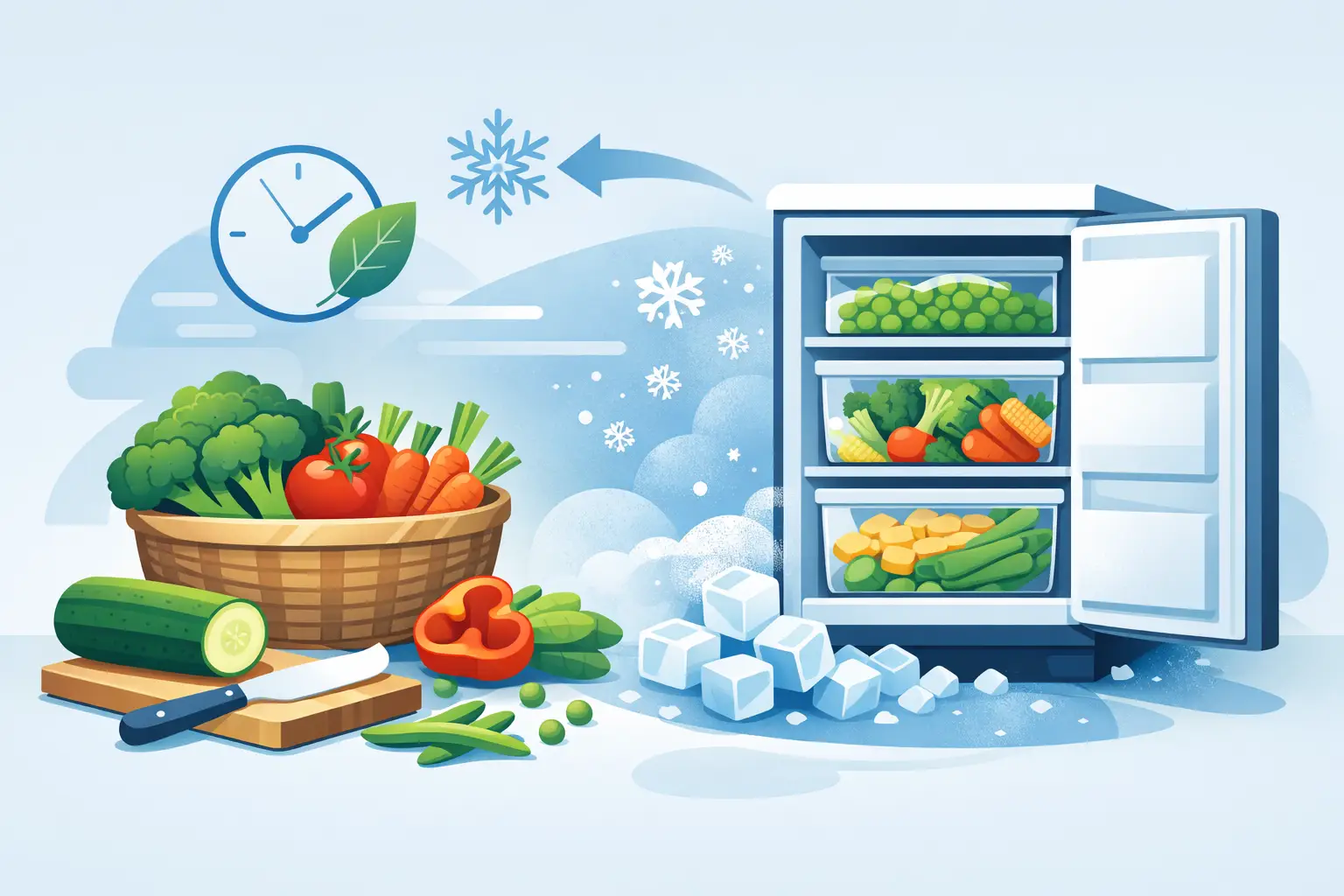
That bag of spinach in the crisper drawer is not a future salad if you will not use it by tomorrow. It is a freezer job. Learning to freeze vegetables before they spoil gives you more time, more meal options, and fewer grocery purchases that end up in the trash.
Freezing is not a rescue plan for vegetables that are already slimy, moldy, or sour-smelling. It works best when produce is still fresh but you can see that your week is moving faster than your meal plan. A few minutes of prep can turn aging broccoli, peppers, greens, and herbs into ingredients for next week's soup, stir-fry, pasta, or smoothie.
When to Freeze Vegetables Before They Spoil
The best time to freeze vegetables is when they are at their best, not their worst. If you bought green beans on Sunday and know you will not cook them by Thursday, freeze them Monday or Tuesday. You will get better flavor, color, and texture than if you wait until they look tired.
Use your senses. Vegetables that are firm, brightly colored, and free of mold are good candidates. A slightly soft bell pepper can still be frozen for cooking. Wilted kale can usually be frozen if it smells clean and has no slimy spots. But skip anything with visible mold, a fermented odor, or extensive mushiness. The freezer pauses quality - it does not reverse spoilage.
It also helps to freeze based on how you plan to use the ingredient later. Frozen vegetables are usually best in cooked dishes, where a softer texture is not a problem. Think curries, omelets, casseroles, sauces, fried rice, sheet-pan meals, and blended soups. Fresh cucumber, lettuce, and radishes do not freeze well for salads because their high water content leaves them limp after thawing.
Start With the Right Prep
Wash vegetables under cool running water, then dry them well. Extra surface moisture turns into ice crystals, which can make vegetables watery and clumped together. A clean kitchen towel or salad spinner makes a real difference for greens and herbs.
Cut produce into the size you will want later. Slice peppers for fajitas, chop onions for soups, and break broccoli into bite-size florets. This small decision saves time on a busy night, when frozen ingredients are most useful.
For many vegetables, blanching is the step that protects quality. Blanching means briefly cooking vegetables in boiling water, then cooling them quickly in ice water. It slows the natural enzymes that can dull color, weaken flavor, and create a stale texture in the freezer.
You do not need to blanch everything. Peppers, onions, mushrooms, herbs, and tomatoes can generally be frozen raw. But broccoli, cauliflower, green beans, carrots, peas, corn, and leafy greens benefit from blanching. Keep the cook time short. The goal is not to make them tender. You are simply giving them a quick reset before freezing.
A simple blanching routine
Bring a large pot of water to a boil and set a bowl of ice water nearby. Add the vegetables in small batches so the water stays hot. Once they are brightened and barely tender, move them straight into the ice water. Drain thoroughly and pat dry before packaging.
Most small or chopped vegetables need only a couple of minutes in boiling water. Leafy greens need even less. If you are unsure, err on the shorter side. Overblanched vegetables can come out soft before they ever reach your pan.
Freeze in Portions You Will Actually Use
A freezer full of one-pound solid blocks is technically food storage, but it is not very useful on a Wednesday night. Portion vegetables for the way you cook. If your household usually makes stir-fries for two, freeze enough chopped vegetables for one stir-fry. If you add spinach to eggs, pasta, and smoothies, make smaller packs.
For loose pieces, use a tray freeze first. Spread dry vegetables in a single layer on a parchment-lined sheet pan and freeze until firm. Then transfer them to freezer bags or containers. This keeps peas, berries, chopped peppers, and broccoli florets from freezing into one hard mass.
Press as much air as possible from freezer bags before sealing. Air exposure causes freezer burn, which is not unsafe but can leave food dry, pale, and less flavorful. Flat bags are especially practical because they freeze quickly, stack neatly, and thaw faster than bulky containers.
Label every package with the vegetable and date. It sounds obvious, but frozen chopped zucchini and frozen chopped green pepper can look surprisingly similar after a month. A label also helps you use older items first, rather than letting them disappear beneath a newer grocery run.
What Freezes Well and What Needs a Different Plan
Many everyday vegetables hold up well in the freezer, especially when they are headed for cooked meals. Broccoli, cauliflower, carrots, green beans, peas, corn, bell peppers, onions, spinach, kale, collards, mushrooms, butternut squash, and sweet potatoes are all useful freezer staples.
Tomatoes freeze well too, although they will not thaw with a fresh slicing texture. Freeze whole tomatoes, chopped tomatoes, or tomato sauce for chili, marinara, and soups. Herbs are another low-effort win. Chop parsley, cilantro, basil, or dill and freeze them in small bags, or pack them into ice cube trays with a little water or olive oil. The flavor is ideal for cooking, even if the leaves are no longer garnish-ready.
Vegetables with a lot of water need more realistic expectations. Zucchini and summer squash can be frozen, but they become soft when thawed. Use them in muffins, soups, fritters, sauces, or sautéed dishes. Celery loses its crunch but works well in stock, stuffing, and soup bases.
Lettuce, cucumbers, and raw potatoes are usually not worth freezing for their original purpose. If potatoes are close to sprouting, cook them first as mashed potatoes, roasted potatoes, or soup, then freeze the finished dish. The same principle applies to salad greens: turn them into pesto, a cooked side, or soup before freezing if their texture has already started to fade.
Cook From Frozen More Often Than You Thaw
Most frozen vegetables do not need to be thawed first. Cooking them directly from frozen usually gives you a better result and keeps dinner moving. Add frozen broccoli or green beans to a hot skillet, use frozen spinach in pasta sauce, or stir frozen corn into tacos and chili.
The main exception is dishes where extra water matters. For casseroles, baked goods, or vegetable fritters, thaw watery vegetables such as spinach, zucchini, and mushrooms, then squeeze or drain off excess liquid. Otherwise, that moisture can make your recipe thin or soggy.
Frozen vegetables may need a little more heat than fresh ones. A crowded skillet can trap steam, so cook in batches when you want browning. For roasted vegetables, preheat the sheet pan and use high heat. You will get better caramelization than if cold vegetables sit on a cool tray and release water slowly.
Build a Freezer Habit, Not a Freezer Mystery
The easiest system is a short weekly check before shopping. Look at the vegetables that need attention and decide: cook tonight, prep for tomorrow, or freeze now. That is enough to prevent many avoidable losses without turning food management into a project.
Keep a small section of the freezer for ready-to-use vegetables and try to pull from it once or twice a week. A bag of frozen peppers can become breakfast tacos. Frozen greens can make a quick soup feel more complete. A mix of odds and ends can become fried rice with eggs and a simple sauce.
If you are stuck on what to make from what you have, Quicine can help turn those freezer ingredients into practical meal ideas. The goal is not a perfectly organized freezer. It is making the food you already bought easier to use.
A vegetable does not need to become a beautiful fresh side dish to be worth saving. Freeze it while it is still good, give it a future job, and let your next busy meal benefit from the decision.