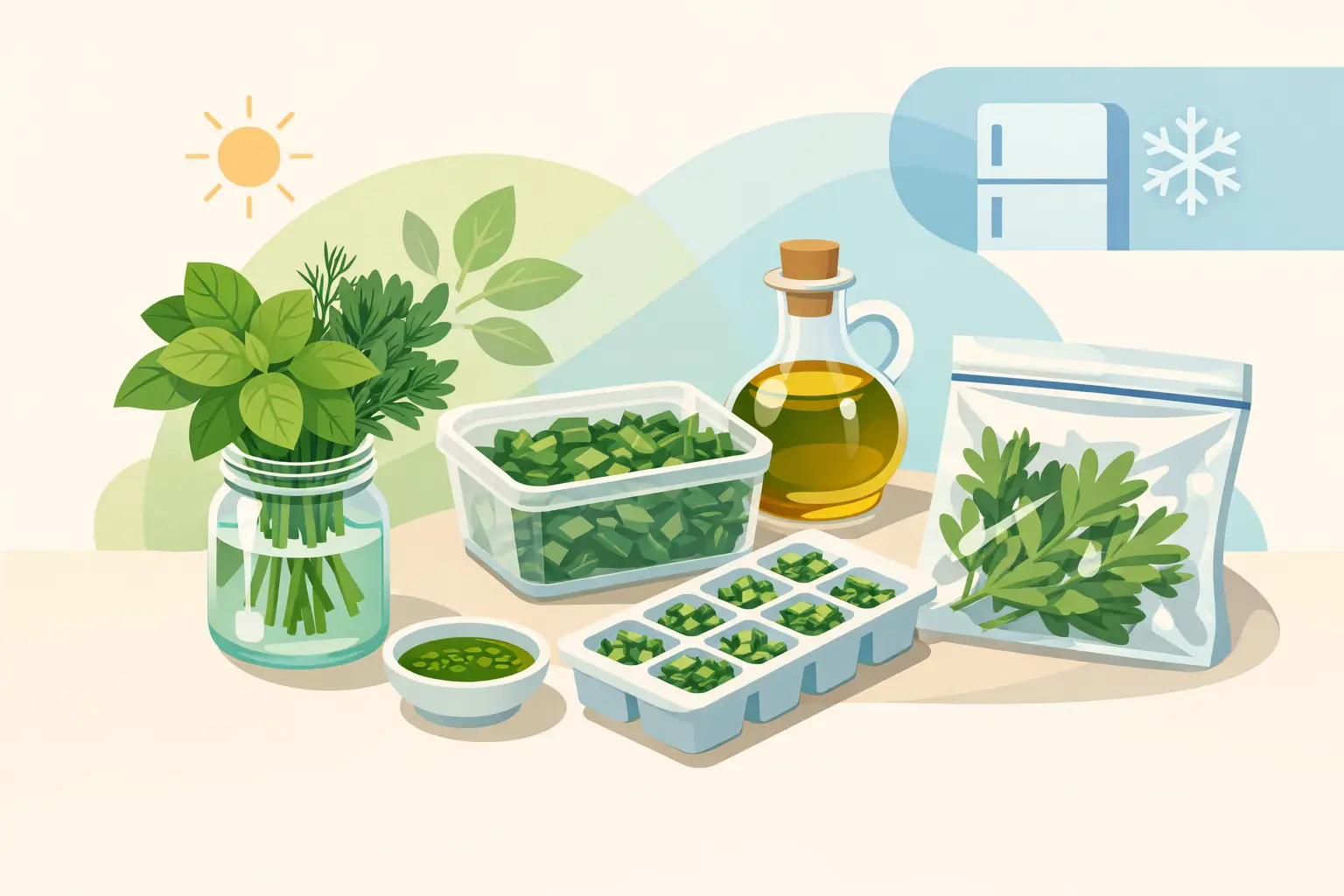
A bunch of herbs can make a simple dinner taste finished. It can also turn into a slimy, forgotten bag in the refrigerator before you get a second chance to use it. Knowing how to store fresh herbs gives you more time to make that pesto, garnish those tacos, or fold fresh dill into tomorrow's eggs.
The best method depends on the herb. Soft, leafy herbs need moisture and gentle protection. Woody herbs need less water and better airflow. Treating every bunch the same is why good groceries often become kitchen waste.
Start with the condition of the herbs
Fresh herbs last longest when you store them soon after shopping. If they have been sitting in a warm car or crowded grocery bag, give them attention when you get home rather than leaving them until meal prep.
First, remove any rubber bands, twist ties, or damaged leaves. A crushed or yellowing leaf can trap moisture against the rest of the bunch and speed up spoilage. Trim a small amount from the bottom of the stems, just as you would with flowers. This opens the stems so they can take in water.
Whether to wash herbs before storing is a practical trade-off. Unwashed herbs usually last longer because extra surface moisture encourages decay. If you do wash them, dry them extremely well in a salad spinner or between clean kitchen towels before they go into the refrigerator. A little moisture is helpful in the right place. Wet leaves are not.
How to store fresh herbs by type
A quick way to choose the right method is to look at the stem. Tender herbs have soft stems and delicate leaves. Hardy herbs have woodier stems and sturdier leaves.
Tender herbs: store them like flowers
Parsley, cilantro, mint, and dill stay freshest when their stems sit in water. Place the trimmed bunch upright in a small jar or glass with about an inch of fresh water. Loosely cover the leaves with a reusable produce bag or a lightly draped plastic bag, then refrigerate the jar.
The loose cover matters. It protects leaves from the refrigerator's drying air while still allowing some airflow. Change the water every few days, or sooner if it looks cloudy. Before cooking, inspect the bunch and remove any leaves that have started to turn.
Cilantro and parsley often last a week or more with this method. Mint can last even longer, although its leaves may darken if the refrigerator runs very cold. Keep the jar where it will not be knocked over, such as toward the front of a stable shelf.
Basil: keep it out of the refrigerator
Basil is the exception that catches many home cooks. Cold temperatures can darken its leaves and make them limp, even when the stems are in water. Store basil upright in a glass of water on the counter, away from direct sunlight and heat. A loose bag over the top can help if your kitchen is very dry, but do not seal it tightly.
Use basil within several days for the best flavor. If you bought a large bunch for one recipe, plan a second use right away: basil scrambled eggs, tomato toast, a quick pasta sauce, or a blended herb dressing all make good use of it.
Hardy herbs: wrap and refrigerate
Rosemary, thyme, oregano, sage, and chives do better with a different approach. Their leaves do not need to sit in a jar of water. Instead, loosely wrap them in a paper towel that is barely damp, then place the bundle in a reusable container or partially closed zip-top bag in the refrigerator.
The towel should feel moist, not wet. Too much water can make woody herbs blacken or grow mold. A container with a little room around the herbs is often better than tightly packing them, especially for chives, which bruise easily.
Hardy herbs generally keep for one to two weeks. Rosemary and thyme are especially forgiving, so they are useful herbs to buy when you want flavor that will still be around later in the week.
Give your refrigerator a small reset
Herbs spoil faster when they are crushed beneath heavier produce or hidden in the back of a packed drawer. Make them visible. A jar of parsley or cilantro at eye level is more likely to become dinner than a bag you rediscover after it is too late.
Avoid storing herbs near fruits that release a lot of ethylene gas, such as apples, bananas, and avocados. Ethylene can speed aging in nearby produce. The effect will not ruin a healthy bunch overnight, but separating delicate herbs from ripening fruit is an easy way to buy a little more time.
Temperature also matters. If your refrigerator tends to freeze items near the back wall, keep herbs away from that spot. Frozen leaves become watery and dark once they thaw. The crisper drawer can work for wrapped hardy herbs, but jars of tender herbs are usually safer on a shelf where they stay upright.
Use the herbs in the right order
Storage is only half the strategy. The other half is cooking with the most delicate ingredients first. Basil, dill, cilantro, and mint should be near the top of your meal plan. Save rosemary, thyme, oregano, and sage for later meals because they hold up better.
This does not require a complicated schedule. When you unpack groceries, take ten seconds to ask: Which herb will spoil first, and what can I make with it? Cilantro can become a taco topping, lime rice, salsa, or a quick green sauce. Parsley can stretch across pasta, grain bowls, soups, and meatballs. One bunch does not need one recipe.
If you use Quicine, add the herbs you have on hand and look for meals that fit them alongside the ingredients already in your kitchen. That small habit can turn an overlooked bunch into a useful prompt for dinner.
Preserve herbs before they reach the danger zone
When leaves are still bright and fragrant but you know you will not use them in time, preserve them. Do not wait until they are slimy or heavily browned. Preservation works best when the herbs are still in good condition.
For freezing, chop herbs and pack them into an ice cube tray with water, broth, or olive oil. Once frozen, transfer the cubes to a labeled freezer container. Herb cubes are ideal for soups, sauces, beans, sautéed vegetables, and marinades. They will not look like fresh garnish after thawing, but the flavor is still useful.
You can also freeze whole hardy sprigs, especially rosemary and thyme. Pull off what you need directly from the frozen sprig while cooking. For leafy herbs, blend basil, parsley, or cilantro with a little oil and freeze the mixture in small portions. This is a simple base for dressings, pasta sauces, and roasted vegetables.
Drying is another option, but it works better for woody herbs than tender ones. Hang small bundles of thyme, oregano, rosemary, or sage in a dry, airy place, or dry them slowly in a low oven. Dried herbs are more concentrated than fresh, so use less when cooking. Basil and cilantro usually lose much of the bright flavor that makes them worth buying fresh, so freezing is often the better choice.
Know when to let herbs go
A few dark edges or slightly droopy leaves do not automatically mean the bunch is unusable. Trim away damaged parts and use the rest in a cooked dish, sauce, or broth. But discard herbs that feel slimy, smell sour or musty, or show visible mold. Mold can spread through soft leaves and stems even when only one area looks affected.
The goal is not to keep every leaf forever. It is to give the herbs you buy a clear next step: use them fresh, cook them soon, or save them for later. Put that bunch where you can see it, and let it make the next meal easier.