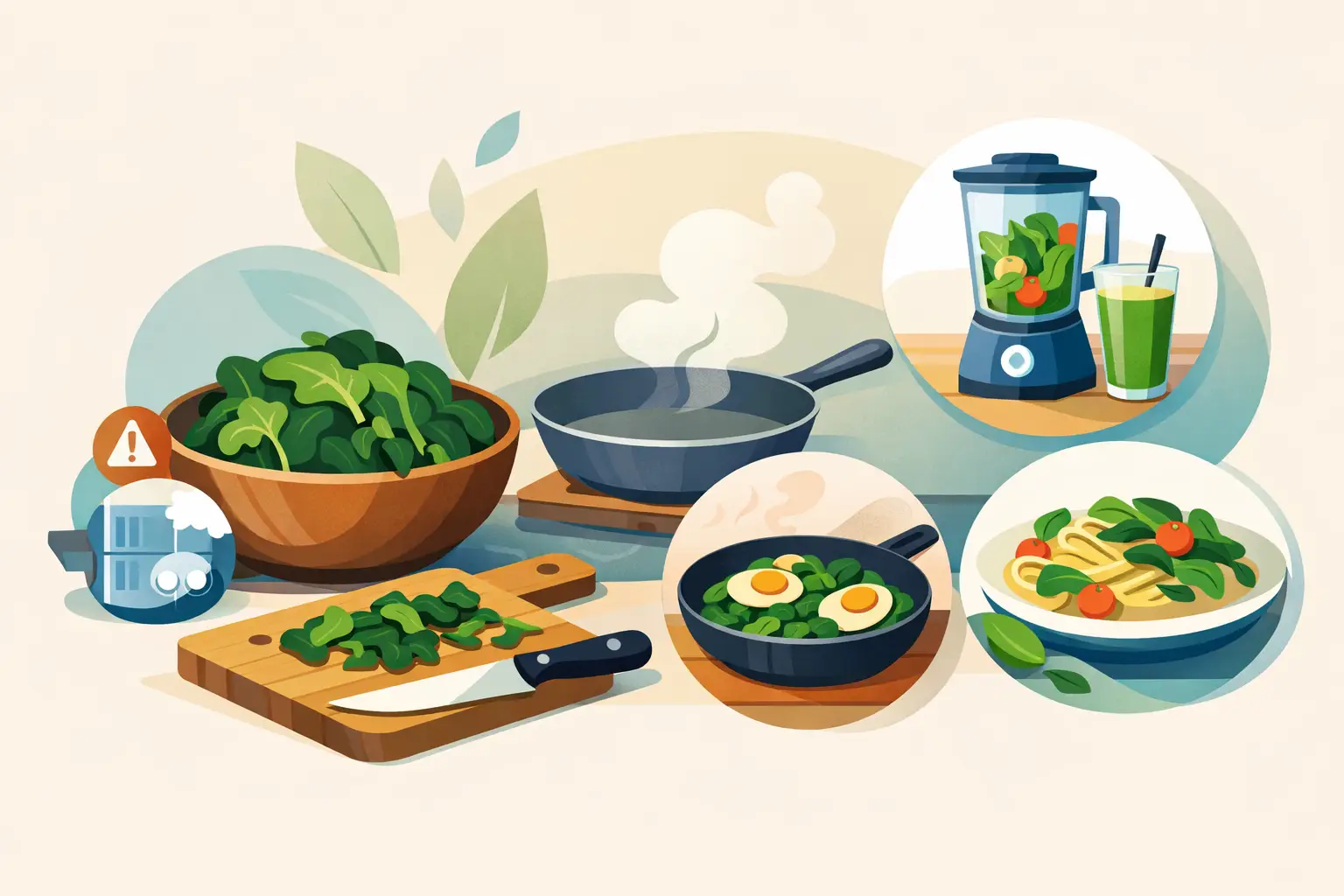
A bag of spinach can go from crisp to tired-looking in a day or two. That does not automatically make it waste. Knowing how to use wilted spinach gives you a quick way to turn a forgotten salad ingredient into dinner - while getting more value from the groceries you already bought.
Wilted spinach is usually best in cooked dishes, where its softer texture is not a drawback. The key is separating harmless moisture loss from actual spoilage. Do that first, then use it in a meal that gives it high heat, seasoning, and a little structure.
Is Wilted Spinach Still Safe to Eat?
Spinach wilts because its leaves lose water. If the leaves are soft, droopy, or slightly dry at the edges but still smell fresh and look green, they are generally fine to cook. A quick rinse can remove any grit, but do not expect water to restore every leaf to salad-ready crispness.
Skip spinach that is slimy, sticky, foul-smelling, or covered in dark, mushy patches. Yellowing alone is not always dangerous, but it is a sign that quality is fading. If only a few leaves look questionable, remove them and inspect the rest carefully. When the entire bag feels wet, slick, or sour, compost it rather than trying to save it.
This distinction matters because cooking can improve wilted texture, but it cannot make spoiled food safe. When in doubt, trust your senses and choose the lower-waste option that is also the lower-risk option: composting food that has clearly turned.
How to Use Wilted Spinach in Dinner Tonight
The easiest approach is to use wilted spinach where it will naturally cook down. Spinach has a high water content, so a large handful becomes a small amount in the pan. Plan for that before you decide whether you have enough for a full side dish or should treat it as an add-in.
Fold it into eggs
Wilted spinach is especially useful for scrambled eggs, omelets, frittatas, and breakfast sandwiches. Sauté it first with a little oil until the extra moisture cooks off, then add beaten eggs. Garlic, feta, cheddar, Parmesan, onions, and leftover roasted vegetables all work well here.
For a fast meal, cook spinach in a skillet, add eggs, and serve with toast or tortillas. It is a practical way to use a generous amount of greens without building a separate recipe around them.
Add it to soup, beans, or lentils
Spinach needs only a minute or two in hot broth. Stir it into tomato soup, chicken noodle soup, minestrone, ramen, or a can of white beans warmed with stock and seasonings. Add the leaves near the end so they stay green and do not become overly soft.
This method works well when you have only a small amount left. Even a cup or two can add color and nutrition to a pantry-based meal. If the spinach is very wet, shake it dry first so it does not dilute the broth.
Turn it into a pasta sauce
Sauté spinach with olive oil and garlic, then toss it with pasta, beans, cooked chicken, or sausage. A spoonful of pasta water helps the ingredients coat the noodles, while lemon juice, red pepper flakes, or grated cheese adds brightness.
Creamy pasta is another good fit. Stir spinach into a simple sauce made with milk, cream cheese, ricotta, or a jarred Alfredo-style sauce. Because wilted spinach is already soft, it blends in quickly and saves you from opening a fresh bag just for a handful of greens.
Use it in rice, grains, and stir-fries
Fold spinach into warm rice, quinoa, couscous, or farro just before serving. The residual heat will soften it, or you can give it a quick sauté first if the leaves are bulky. Add an egg, canned chickpeas, tofu, or leftover protein to turn the base into a complete bowl.
For stir-fries, add spinach last. Most vegetables need time to cook; spinach does not. Once the pan is hot and the other ingredients are nearly done, toss in the spinach and stir until just collapsed. This prevents a watery stir-fry and keeps the greens from disappearing entirely.
Bake it into a forgiving dish
Spinach is useful in recipes that already have a soft, savory filling: quesadillas, grilled cheese, stuffed shells, lasagna, savory muffins, casseroles, and pot pies. Cook it briefly first and squeeze out excess water if the recipe is thick or cheese-based. That extra step matters. Too much moisture can make a casserole watery or leave a quesadilla soggy.
A simple option is a spinach and cheese quesadilla. Layer cooked spinach with shredded cheese and beans between tortillas, then toast in a dry skillet until crisp. It uses up small quantities well and is easy to adapt to what is in the refrigerator.
Give It a Quick Refresh - Only If It Is Still Fresh
If your spinach is merely limp and you want to use it uncooked, place the leaves in a bowl of ice water for about 10 minutes. Dry them thoroughly afterward. This can perk up leaves enough for a sandwich, wrap, or grain salad, especially if they were stored a little too dry.
Still, cooked uses are usually the smarter choice for spinach that has been sitting for several days. A refreshed leaf may look better, but it will not have the same texture as newly purchased spinach. Save the best leaves for salads and cook the rest.
Prevent the Next Bag From Wilting So Fast
Spinach lasts longer when excess moisture is managed. Keep it cold in the refrigerator, and avoid washing it until you are ready to use it unless the package instructions say otherwise. If you do wash it ahead, dry it very well.
For an opened bag, line a storage container or reusable bag with a paper towel to absorb condensation. Replace the towel if it becomes damp. Do not pack the leaves tightly, and keep them away from fruits such as apples and bananas when possible, since ethylene gas can speed up aging in nearby produce.
A useful routine is to plan one cooked spinach meal soon after grocery day. Fresh spinach can cover salads and sandwiches first; any leaves that start to soften can move directly into eggs, soup, or pasta later in the week. This is less about perfect storage and more about giving ingredients a clear next use.
A Simple Decision Rule for Leftover Spinach
When you find spinach in the fridge, make the decision before meal planning gets complicated. Fresh and crisp spinach can go in a salad. Soft but clean-smelling spinach should go in a cooked dish. Slimy or sour spinach should go in the compost.
That small habit cuts down on the familiar cycle of buying good intentions and throwing away produce. Quicine is built around this kind of ingredient-first cooking: start with what needs using, then let that guide the meal. A slightly wilted bag of spinach is not a failed grocery purchase. It is a prompt for a fast, flexible dinner.