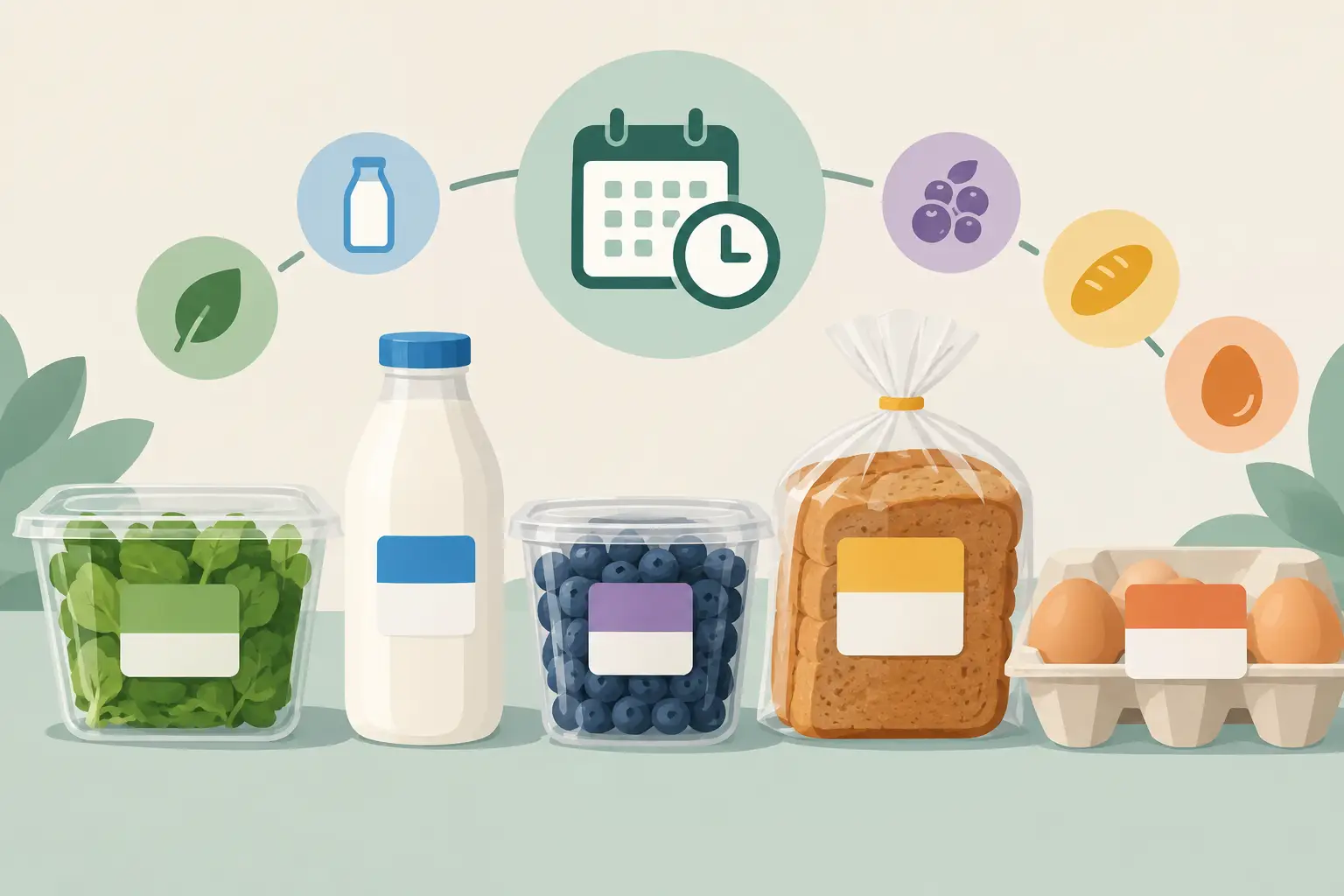
A carton of yogurt sits one day past its printed date. A bag of salad is still sealed. Leftover chicken is nearing the end of the week. A useful date label comparison can help you make a safer call without tossing food that is still perfectly usable.
Most dates on US food packages are about quality, not an automatic safety deadline. They tell you when a store should sell an item or when a manufacturer expects its peak flavor and texture. Your storage habits, the kind of food, and the condition of the package matter just as much.
Date Label Comparison: The Labels You See Most
Food date labels sound similar, but they answer different questions. Reading the wording - not just the date - is the first step toward wasting less.
Best by, best if used by, and best before
These labels point to quality. The manufacturer is saying the product should taste, look, or perform its best before that date. Afterward, shelf-stable foods may lose crispness, flavor, or color, but they are not necessarily unsafe.
Think of crackers that are a little stale, canned tomatoes with less-bright flavor, or cereal that has lost some crunch. If the package is intact and the food has been stored properly, assess it before throwing it out. You may still be able to use it in a soup, casserole, smoothie, or other meal where small quality changes are less noticeable.
Sell by
A sell-by date is mainly for store inventory. It helps retailers rotate products and gives shoppers a sense of how long an item may hold its quality at home. It is not a federal food safety expiration date.
For refrigerated groceries, buy products with enough time for your plan. If you will not use the milk, meat, or deli items soon, freeze them while they are still at their best. The date is useful, but your fridge temperature and handling after purchase carry more weight.
Use by
A use-by date can be more confusing. On many products, it is the manufacturer's recommendation for best quality, much like a best-by date. It does not always mean the food becomes dangerous at midnight.
There is one major exception: infant formula. Federal rules require an expiration date on infant formula because its nutrient content and quality must meet specific standards through that date. Do not use formula after its expiration date.
For other foods, check whether your state has its own labeling rules, especially for dairy or eggs. Wording can vary by manufacturer and location, so a package date should be one piece of your decision, not the whole decision.
Expiration date
“Expiration” sounds final, but it is not used consistently across every US food category. Some state-regulated products may carry an expiration date with specific requirements. For many packaged foods, though, the term may reflect a manufacturer's quality guidance rather than a universal safety cutoff.
When in doubt, be more cautious with refrigerated ready-to-eat foods than with dry pasta or canned beans. A date on a box of rice and a date on smoked salmon should not be treated the same way.
Why the Date Is Only Part of the Story
A label cannot know what happened between the factory and your kitchen. Food can spoil before a printed date if it sat in a hot car, was left on the counter too long, or was stored in a warm refrigerator. It can also remain usable after a quality date if it stayed cold, sealed, and properly handled.
Your refrigerator should be at 40°F or below, and your freezer should be at 0°F. Those temperatures slow bacterial growth and help foods last closer to their expected storage window. If you are unsure about your fridge, a simple appliance thermometer is more useful than guessing from how cold the milk feels.
Opening a package changes the equation, too. A sealed jar of sauce may keep well until its quality date, while the opened jar needs refrigeration and should be used within a shorter period. The same goes for lunch meat, shredded cheese, broth, and salad kits. Once air, utensils, and hands enter the picture, the printed date becomes less predictive.
Use Your Senses, With Clear Limits
Looking, smelling, and checking texture can prevent unnecessary waste, especially with produce and shelf-stable goods. A wrinkled bell pepper can still be roasted. Soft herbs can become sauce. Yogurt may be fine after its best-by date if it smells normal and has been refrigerated consistently.
But your senses cannot detect every foodborne pathogen. Never taste a questionable food just to test it. Instead, discard food when you notice clear spoilage signs, including:
- Mold on foods where it can spread below the surface, such as soft cheese, yogurt, bread, leftovers, or cooked grains
- A swollen can, leaking package, broken seal, or spurting liquid when a container is opened
- Strong off odors, unusual slime, or unexpected discoloration on refrigerated foods
- Food left at room temperature for more than two hours, or more than one hour when temperatures are above 90°F
For raw meat, poultry, seafood, and prepared leftovers, safe timing matters more than a sniff test. If you cannot remember when you cooked it or how long it has been open, choose caution. Saving a few dollars is not worth a foodborne illness.
A Practical System for Food Dates at Home
The best date label comparison is the one that leads to action before food gets forgotten. Instead of treating every printed date as a discard date, build a quick routine around what needs attention first.
When you unpack groceries, put items with the earliest quality dates toward the front. Keep newer products behind them. This simple first-in, first-out habit works for yogurt, tortillas, sauces, snack foods, and freezer items. For produce, store it where it lasts best and keep a visible “use soon” area for ingredients that need a meal plan.
Add your own date to leftovers and opened packages. A piece of masking tape with “opened Monday” or “cooked Tuesday” is often more useful than the original label. It tells you what the package date cannot: how long the food has been in your kitchen.
Freezing is another practical reset button. Freeze bread before it goes stale, bananas when they become too ripe for snacking, and extra portions of cooked beans, rice, soup, or meat. Freezing preserves safety and quality best when food is still fresh, not when it is already questionable.
A personal kitchen assistant such as Quicine can also make the use-soon list more useful by turning those ingredients into meal ideas. The goal is not to cook a complicated rescue recipe every night. It is to notice the spinach, chicken, and half jar of pesto early enough to make an easy dinner.
Match the Decision to the Food
Different foods deserve different levels of caution. Shelf-stable items such as dry beans, pasta, cereal, and unopened canned goods often remain usable well beyond a best-by date if the package is sound. Their quality may gradually decline, but they are low-risk when stored cool and dry.
Fresh produce is more variable. A few brown spots on an apple or a limp carrot do not mean the whole item is lost. Trim minor damage, cook soft vegetables, or blend ripe fruit. Moldy berries, slimy greens, and produce with widespread decay should go.
Refrigerated ready-to-eat foods are less forgiving. Deli meat, prepared salads, smoked fish, and leftovers need steady cold storage and timely use. Plan these foods for the first few days after shopping or cooking, then freeze what you will not finish.
The useful question is not, “Is this one day past the date?” Ask, “What type of food is this, how was it stored, has it been opened, and does it show any signs of spoilage?” That small shift helps you protect both your grocery budget and your household.
The next time you spot a date on a package, treat it as a prompt to check, plan, and use what you have. A smarter kitchen is built from small decisions made before good food becomes waste.