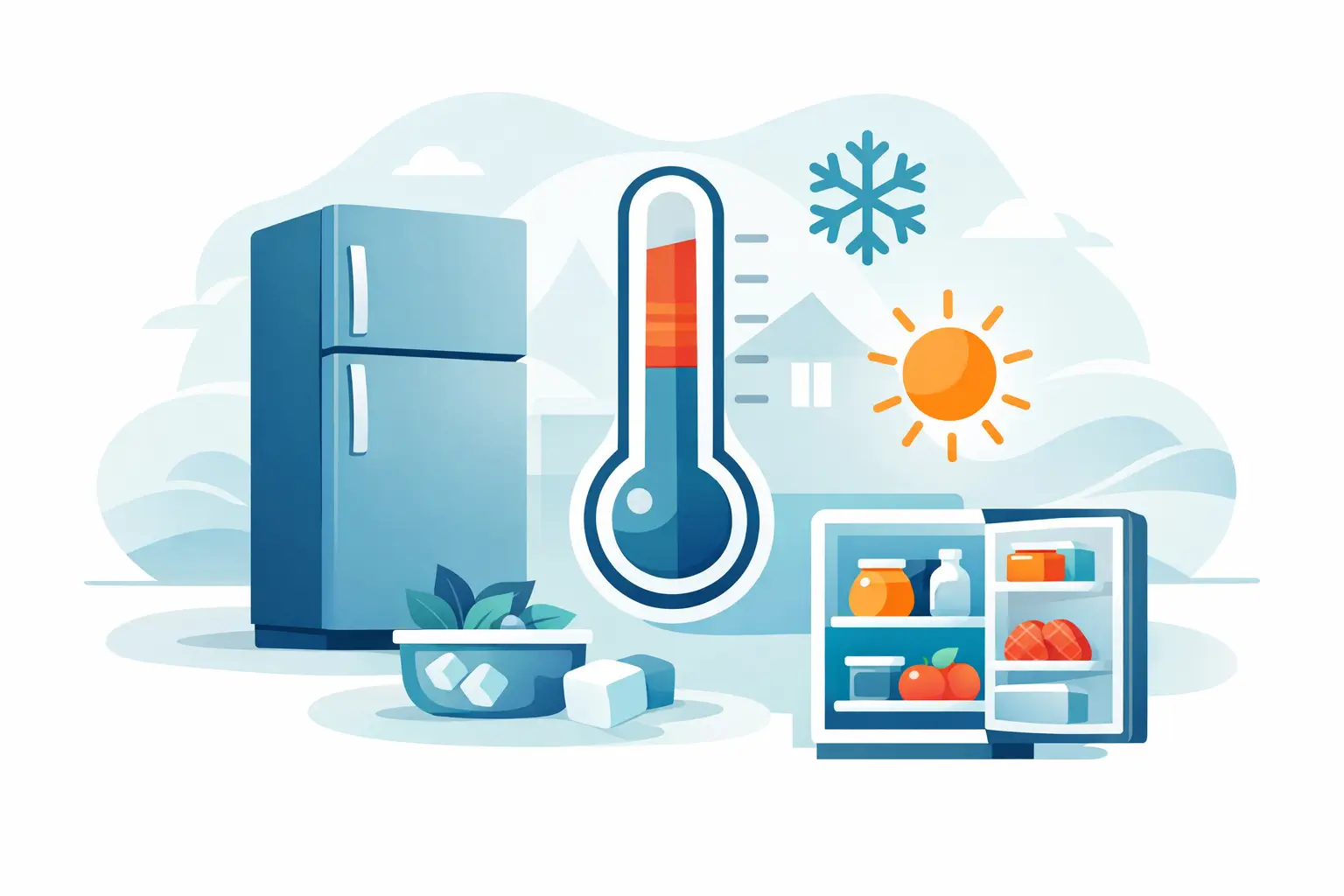
That bag of spinach did not wilt overnight by accident. A refrigerator that runs a few degrees too warm can shorten the life of produce, leftovers, dairy, and meat before you realize there is a problem. This guide to refrigerator temperature helps you set up the cold storage you already have to keep food safer, fresher, and easier to use.
The refrigerator temperature target
Set your refrigerator to 37°F to 40°F. The Food and Drug Administration recommends keeping refrigerated food at 40°F or below, while 37°F gives you a little useful buffer when the door opens or the kitchen gets warm.
Your freezer should hold at 0°F. Freezing does not make food last forever, but it pauses bacterial growth and preserves ingredients far better than a freezer that hovers a few degrees above zero.
The number on your refrigerator dial may not be the actual temperature inside. On many models, a setting of 1 through 5 or Low through High controls how often the appliance runs, not a precise temperature. That is why a simple appliance thermometer is more useful than trusting the dial alone.
Why 37°F to 40°F is the sweet spot
At this range, cold-sensitive bacteria grow much more slowly, and common groceries keep their quality longer. Milk is less likely to sour early. Cooked rice, chicken, and leftovers have a better chance of staying within their safe storage window. Leafy greens and berries are also less likely to fade before you can cook with them.
Colder is not always better. Temperatures close to 32°F can freeze high-water foods such as lettuce, cucumbers, herbs, berries, and eggs. Freezing damages cell walls, which is why a partly frozen cucumber turns watery and limp after thawing. If food at the back of your fridge is icing over, the refrigerator may be set too cold, overloaded in the wrong places, or pushing cold air unevenly.
How to check your refrigerator temperature accurately
Put an appliance thermometer in a glass of water on the center shelf, then leave it there for at least eight hours. Water changes temperature more slowly than air, so this gives you a more realistic reading for the food around it. Check it before a busy morning or after the fridge has stayed closed overnight.
If the reading is above 40°F, lower the refrigerator setting one small step and check again the next day. Avoid making a big adjustment all at once. Refrigerators need time to stabilize, and a dramatic change can turn a warm shelf into a freezing one.
Test more than one spot if your fridge regularly causes problems. The back of the lower shelves is often colder than the front, while door shelves tend to be warmest because they are exposed every time someone reaches for creamer or a snack. A small difference is normal. A large difference suggests blocked vents, crowded shelves, worn door gaskets, or an appliance that needs service.
Check after changes in your routine
A refrigerator can drift warmer after a large grocery run, a holiday meal, a power outage, or a move. Hot leftovers placed inside can also raise the temperature temporarily, especially in a compact fridge. Divide large portions into shallow containers so they cool faster, and leave space around them for cold air to circulate.
You do not need to cool food on the counter for hours before refrigerating it. Perishable food should generally be refrigerated within two hours, or within one hour when the room is hotter than 90°F. Small containers cool efficiently without warming the whole refrigerator as much as one deep pot of soup or a large casserole dish.
Store food where the temperature helps it most
A well-set refrigerator works best when its cold zones match the foods you keep there. Think of shelves as part of your food-management system, not just open space to fill.
Use the lower shelves for raw meat and seafood
Keep raw meat, poultry, and seafood on the bottom shelf, ideally in a tray or container that can catch leaks. This area is usually among the coldest parts of the refrigerator, and placing raw ingredients low prevents drips from reaching ready-to-eat food.
Plan to cook or freeze these ingredients promptly. A cold fridge slows spoilage, but it does not reset the clock on a package that has already spent several days in storage. If dinner plans change, freezing meat while it is still fresh is usually a better move than hoping you will get to it tomorrow.
Keep milk, eggs, and leftovers away from the door
The door is convenient, but it is the least stable place in the refrigerator. Store condiments, jam, pickles, and bottled drinks there. These foods handle small temperature shifts better than milk, eggs, yogurt, or leftovers.
Put dairy and eggs on an interior shelf, preferably toward the back but not pressed against a freezing wall. Keep leftovers in clear, labeled containers. A date label turns a vague container of pasta or roasted vegetables into an easy lunch decision before it becomes a mystery in the back of the fridge.
Use produce drawers with a purpose
Crisper drawers help manage humidity. Most vegetables, especially leafy greens, broccoli, carrots, and herbs, do better with higher humidity. Fruit that gives off ethylene gas, such as apples, pears, and ripe avocados, generally does better with lower humidity and some separation from sensitive produce.
It depends on what you have. Berries often last longer when left unwashed in a breathable container until you are ready to eat them. Herbs can benefit from a damp paper towel or a glass of water, depending on the variety. If a drawer is turning produce slimy, check for trapped moisture and remove anything already spoiling.
Not every grocery item belongs in the refrigerator. Tomatoes can lose flavor and turn mealy when chilled. Whole potatoes, onions, winter squash, and unripe bananas usually prefer a cool, dry counter or pantry area. Once produce is cut, though, refrigerate it promptly.
Common refrigerator temperature problems and fixes
If your food spoils faster than expected, start with the thermometer rather than guessing. A fridge can feel cold to your hand and still sit above the safe range. The following issues are especially common in busy kitchens:
- Blocked vents: Food packed against interior vents stops cold air from reaching the rest of the compartment. Leave a little breathing room at the back and sides.
- An overstuffed fridge: A full refrigerator holds cold better than an empty one, but cramming it tightly reduces airflow. Aim for comfortably full, not packed.
- A nearly empty fridge: If shelves are sparse, add a few water bottles. They help the temperature stay steadier when the door opens.
- Damaged door seals: Close the door on a sheet of paper. If it slides out easily in several places, the gasket may not be sealing well.
- Dirty condenser coils: Dusty coils make the appliance work harder and can contribute to poor cooling. Follow your refrigerator manufacturer's cleaning guidance.
Try not to judge freshness by temperature alone. A fridge at 38°F helps, but food still has a limited life. Notice when you bought items, cook leftovers within a reasonable timeframe, and use the most perishable ingredients first. When you are choosing a meal, start with what needs attention: wilting greens, open yogurt, leftover rice, or chicken nearing its use-by date. Quicine is built around that same simple habit - cook from what is already waiting in your kitchen.
When a temperature issue becomes a food-safety issue
After a power outage, keep the refrigerator and freezer doors closed as much as possible. An unopened refrigerator can keep food cold for about four hours. A full freezer can hold its temperature for about 48 hours, or about 24 hours if it is half full. Once power returns, use a thermometer to check conditions instead of relying on appearance or smell.
If refrigerated perishable food has been above 40°F for two hours or more, the safest choice is to discard it. That can feel wasteful, especially when groceries are expensive, but food safety and food-waste reduction are not competing goals. The best way to avoid that loss is prevention: know your appliance's real temperature, keep cold air moving, and give vulnerable ingredients a clear plan before they are forgotten.
A refrigerator set to the right range will not decide dinner for you, but it gives every ingredient more time to become one. That small check of a thermometer can mean fewer spoiled groceries, fewer last-minute takeout orders, and more useful meals from the food you already bought.