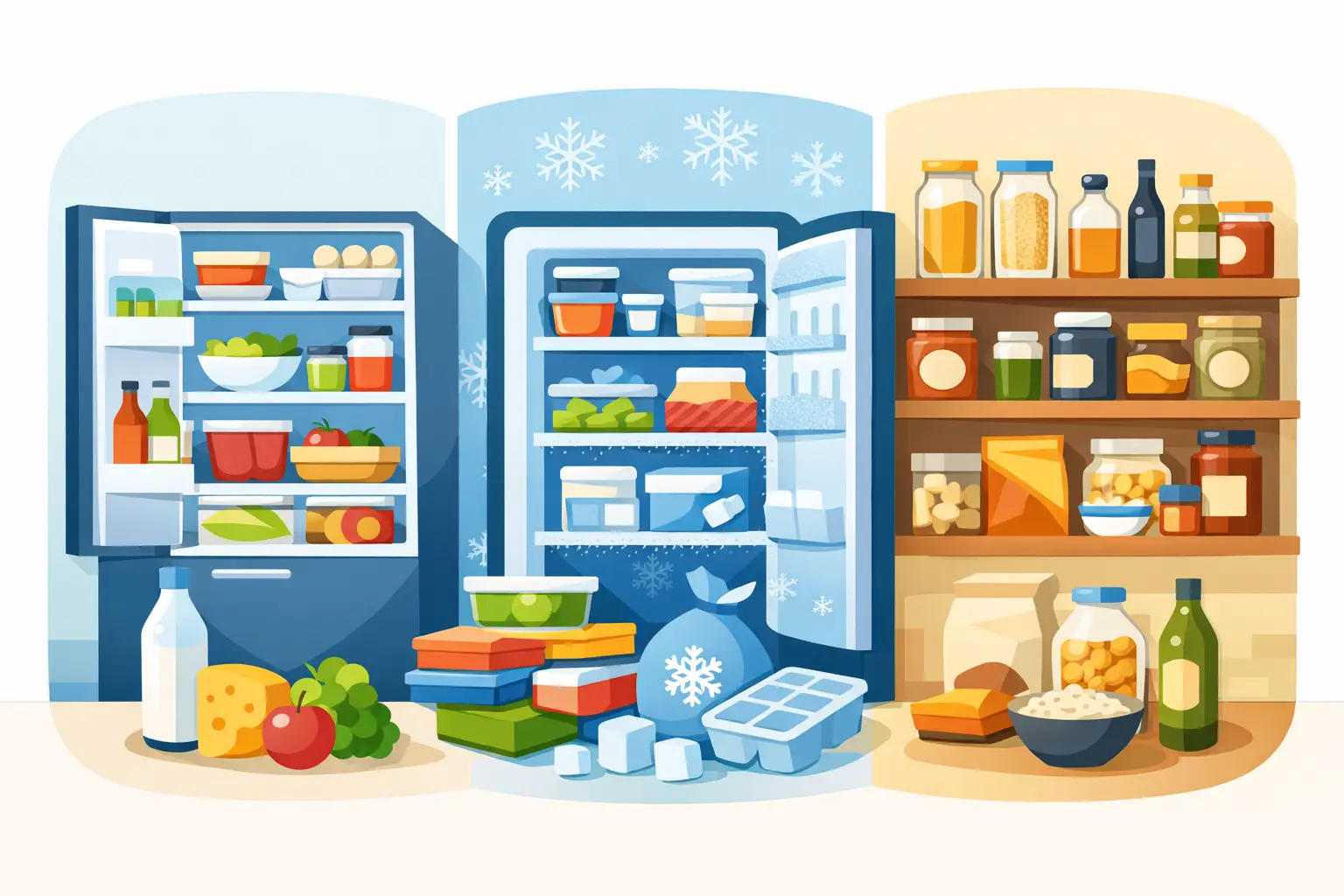
That bag of spinach is not a future-you problem. It is dinner, lunch, or a freezer-ready ingredient with a short window. A practical food storage chart helps you see that window clearly, so groceries become meals before they become waste.
Storage times are useful, but they are not magic deadlines. A food's condition when you bought it, your refrigerator temperature, and how often the door opens all matter. Use this chart as a planning tool, then trust your senses and follow package instructions when they are more specific.
Food Storage Chart: At-a-Glance Times
Keep your refrigerator at 40°F or below and your freezer at 0°F. The refrigerator times below assume food has been stored promptly and handled cleanly. Freezer times are mostly about quality, not safety: food kept continuously frozen stays safe longer, but flavor and texture gradually decline.
| Food | Refrigerator | Freezer | Pantry or counter | Best storage move | |---|---:|---:|---:|---| | Raw chicken, turkey, ground meat | 1-2 days | 3-4 months | Never | Cook or freeze early in the week | | Raw steaks, chops, roasts | 3-5 days | 4-12 months | Never | Keep in the coldest part of the fridge | | Raw fish and shellfish | 1-2 days | 2-6 months | Never | Plan it for the next meal or freeze it | | Cooked meat or poultry | 3-4 days | 2-6 months | Never | Portion leftovers before refrigerating | | Cooked grains, pasta, soups | 3-4 days | 1-3 months | Never | Freeze meal-size portions | | Eggs in the shell | 3-5 weeks | Do not freeze in shell | Never | Store in their carton, not the door | | Milk | About 5-7 days after opening | 1-3 months | Never | Keep toward the back of the fridge | | Yogurt | 1-2 weeks after opening | 1-2 months | Never | Use in smoothies or sauces near the date | | Soft cheese, opened | About 1 week | 2-3 months | Never | Wrap tightly and check often | | Hard cheese, opened | 3-4 weeks | 6 months | Never | Grate and freeze extra portions | | Leafy greens | 3-7 days | 8-12 months, cooked | Never | Store dry with a paper towel | | Berries | 2-5 days | 8-12 months | Never | Do not wash until you use them | | Apples | 3-4 weeks | 8-12 months, sliced | 5-7 days | Refrigerate for a longer life | | Citrus | 2-3 weeks | 3-4 months, juiced/zested | About 1 week | Refrigerate if not using soon | | Carrots, celery | 2-4 weeks | 8-12 months, blanched | Never | Keep sealed in the crisper | | Broccoli, green beans | 3-5 days | 8-12 months, blanched | Never | Cook or freeze before they soften | | Potatoes | 2-4 weeks | Not ideal raw | 2-4 weeks | Keep cool, dark, and dry | | Onions and garlic | 1-2 months | 3-6 months, chopped | 1-2 months | Store with airflow, away from potatoes | | Bread | 3-5 days | Up to 3 months | 3-5 days | Freeze what you will not eat quickly | | Canned goods, unopened | Not needed | Not needed | 1-5 years | Store cool and dry; rotate stock |
Read the Chart as a Meal Plan
The best use of a food storage chart is not memorizing every number. It is deciding what deserves attention first. When you unpack groceries, place the shortest-life foods where you will see them: fish, berries, herbs, salad greens, and opened dairy.
Think in three lanes. Foods with one or two days of refrigerator life should shape your next meals. Foods with several days can fill the rest of the week. Shelf-stable and freezer foods are your flexible backups when plans change.
For example, chicken purchased on Sunday belongs in a Monday or Tuesday dinner plan. If Tuesday is already packed, freeze it Sunday in a recipe-ready portion. This takes less effort than trying to rescue it later, and it prevents the familiar cycle of ordering takeout while good food waits in the fridge.
The Storage Details That Change Everything
Keep produce dry, with a few exceptions
Moisture is why tender greens and berries can collapse quickly. Do not wash berries, mushrooms, or leafy greens before storing unless you can dry them thoroughly. A container lined with a paper towel helps absorb excess moisture. Check the container once during the week and replace the towel if it feels wet.
Some produce should stay on the counter until ripe. Bananas, avocados, peaches, pears, tomatoes, and whole melons generally do better there. Once ripe, refrigerate them to slow further softening. Tomatoes may lose some texture in the refrigerator, so use counter storage when you expect to eat them within a few days.
Keep apples, bananas, and pears away from sensitive produce when possible. They release ethylene gas, which can speed ripening in nearby greens, broccoli, and other produce.
Give the fridge a simple system
The refrigerator door is the warmest area, so it is better for condiments than milk, eggs, or raw meat. Store raw meat and seafood on a low shelf in a rimmed container, where leaks cannot reach ready-to-eat food. Put leftovers and prepped ingredients at eye level so they are easy to use.
Your crisper drawers help, but they are not interchangeable. Leafy greens usually prefer higher humidity. Apples, pears, and other fruits that release ethylene generally do better with lower humidity. If your fridge does not have humidity controls, the simpler rule is still useful: keep vegetables contained and dry, and avoid crowding everything into one drawer.
Freeze for convenience, not just emergencies
Freezing works best before food looks questionable. Portion ground meat, chicken, soup, tomato paste, cooked rice, and shredded cheese into amounts you can use in one meal. Press air out of freezer bags or use airtight containers, then label each item with the food and date.
Not every ingredient returns from the freezer in the same form. Lettuce, cucumbers, and raw potatoes become watery or soft. That does not make freezing useless for produce. Freeze spinach for smoothies, ripe bananas for baking, herbs in oil or water, and berries for oatmeal. Blanch vegetables such as broccoli, green beans, and carrots first to protect their color and flavor.
Dates, Leftovers, and When to Let Food Go
A date on a package is often about quality, not an automatic safety cutoff. “Best by” usually signals the period when flavor or texture is expected to be at its best. “Use by” may carry more specific guidance, especially for highly perishable foods, so follow the package label when it is present.
For leftovers, the four-day rule is a useful guardrail. Refrigerate cooked food within two hours of cooking, or within one hour if the temperature is above 90°F. Divide large batches of soup, chili, or casserole into shallow containers so they cool faster. Reheat leftovers until they are steaming hot throughout.
Do not taste food to decide whether it is safe. Throw it out if you see mold where it should not be, notice a sour or rancid odor, find a swollen package, or suspect it sat out too long. With leftovers and raw proteins, caution is cheaper than a foodborne illness.
Build a Five-Minute Weekly Check
Once a week, take five minutes before shopping to scan the fridge, freezer, and pantry. Move soon-to-expire ingredients forward. Choose one meal that uses the most perishable item. Then make your grocery list around what is already there, rather than buying duplicates.
If you need a fast prompt, start with one ingredient instead of a recipe. Half a bell pepper, cooked rice, a handful of spinach, and eggs are not random leftovers. They are the beginning of a fried rice, frittata, grain bowl, or soup. Quicine is built around that same ingredient-first habit: cook what you have, while it is still at its best.
A food storage chart will not make every week go exactly to plan. It can make the next decision easier: use it tonight, save it for later, or freeze it now. That small choice is where less waste and more useful meals begin.