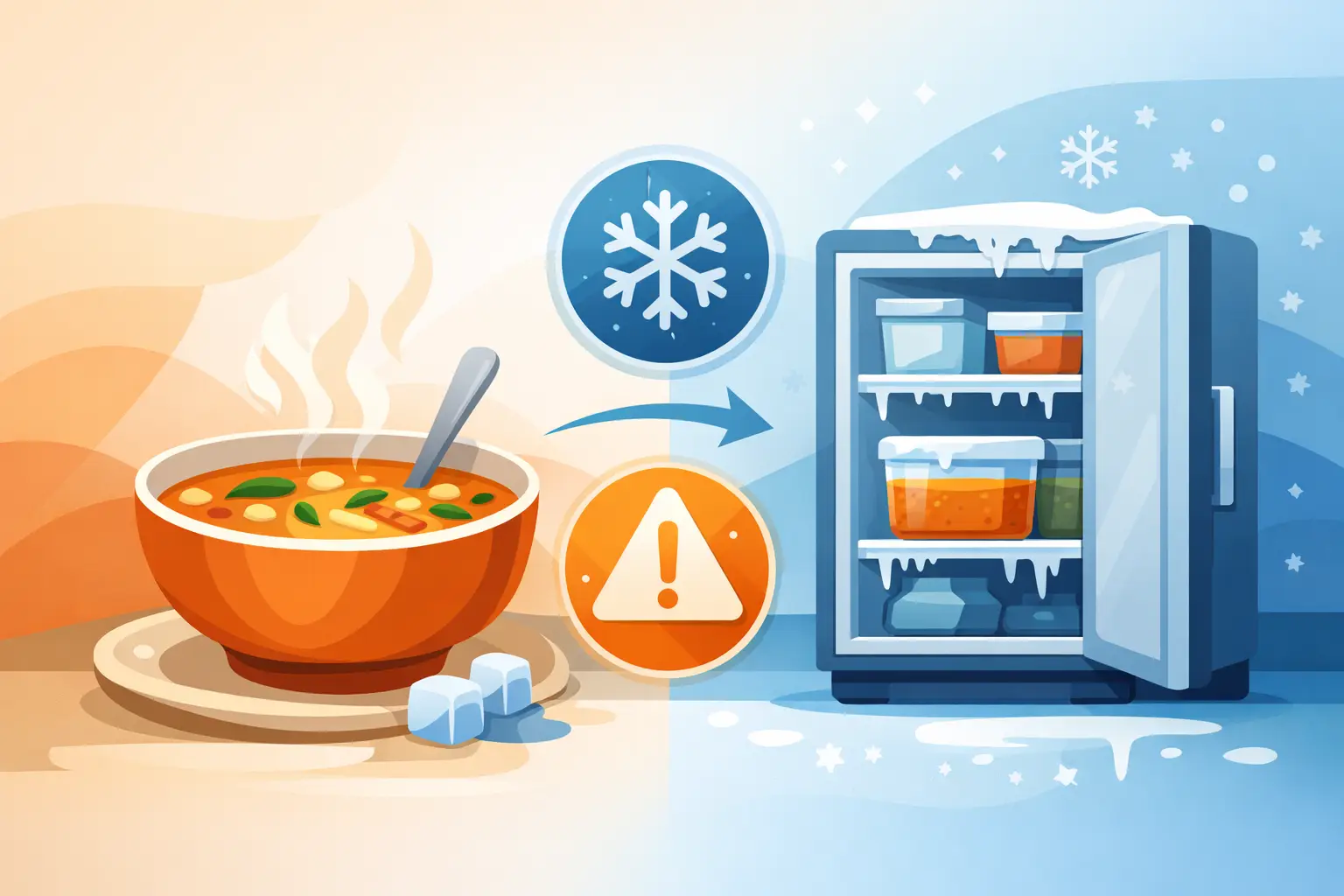
A container of soup can feel like a small win: dinner is handled, ingredients are used, and tomorrow’s lunch is waiting. But plans change. If it thawed and you will not eat it after all, can soup be refrozen safely? Often, yes - but only when it has stayed cold and been handled carefully.
The key is not how many times the soup has been frozen. It is how long it spent in the temperature range where bacteria can grow quickly. A simple check of how it was thawed, stored, and cooled will tell you whether to refreeze it, use it soon, or let it go.
Can soup be refrozen safely after thawing?
Soup can be refrozen if it was thawed in the refrigerator and kept at 40°F or below. That includes homemade soup, store-bought soup, broth-based soups, chili, and many stews. Transfer it back to the freezer promptly if you decide not to use it.
Refreezing may affect quality. Ice crystals can make potatoes softer, cream-based soups may separate, and vegetables can lose some bite. Those changes are frustrating, but they are not automatically a safety problem. A quick stir, blend, or gentle reheat can improve the texture when you serve it later.
The safest route is straightforward: thaw only the amount you expect to eat. Freeze soup in single-meal or two-person portions so a busy evening does not require thawing an entire large container. That small habit protects both food quality and your grocery budget.
The refrigerator rule
Refrigerator thawing keeps soup at a safe temperature while it defrosts. Once thawed, treat it like any other refrigerated leftover: use it within three to four days, or refreeze it before that window closes.
If the soup was in the fridge for two days after thawing and still looks and smells normal, it can generally go back into the freezer. Label the container with the new date so it does not become a mystery meal later.
If you thawed it in cold water or the microwave
Soup thawed in cold water or in the microwave needs a different plan. These methods can warm parts of the food enough for bacteria to grow, even if the center remains frozen.
Cook the soup before refreezing it. Bring it to a full, steaming reheat, then cool it quickly and freeze it in clean containers. Do not simply thaw it using one of these faster methods and place it directly back in the freezer.
When refreezing soup is not a safe choice
Do not refreeze soup that has been left at room temperature for more than two hours. If the room, car, picnic table, or kitchen is hotter than 90°F, that limit drops to one hour.
This includes the common “I’ll put it away after dinner” scenario. A large pot on the stove may stay warm in the middle much longer than it seems. Freezing does not kill every germ that may have multiplied while the soup sat out. It only pauses further growth.
When in doubt, discard soup if any of these situations apply:
- It sat out beyond the two-hour limit, or beyond one hour in hot conditions.
- You do not know how long it was unrefrigerated.
- It thawed on the counter overnight.
- It has an off smell, unusual bubbling, mold, or a slimy texture.
- It was in a refrigerator that was warm for an extended period and no longer feels properly cold.
Do not rely on a taste test. Harmful bacteria do not always change the smell, appearance, or flavor of soup. Losing a container of leftovers is disappointing, but food poisoning costs far more than another meal plan.
What about soup that partially thawed in a power outage?
A freezer door left ajar or a power outage creates a more nuanced situation. Soup can usually be refrozen or cooked if it still contains ice crystals or is 40°F or colder when you check it. A refrigerator thermometer is useful here, especially if outages are common where you live.
If the soup is fully thawed but has remained refrigerator-cold, use the same guideline as refrigerator-thawed soup: cook it within three to four days or refreeze it promptly. If it was above 40°F for more than two hours, discard it.
Avoid opening the freezer repeatedly during an outage. A full, unopened freezer can hold its temperature for about 48 hours, while a half-full one may hold it for about 24 hours. Grouping frozen containers together also helps them stay cold longer.
Cool soup correctly before freezing it again
The cooling step is where good intentions can go wrong. Putting a large, hot pot straight into the refrigerator can warm nearby foods and leaves the center of the pot cooling too slowly.
Instead, divide soup into shallow containers. Aim for a depth of about two inches or less, which helps heat escape faster. You can also set the pot in an ice-water bath and stir it occasionally before portioning. Once the soup has stopped steaming heavily, move it into the refrigerator.
You do not need to wait until soup reaches room temperature before refrigerating it. In fact, waiting too long creates the risk. Get it chilled within two hours of cooking, then freeze it once cold. Leave a little space at the top of each container because liquids expand as they freeze.
For a smoother routine, label each container with the soup name, portion size, and freeze date. “Chicken vegetable, 2 lunches, March 4” is much more useful than an unlabeled frosty tub three weeks from now.
How long will refrozen soup keep?
Frozen soup remains safe indefinitely when continuously kept at 0°F, but quality gradually declines. For the best flavor and texture, try to use refrozen soup within two to three months.
Broth-based soups, lentil soups, bean soups, and chili tend to refreeze well. Creamy soups can separate, while soups with pasta, rice, zucchini, or potatoes may become softer after another freeze-thaw cycle. If you know you will refreeze a batch, consider freezing the base separately and adding cooked pasta, rice, dairy, or fresh herbs when reheating.
This is not about chasing perfection. A slightly softer vegetable soup can still be a satisfying lunch, especially when it prevents good food from being forgotten in the back of the fridge.
A quick decision check before you refreeze
Ask yourself three questions. Was the soup thawed in the refrigerator or kept at 40°F or below? Has it been out for less than two hours? Is it still within its three-to-four-day refrigerated leftover window?
If the answer is yes, refreezing is a reasonable choice. If it was thawed with cold water or a microwave, reheat it first. If time or temperature is uncertain, choose safety over saving it.
Make the next batch easier to manage
Soup is one of the best low-waste meals because it can turn extra vegetables, beans, cooked grains, or leftover chicken into something useful. The trick is freezing with your real schedule in mind, not your best intentions on a Sunday afternoon.
Portion one batch for a quick dinner, another for lunch, and keep a smaller container for a flexible meal starter. A frozen tomato soup can become pasta sauce. A vegetable soup can support a grilled cheese night. A plain broth can turn odds and ends into a fast noodle bowl.
Good freezer habits give leftovers a second chance without adding stress. Keep soup cold, portion it well, label it clearly, and you will have more easy meals ready when life gets busy.