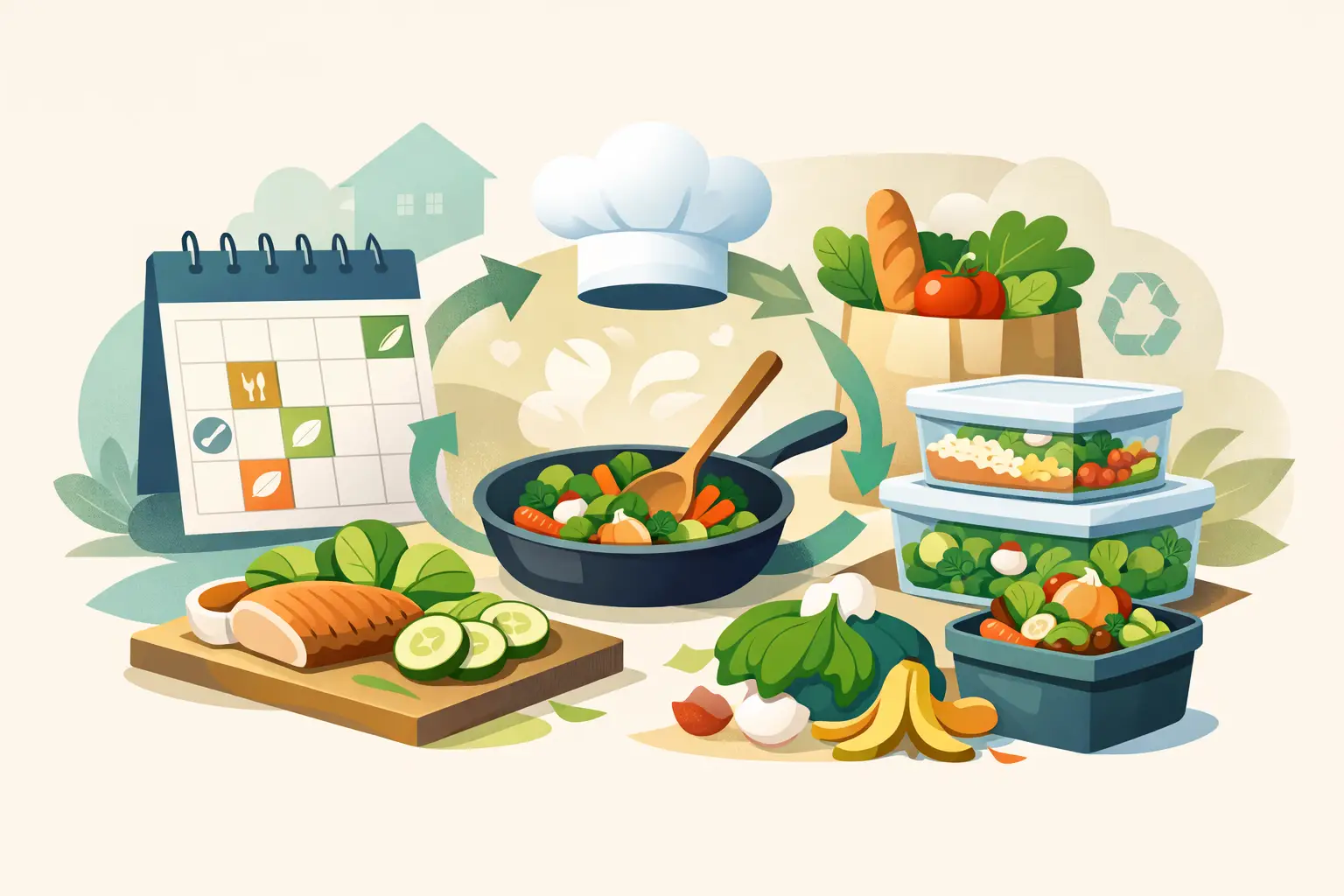
A dinner plan that falls apart on Wednesday is not a personal failure. It is usually a plan that assumed every night would go exactly as expected. Learning how to plan flexible dinners gives you room for late meetings, changing cravings, forgotten leftovers, and produce that needs attention now. You still get the calm that comes from planning, without feeling locked into seven rigid recipes.
Flexible dinner planning starts with a different goal. Instead of deciding every dish in advance, decide how you will use the food you already have and give yourself a few easy ways to adapt.
Stop Planning Seven Exact Recipes
A recipe-by-recipe plan can look organized, but it often creates waste. Maybe Tuesday's chicken recipe no longer sounds good. Maybe you ordered takeout one night, so the ingredients for Wednesday are still waiting. By the weekend, the spinach is wilted, the yogurt is past its best, and you have a fridge full of plans instead of food you want to eat.
Try planning for a set of dinner options rather than assigning a specific recipe to each day. Think in terms of five or six meals you could make during the week, with two of them designed to use ingredients that spoil quickly. Then choose based on your schedule and what needs using first.
This approach works especially well for households with unpredictable evenings. A 15-minute egg dinner can take the place of a planned pasta night. Leftovers can cover Thursday when everyone is tired. The plan still does its job because it gives you choices, not rules.
Start With a Quick Kitchen Check
Before making a grocery list, take five minutes to look through the refrigerator, freezer, and pantry. You are not doing a full inventory. You are looking for ingredients that should shape this week's dinners: produce that is starting to soften, open packages, leftovers, proteins to thaw, and staples that are running low.
Put the most urgent ingredients where you can see them. A bag of limp carrots might still be perfect for soup, fried rice, or a sheet-pan dinner. Half an onion, an open carton of broth, and leftover rice are not random extras. Together, they are a useful starting point.
It helps to sort what you find into three simple categories: use soon, use later, and keep on hand. Use-soon food includes delicate greens, berries, fresh herbs, cooked leftovers, and opened dairy. Use-later food includes sturdier vegetables, unopened proteins, and frozen items. Keep-on-hand foods are your flexible basics, such as eggs, canned beans, pasta, tortillas, rice, and a favorite sauce.
Quicine can help turn that quick ingredient check into meal ideas, so you spend less time searching for a recipe that uses one specific item and more time cooking what makes sense tonight.
How to Plan Flexible Dinners Around Ingredients
Build your week around ingredients, not a fixed calendar. Choose two priority ingredients that need to be used early, then match them with dinner formats that can change easily.
For example, if you have spinach and ground turkey, you might plan a turkey skillet, tacos, pasta, or grain bowls. You do not need to decide which one on Sunday. You only need enough supporting ingredients to make at least two of those options possible.
A practical weekly plan might include one fast dinner, two meals built around perishables, one leftover night, one freezer or pantry dinner, and one open night for takeout, social plans, or an easy repeat. That open night matters. It prevents a surprise schedule change from pushing every meal back and leaving food unused.
When you shop, buy ingredients with overlap. If tortillas appear in one meal, consider whether they can also become breakfast quesadillas, bean wraps, or crispy tortilla strips for soup. If you buy broccoli for a stir-fry, it can also work in pasta, omelets, or a grain bowl. Overlap gives each grocery purchase more than one job.
Build Dinners From Flexible Parts
The easiest flexible dinners have a simple structure: a base, a protein, vegetables, and a flavor builder. Change one or two parts, and you have a different meal without starting over.
A base might be rice, pasta, potatoes, bread, tortillas, or greens. Protein can be chicken, eggs, beans, tofu, lentils, fish, or leftovers. Vegetables can be fresh, frozen, roasted, raw, or whatever needs using. Flavor builders include salsa, pesto, soy sauce, jarred curry sauce, broth, cheese, herbs, or a spice blend.
This structure is more useful than keeping a long list of separate recipes. Cooked rice can become a bowl with roasted vegetables and beans, fried rice with an egg, or a quick side for soup. Roasted chicken can become sandwiches, tacos, a salad topper, or a pasta add-in. The food stays familiar, but dinner does not have to feel repetitive.
Choose components based on how much energy you expect to have. On a busy night, use a shortcut such as bagged salad, frozen vegetables, rotisserie chicken, or canned beans. On a quieter night, roast extra vegetables or cook a larger batch of grains for later. Cooking a little more when you have capacity makes the next decision easier.
Give Perishables an Earlier Place in the Week
Not all groceries have the same timeline. Tender greens, mushrooms, fresh fish, berries, and herbs generally deserve attention first. Potatoes, cabbage, carrots, onions, and many frozen foods can wait longer. Planning with that order in mind is one of the simplest ways to reduce waste.
You do not need to force yourself to eat every delicate ingredient immediately. Sometimes freezing is the better choice. Slice bread before it goes stale, freeze extra cooked meat in meal-sized portions, and blend herbs with oil or water into freezer cubes. If bananas are getting too ripe, peel and freeze them for smoothies or baking.
Be realistic about what will actually get cooked. Buying ingredients for five ambitious meals may feel productive, but a smaller shop paired with dependable pantry food often saves more money. Flexible planning is not about using every ingredient in a perfect sequence. It is about giving food a clear next use before it is forgotten.
Keep a Backup Dinner That Requires Almost Nothing
Every flexible plan needs a fallback meal. This is not a sad emergency dinner. It is a reliable option you genuinely enjoy and can make from shelf-stable, frozen, or long-lasting ingredients.
Pasta with beans and sauce, eggs on toast with vegetables, frozen dumplings with a quick salad, or soup and grilled cheese can all fill this role. Keep the ingredients replenished, and you will be less likely to order food simply because the original dinner plan no longer fits the night.
A backup also protects your more perishable ingredients. If you unexpectedly eat out, you can move tomorrow's fresh meal forward instead of trying to use it after its best days have passed. The backup waits patiently. Your spinach does not.
Make the Dinner Decision at the Right Time
The best time to choose dinner is often not when you make the grocery list. It is late morning or early afternoon, when you can check the fridge, consider your schedule, and thaw something if needed. This small habit avoids the 6 p.m. scramble and gives you time to use what is most urgent.
Ask three quick questions: What needs to be used first? How much time do I have? What sounds good? The answer may be a planned meal, a leftover remix, or a pantry dinner. All three count as a successful dinner.
Keep your plan somewhere visible, but leave it loose. A note with ingredients to use soon and a few dinner formats is enough. The point is not to follow a perfect schedule. It is to make the next useful choice feel obvious.
A flexible dinner plan gets better when it reflects your real week, not your ideal one. Start with the food you have, keep a few adaptable building blocks nearby, and let tonight's needs guide the final call. That is how dinner becomes easier, groceries go further, and less food gets left behind.