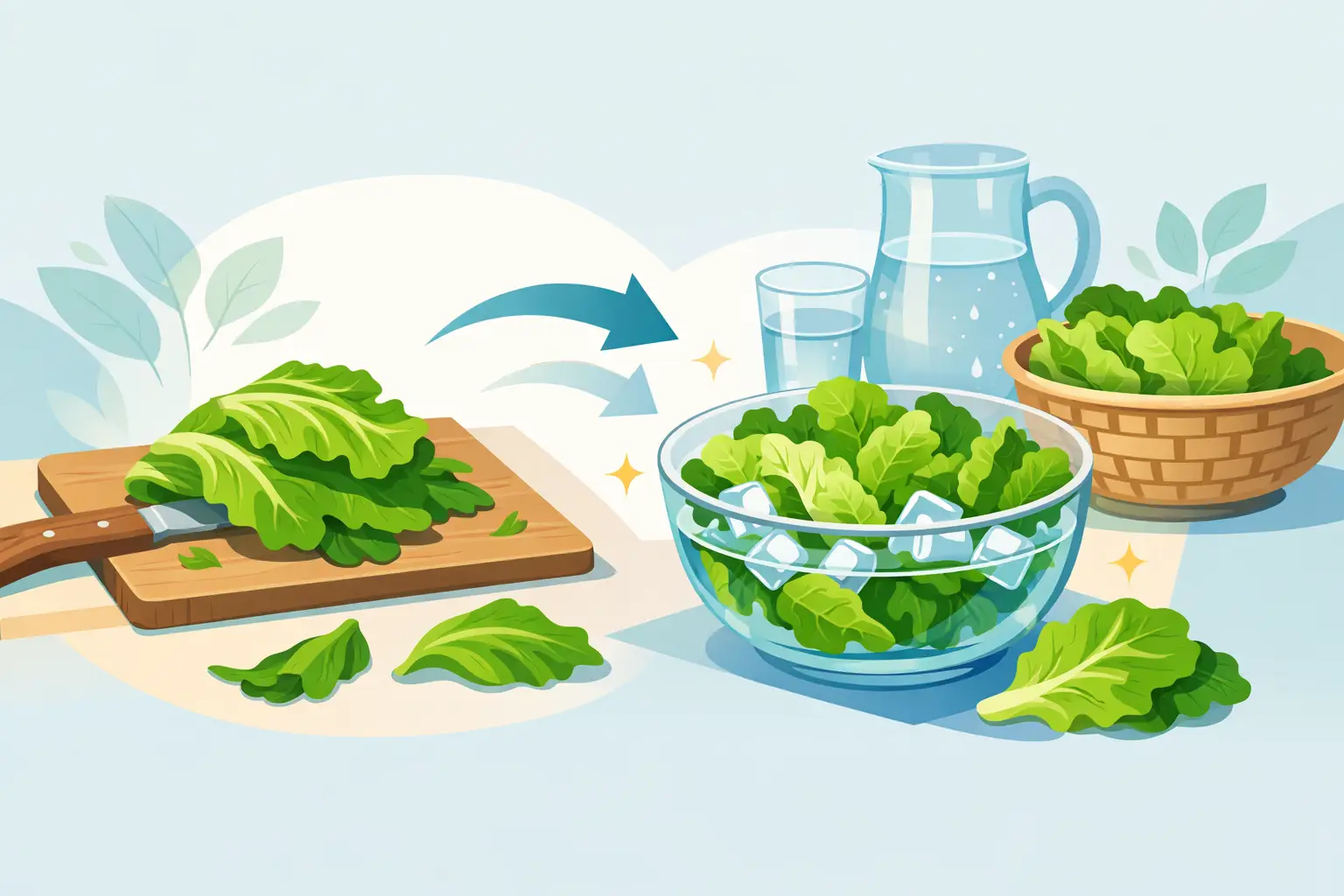
A bag of lettuce can go from crisp to disappointing in a day or two, especially after it has been opened. The good news: learning how to revive limp lettuce usually takes less than 20 minutes and does not require a special gadget. If the leaves are merely wilted, cold water can often bring back enough crunch for salads, sandwiches, tacos, and wraps.
The key is knowing the difference between lettuce that is thirsty and lettuce that is spoiled. Reviving the first helps you get more from groceries you already bought. The second belongs in the compost or trash.
Why lettuce goes limp
Lettuce is mostly water. Its crisp texture comes from water pressure inside its plant cells, called turgor pressure. Once leaves lose moisture through cut edges, dry refrigerator air, or simple age, that pressure drops. The leaves soften, curl, and look tired.
Cold water gives those cells a chance to absorb moisture again. It will not make every leaf look newly harvested, but it can make a noticeable difference when lettuce is still fresh enough to eat.
Some varieties bounce back better than others. Romaine, iceberg, butter lettuce, and sturdy leaf lettuces tend to respond well. Delicate spring mix and very thin baby greens can revive too, but they bruise more easily and may not become fully crisp again.
Before you start, inspect the lettuce. A few browned edges are usually fine to trim away. Skip the revival attempt if leaves are slimy, smell sour or unpleasant, have widespread dark decay, or feel mushy. Water can rehydrate lettuce, but it cannot reverse spoilage.
How to revive limp lettuce with ice water
For most loose leaves or chopped lettuce, an ice-water bath is the fastest method. Fill a large bowl or clean sink with very cold water, then add a handful of ice. Separate the leaves so the water can reach all surfaces, and submerge them completely.
Let the lettuce soak for 10 to 20 minutes. Very limp, sturdy leaves may need up to 30 minutes, but longer is not automatically better. Extended soaking can leave delicate greens waterlogged and more fragile.
Lift the leaves out rather than pouring the bowl through a colander. This leaves any grit at the bottom of the bowl. Rinse briefly with fresh cold water if needed, then dry the lettuce thoroughly in a salad spinner. If you do not have one, spread the leaves on a clean kitchen towel or paper towels, gently pat them dry, and let them air-dry for a few minutes.
Drying matters almost as much as soaking. Water clinging to the leaves speeds up deterioration in storage and can make dressing slide right off your salad. Crisp, dry leaves are the goal.
If you do not have ice
Cold tap water still works. Fill a bowl with the coldest water from your faucet and soak the leaves for 15 to 30 minutes. You can also place the bowl in the refrigerator while the lettuce soaks. The result may be slightly less dramatic than an ice bath, but it is often enough to rescue a weekday lunch.
For a whole head of lettuce
If a whole head of romaine, iceberg, or butter lettuce feels limp, trim a thin slice from the stem end first. Then place the head cut-side down in a bowl of cold water, keeping the leaves above water if the bowl is shallow. Refrigerate it for 30 to 60 minutes.
For iceberg or romaine, you can also wrap the head loosely in a damp paper towel and refrigerate it for an hour. This method is slower, but useful when you do not want to soak every leaf before deciding how much you will use.
Do not try to fix lettuce that has crossed the line
A wilted leaf can be a good candidate for revival. A slimy leaf is not. Use your senses before making dinner: look for a wet, slippery coating; smell for sourness or an off odor; and feel for soft, collapsing areas.
Brown or pink cut edges are different. They are often caused by oxidation, especially on bagged lettuce, and you can trim small affected spots if the rest of the leaf smells and feels normal. But if discoloration is spreading alongside slime or an odor, discard it.
Do not rely on an ice-water bath to make questionable produce safe. Cold water improves texture, not food safety. When in doubt, waste less by using food earlier next time, not by taking a risk with food that has spoiled.
Store revived lettuce so it stays crisp
Once lettuce has been rehydrated, use it within a day or two for the best texture. Store it dry in the refrigerator, ideally in a container or reusable produce bag lined with paper towels. The towels absorb excess moisture while keeping the environment humid enough to prevent rapid wilting.
For a head of lettuce, wrap it loosely in dry paper towels and place it in a bag or container. Do not pack it tightly. A little airflow helps prevent trapped moisture from turning into slime.
Keep lettuce in the crisper drawer, away from the coldest back wall of the refrigerator. Freezing temperatures can damage leaf cells, leaving lettuce translucent and soggy after it thaws. Also keep it separate from apples, bananas, pears, and avocados when possible. These fruits release ethylene gas, which can speed up aging in some produce.
If you buy bagged greens, check the bag every day or two. Remove any damaged leaves, replace damp paper towels if you have transferred the greens to a container, and use the most fragile varieties first. This small reset takes less time than realizing an entire bag has become unusable.
Make revived lettuce part of tonight's meal
Freshened lettuce does not need to become a perfect restaurant-style salad to earn its place on the table. If the outer leaves are still a little soft after soaking, use them where texture is less critical. Shred them into tacos, layer them into sandwiches, add them to grain bowls, or tuck them into wraps.
For leaves that are crisp again, keep the meal simple. Toss with a vinaigrette just before eating, make a chopped salad with beans and leftover chicken, or use large leaves as a base for tuna salad, egg salad, or a quick stir-fry bowl. Dressing too far ahead is one of the fastest ways to turn revived lettuce limp again.
If you have more lettuce than you can use raw, try cooking sturdier leaves. Romaine, escarole, and some leaf lettuces can be quickly sautéed with garlic and olive oil or added near the end of a soup. The texture changes, but that is a practical use for leaves that are safe to eat yet no longer crisp enough for a salad.
A limp bag of lettuce is not necessarily a lost cause. Check it, chill it, dry it well, and use it with a plan. Small habits like this make grocery purchases go further - and make the question of what to cook feel a little easier. Quicine is built around exactly that kind of everyday kitchen win: cook smarter, waste less.