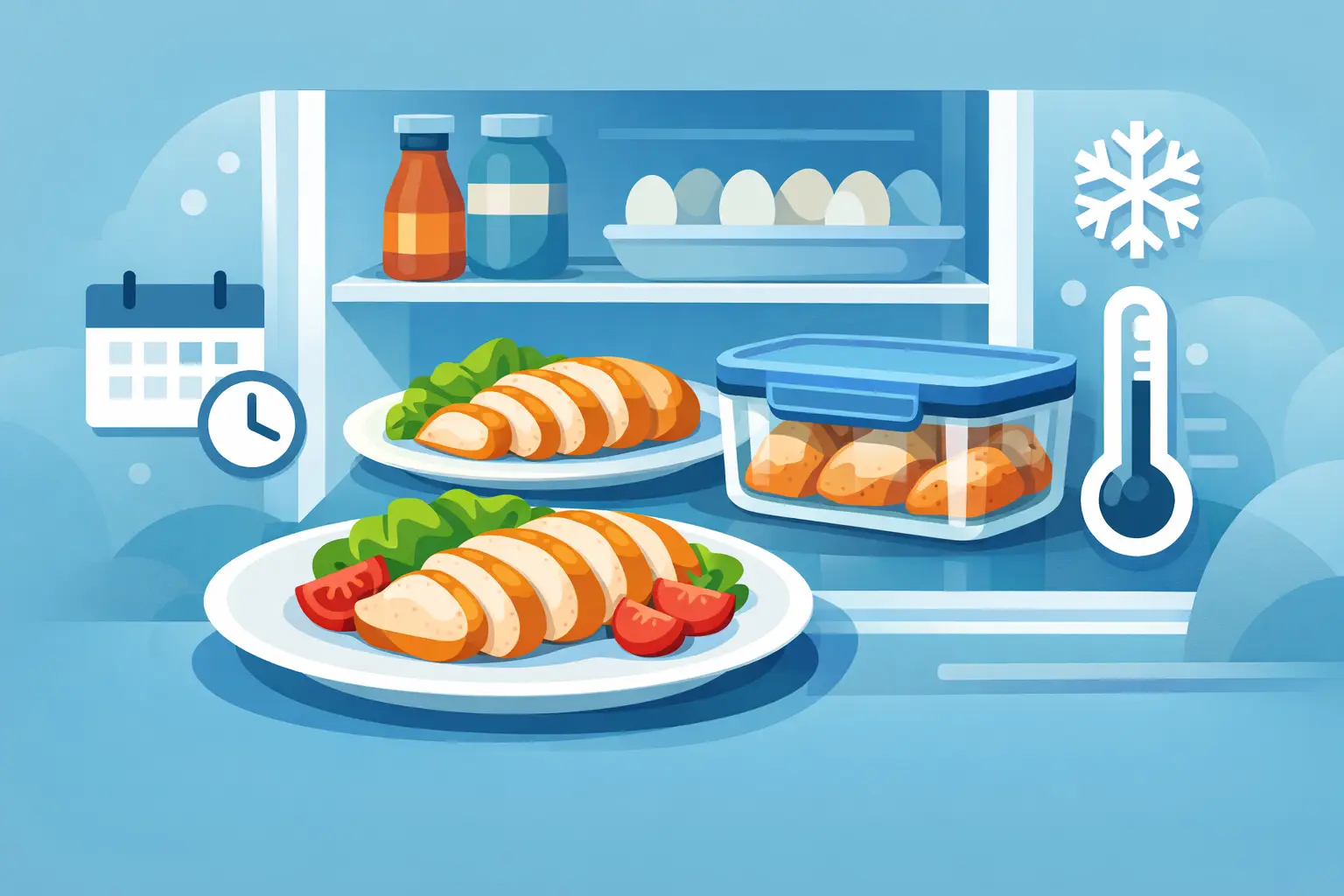
That container of roast chicken can be tomorrow’s easy lunch, a quick taco filling, or the start of a weeknight soup. But leftovers only stay useful when they are stored on time. How long cooked chicken lasts comes down to one thing: how quickly it gets cold and how consistently it stays cold.
For most home kitchens, the answer is simple: refrigerated cooked chicken is best used within three to four days. That includes homemade chicken breasts, grilled thighs, shredded chicken, rotisserie chicken, and cooked chicken mixed into a casserole or pasta dish. A quick label with the date can prevent both food-safety guesswork and the familiar mystery-container problem.
How long cooked chicken lasts in the refrigerator
Cooked chicken lasts three to four days in a refrigerator kept at 40°F or below. Count from the day it was cooked, not the day you remember finding it at the back of the fridge.
For example, chicken cooked on Sunday should be eaten by Wednesday or Thursday. If you bought a hot rotisserie chicken on Sunday, the same three-to-four-day window generally applies, assuming you refrigerated it promptly.
This guideline is not a challenge to see whether chicken can make it to day five. Harmful bacteria can grow without changing the food’s smell, color, or texture. When you are unsure how long it has been stored, the safer choice is to discard it rather than gamble on one more meal.
The clock moves faster when chicken sits out. Refrigerate cooked chicken within two hours of cooking or serving. If the room, patio, car, or picnic table is hotter than 90°F, that window shrinks to one hour. A big pan of chicken left on the counter to cool can spend too long in the temperature range where bacteria multiply quickly.
Store it right, and make those four days count
The goal is to cool chicken quickly, protect it from contamination, and make it easy to use before it is forgotten. Transfer leftovers from the roasting pan, slow cooker, or serving platter into shallow containers. Smaller portions cool more quickly than one deep, crowded container.
You do not need to leave food out until it reaches room temperature. Put it in the fridge while it is still warm, ideally in shallow containers with enough space around them for cold air to circulate. If you have a large amount, divide it into meal-size portions first. This also makes tomorrow’s lunch or dinner easier to grab.
Use airtight containers or resealable bags, and keep chicken on an interior refrigerator shelf rather than in the door. The door warms up every time it opens. If you store chicken with juices or sauce, use a leakproof container so those drips do not contaminate produce or ready-to-eat foods below.
A label does more than organize your fridge. Write the date cooked or purchased and, if helpful, a use-by day such as “Eat by Thursday.” That small step turns leftovers into an ingredient with a plan instead of a vague obligation.
A quick refrigerator check
Your refrigerator should stay at 40°F or below, with 37°F to 38°F offering a little extra buffer. The dial setting is not always an accurate temperature reading, especially in a crowded fridge. An inexpensive appliance thermometer gives you a clearer answer.
Avoid packing the refrigerator so tightly that air cannot move. A full fridge can be efficient, but an overloaded one may struggle to cool food evenly. If you are bringing home groceries, put away perishables first and move older cooked chicken toward the front where you will see it.
Can you tell if cooked chicken has gone bad?
Sometimes, yes. Chicken that has a sour or unpleasant odor, a slimy surface, visible mold, or unusual gray-green discoloration should be thrown away. Do not taste it to test whether it is safe.
But appearance and smell are backup clues, not a reliable expiration system. Chicken can look completely normal and still be unsafe after too many days in the fridge or too much time at room temperature. The date and temperature history matter more than a sniff test.
Be especially cautious with chicken that has traveled. Leftovers packed for work, a takeout box left in the car, or a cooler that was not kept cold may have spent longer than you realize outside safe temperatures. If cooked chicken was out for more than two hours, or more than one hour in hot weather, discard it. Reheating does not reliably fix food that has been mishandled.
Reheating leftovers without drying them out
When you are ready to use refrigerated chicken, reheat it to 165°F in the thickest part. A food thermometer is the most dependable way to check, particularly for larger pieces, casseroles, and dishes with sauce.
For shredded chicken, add a splash of broth, water, salsa, or sauce before heating it in a covered skillet or microwave-safe container. That added moisture helps prevent the dry, stringy texture that makes leftovers less appealing. Heat only the portion you plan to eat, rather than warming the entire container again and again.
If you use a microwave, stir or rearrange the chicken halfway through so cold spots do not linger. Let it stand briefly after heating, then check that it is steaming hot throughout. A cold center is a sign it needs more time.
Repeated cooling and reheating can reduce quality and create more opportunities for temperature mistakes. It is usually better to portion chicken before storing it, then reheat one serving at a time.
Freeze cooked chicken when you will not use it in time
If you do not have a realistic plan for cooked chicken within the next few days, freeze it early. Freezing on day one or two will preserve better flavor and texture than waiting until the last possible day.
Cooked chicken stays safe in a freezer held at 0°F, but quality is best when it is used within about two to six months. Freeze it in airtight bags or containers, press out excess air when using bags, and label each package with the date and portion size.
Flat bags of shredded chicken thaw quickly and take up little space. They are useful for soups, fried rice, quesadillas, grain bowls, and pasta. Larger pieces are better for meals where you want sliced chicken, such as salads or sandwiches.
Thaw frozen cooked chicken in the refrigerator, not on the counter. If you need it faster, use the microwave’s defrost setting and reheat it promptly. Chicken thawed in the refrigerator should be used within three to four days.
Turn leftovers into an easy next meal
The best way to reduce chicken waste is to decide its next job before you store it. If tonight’s chicken will become tomorrow’s grain bowl, shred or slice it while you are cleaning up. If it is headed for soup, freeze it with a note that says “soup chicken” instead of leaving yourself a mystery container.
Cooked chicken works best when it is treated as a flexible ingredient, not a repeat of the same dinner. Fold it into scrambled eggs, toss it with greens and a sharp dressing, add it to a baked potato, or simmer it briefly in a sauce. Pairing it with ingredients that need using soon, such as wilting spinach, half a bell pepper, or cooked rice, helps clear the fridge with less effort.
A dated container is a small kitchen habit with a practical payoff: you know what is safe, what needs using first, and what can become dinner before another grocery trip.