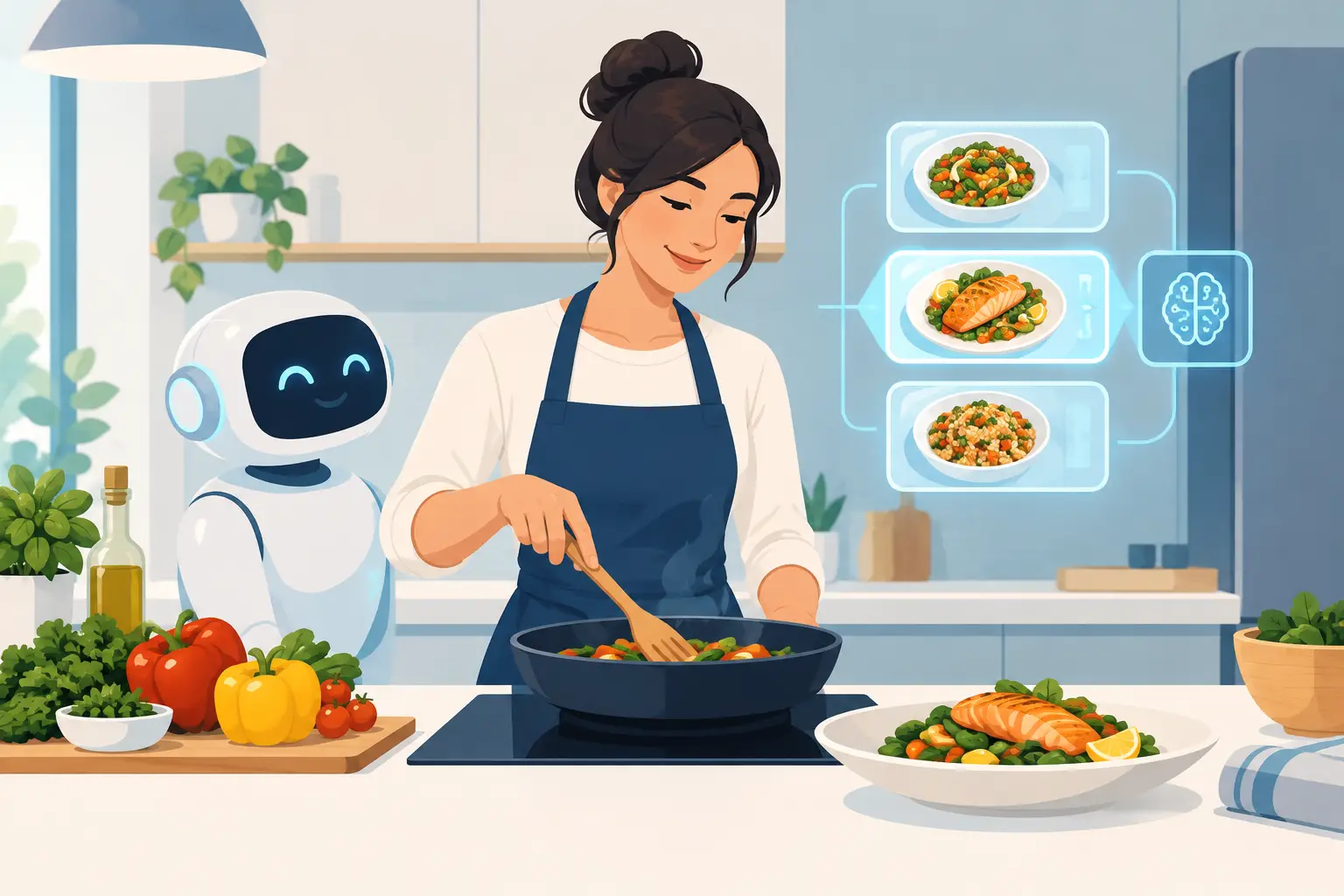
The most useful AI cooking trends are not about asking a robot to invent a restaurant-worthy meal. They are about the 6 p.m. problem: a bag of spinach is fading, chicken is in the fridge, and no one wants another expensive takeout order. For home cooks, AI earns its place when it turns those loose ingredients into a realistic plan.
That shift matters because cooking friction often starts before the stove is on. Deciding what to make, remembering what needs to be used first, and finding a recipe that does not require another grocery run can drain more energy than the actual cooking. The best new tools are designed to reduce that work.
AI Cooking Trends Moving Into Everyday Kitchens
Ingredient-first meal ideas
For years, recipe search began with a dish: tacos, pasta, sheet-pan chicken. AI is pushing cooking in the opposite direction. You start with what is already in your kitchen, then receive meal ideas built around it.
This is a better fit for real life. A search for “recipes with zucchini” can return hundreds of options, many of which call for ingredients you do not own. An ingredient-aware assistant can work with zucchini, eggs, rice, a partial jar of salsa, and whatever seasonings are available. It can suggest a skillet meal, a frittata, or a rice bowl instead of sending you to the store.
The value is not just novelty. Ingredient-first cooking makes it easier to use perishables before they spoil and get more meals from the groceries you have already paid for. Quicine is built around this simple idea: begin with your ingredients, not an idealized shopping list.
Smarter substitutions that preserve the point of a recipe
Good substitutions have always been part of home cooking. AI tools are getting better at explaining which swaps will work and why. That matters more than a generic instruction to “use whatever you have.”
A useful suggestion recognizes the job an ingredient performs. Greek yogurt can replace sour cream because both add tang and creaminess. Canned chickpeas can stand in for chicken in a grain bowl because they add protein and substance. But swapping baking soda for baking powder without changing the recipe can create a disappointing result.
The best AI cooking help gives a practical answer with a little context: what to swap, how much to use, and what will change. A sauce may become thinner, a roasted vegetable may take longer, or a dish may need extra salt after a low-sodium substitution. That guidance helps people cook with confidence rather than gamble with dinner.
Pantry and fridge tracking with less manual effort
Kitchen inventory has traditionally required more discipline than most households can spare. Writing down every grocery item sounds helpful until a busy week gets in the way. AI-assisted inventory tools aim to make that task lighter through receipt scanning, barcode input, photo recognition, and reminders based on what is likely to expire.
The promise is straightforward: your phone can help you notice the cilantro, berries, leftovers, and open carton of broth before they become waste. It can also help group ingredients into meals, so a few items nearing their peak become a stir-fry, soup, or snack plate rather than a collection of guilt-inducing leftovers.
There is a limit. Photo recognition can confuse similar produce, and expiration dates do not always tell the full story. Use reminders as a prompt to check the food, not as a replacement for your senses. If something smells off, feels slimy, or shows mold where it should not, it is safer to discard it.
The Most Helpful Trend Is Personalized Meal Planning
A recipe can be technically correct and still be wrong for a Tuesday night. AI is increasingly useful because it can account for constraints that traditional recipe sites treat as filters: time, budget, dietary needs, cooking skill, appliance access, and the ingredients on hand.
For example, a household may need a 20-minute dinner that uses ground turkey, half a bell pepper, and rice. Another may have the same ingredients but need a dairy-free option, lunch leftovers, and a meal a selective child will try. Personalization can adapt the format of the meal, not just the ingredient list.
This is where the technology becomes more than a recipe generator. It can reduce decision fatigue by narrowing options to a few practical choices. Too many meal ideas can be its own problem. A useful assistant should help you choose, not hand you an endless scroll of possibilities.
Plans that connect dinner to the rest of the week
The stronger version of meal planning does not treat each dinner as an isolated event. It considers how one meal can support the next.
Roast extra vegetables on Monday, then fold them into quesadillas or grain bowls on Wednesday. Cook a larger batch of rice for fried rice later in the week. Turn a rotisserie chicken into tacos, soup, and a quick salad. AI can spot those overlaps and suggest a sequence that uses ingredients fully without making every meal taste the same.
That approach reduces food waste without requiring a strict meal-prep routine. It also keeps grocery lists more focused. Instead of buying separate ingredients for five unrelated dinners, you can buy a smaller set of flexible foods that work across several meals.
Food Safety Is Where AI Needs a Reality Check
AI can offer useful cooking guidance, but it should not be treated as the final authority on food safety. A confident answer is not necessarily a correct one, especially when the question involves raw meat, storage time, reheating, allergies, or canning.
Use AI to help plan leftovers, but follow established safety habits. Refrigerate perishable foods promptly, keep raw meat separate from ready-to-eat foods, and reheat leftovers until they are hot throughout. When you are unsure whether a food has been stored safely, caution is the better choice.
The same care applies to dietary restrictions. An AI-generated recipe may overlook a hidden allergen in a sauce, seasoning blend, or packaged ingredient. Always read labels and make decisions based on the needs of the people eating the meal.
How to Use AI Without Making Cooking More Complicated
The most effective approach is to give an AI assistant clear, ordinary information. Start with ingredients that need attention first, then add your constraints. “I have spinach, eggs, tortillas, and cheddar. I need dinner in 25 minutes for two people.” That will usually produce a more useful result than “What should I make?”
Ask for options in the format you need. Request one-pan meals, ideas that create leftovers, recipes without an extra store trip, or ways to use a specific ingredient in two meals. If a suggestion sounds overly complicated, ask for fewer steps or a version using only pantry staples.
It also helps to keep your own judgment in the process. You know whether your family dislikes mushrooms, whether the pan is too small, and whether the produce has another day left. AI can organize possibilities, but it cannot see your kitchen or taste the sauce. Think of it as a helpful second brain, not a replacement for basic cooking instincts.
What Comes Next for AI Cooking Trends
The next wave will likely feel less like a flashy gadget and more like a quiet kitchen habit. Better tools will connect ingredients, meal plans, grocery lists, leftover ideas, and simple food-storage guidance in one place. The goal is not to make every meal optimized. It is to make everyday cooking easier to start.
That is especially useful for households trying to spend less and waste less. A practical suggestion at the right moment can save a carton of mushrooms, turn odds and ends into lunch, or prevent an unnecessary grocery run. Those small decisions add up over a month.
Tonight, open the fridge before opening a delivery app. Start with the ingredient that needs to be used first, choose the simplest meal that fits your time, and let technology help with the blank space between “what do we have?” and “dinner is ready.”