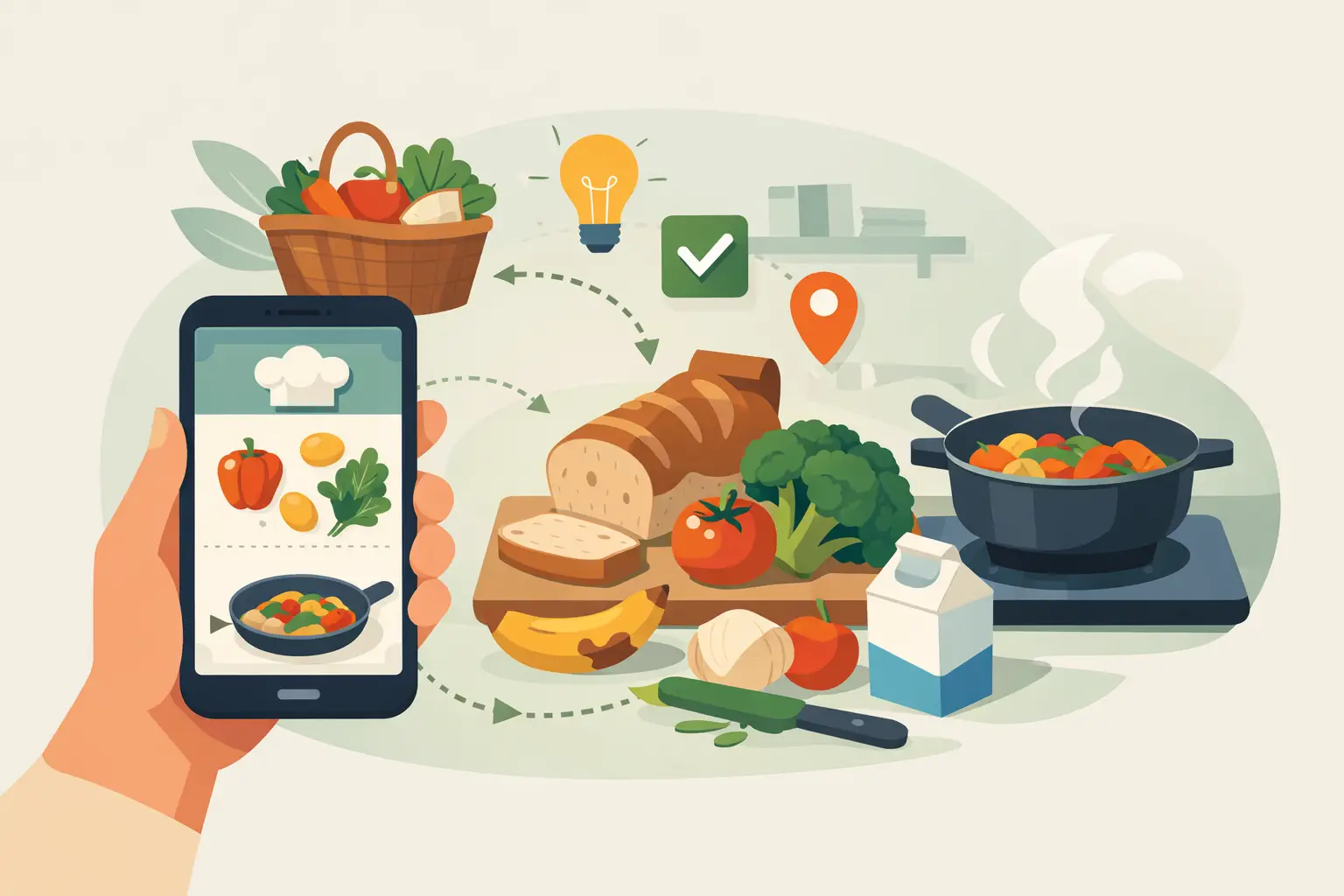
That bag of spinach looked like a good idea on Sunday. By Thursday, it is hiding behind a carton of eggs, and dinner still needs an answer. Food waste apps are built for this exact gap between buying groceries and actually using them.
The best ones do more than tell you that waste is bad. They reduce the small decisions that cause food to be forgotten: what to cook first, how to use three leftover ingredients together, whether a vegetable is still usable, and what not to buy on the next grocery run.
For most home cooks, the goal is not a perfectly tracked refrigerator or a dramatic lifestyle reset. It is making one more useful meal from the food already in the kitchen.
What food waste apps actually solve
Food waste at home rarely comes from one big mistake. More often, it is the result of ordinary friction. You buy ingredients for a plan that changes. You cook less than expected. A new package gets placed in front of an older one. Then the food is forgotten until it is too late.
Apps can help at different points in that cycle. Some focus on surplus food from restaurants, bakeries, and stores. Others help households manage their own groceries, recipes, leftovers, and expiration dates. Both can reduce waste, but they solve different problems.
A surplus-food marketplace can be useful when you want lower-cost prepared food or discounted groceries nearby. It may help prevent commercial food from being discarded, but it will not necessarily answer tonight's question: what can I make with the zucchini, rice, and rotisserie chicken in my fridge?
An ingredient-first kitchen app addresses that question directly. You add what you have, then get meal ideas designed around those ingredients. This approach is especially practical for produce, partial packages, and leftovers, because it turns a vague intention to “use it up” into a specific dish.
Inventory and expiration trackers take another route. They help you record what came home, monitor use-by dates, and organize your refrigerator or pantry. That visibility can be valuable, especially for larger households. The trade-off is effort: if logging every item takes too long, the system often stops being useful after the first busy week.
The features that make food waste apps useful
The right app is the one you will keep opening when dinner is 30 minutes away. That sounds obvious, but it changes what matters most.
Ingredient-based meal ideas
A useful app should begin with your available food, not a recipe that requires a separate shopping trip. Look for the ability to enter a few ingredients and get flexible meal options. Good suggestions make room for substitutions, because real kitchens rarely contain every item a recipe requests.
For example, a meal idea that uses tomatoes, beans, and greens should still be workable if you have kale instead of spinach or canned chickpeas instead of white beans. Flexibility keeps an app from becoming another source of decision fatigue.
Quicine is designed around this ingredient-first approach, helping home cooks turn what is already on hand into practical meal ideas rather than starting with an idealized grocery list.
Prioritization for perishables
Not every ingredient needs the same attention. Dry pasta can wait. Tender herbs, berries, salad greens, seafood, and cooked leftovers usually cannot. The most helpful tools make it easy to identify what should be used first.
This does not always require a detailed expiration dashboard. A simple “use soon” view, a prompt to feature ripe produce, or recipe suggestions that prioritize perishables can be enough. The point is to direct attention where it has the most impact.
Leftover-friendly planning
A recipe solves one meal. A good food-management habit solves several. Look for ideas that use leftover ingredients across the week without forcing you to eat the same dinner repeatedly.
Roasted vegetables can become tacos one night, a grain bowl the next, and a blended soup later in the week. Cooked chicken can move from a sheet-pan dinner to wraps or fried rice. Apps that suggest these kinds of transitions help food feel intentional instead of repetitive.
Practical kitchen guidance
Food waste is also a confidence problem. Many people throw away food because they are unsure whether it is safe, how to store it, or what to do with it once it looks less than perfect.
Clear storage tips and accessible food-science guidance can help. Wilted herbs may revive in cold water. Soft tomatoes can still be excellent in sauce. Brown bananas are often better for baking than bright yellow ones. But an app should also be careful not to treat safety labels as optional. When food has an off smell, mold beyond a small removable spot on firm produce, or signs of spoilage, caution is the smarter choice.
How to choose food waste apps for your routine
Start with the problem you actually have, not the longest feature list. If you frequently forget what is in the refrigerator, an inventory tool or a visible use-soon list may help. If you know what you have but cannot think of dinner ideas, prioritize ingredient-based recipe support. If rising food costs are your main concern, a nearby surplus marketplace may be a useful addition.
For many households, the strongest setup combines two habits: plan meals around perishables first, then use a short grocery list to fill only the gaps. An app can support that process, but it should not turn cooking into paperwork.
Before committing, test whether the app handles your real kitchen. Add a few imperfect, ordinary ingredients: half an onion, yogurt nearing its date, frozen peas, tortillas, and a leftover protein. If the suggestions are realistic and appealing, you are more likely to use it consistently.
Also consider how much input the app requires. Barcode scanning, receipt imports, and full inventory systems can be helpful, but only if they fit your routine. A busy parent may prefer quick meal ideas over precise tracking. A person living alone may get more value from portion planning and leftover reminders. There is no single best workflow.
A simple way to get results from food waste apps
The app matters less than the rhythm you build around it. Try a five-minute kitchen check before shopping and again midway through the week. First, identify two or three ingredients that need attention. Next, choose meals that use them. Then buy only what supports those meals.
Keep the plan modest. If you buy spinach, mushrooms, and fresh herbs for five different recipes, you create five chances for food to be stranded. Instead, choose ingredients that can overlap across meals. A bunch of cilantro can work in grain bowls, tacos, and a quick sauce. Bell peppers can go into eggs, stir-fries, and fajitas.
When you cook, make leftovers visible. Store them in clear containers when possible, label them with the date, and place them where they will be seen. Then use your app for a next-step idea rather than treating leftovers as a separate problem. Rice from Tuesday can become a skillet meal on Wednesday. Extra roasted squash can become pasta sauce or soup.
Freezing is another useful pressure valve, not a failure. If plans change, freeze bread, cooked beans, ripe fruit, herbs blended with oil, or extra portions before they decline. A food waste app can help you decide what to use now, but a well-stocked freezer gives you more time to make that decision.
Food waste reduction should feel useful, not strict
The most effective food waste apps do not ask you to become a different kind of person. They support the way real households cook: with changing schedules, partial ingredients, imperfect produce, and limited energy at the end of the day.
You will still occasionally lose a bag of lettuce or forget a container at the back of the fridge. The goal is progress that pays you back in easier meals, fewer repeat grocery trips, and more value from what you buy.
Tonight, start small: open the fridge, pick the ingredient most likely to be wasted, and let it choose dinner. That is how a smarter kitchen habit begins.