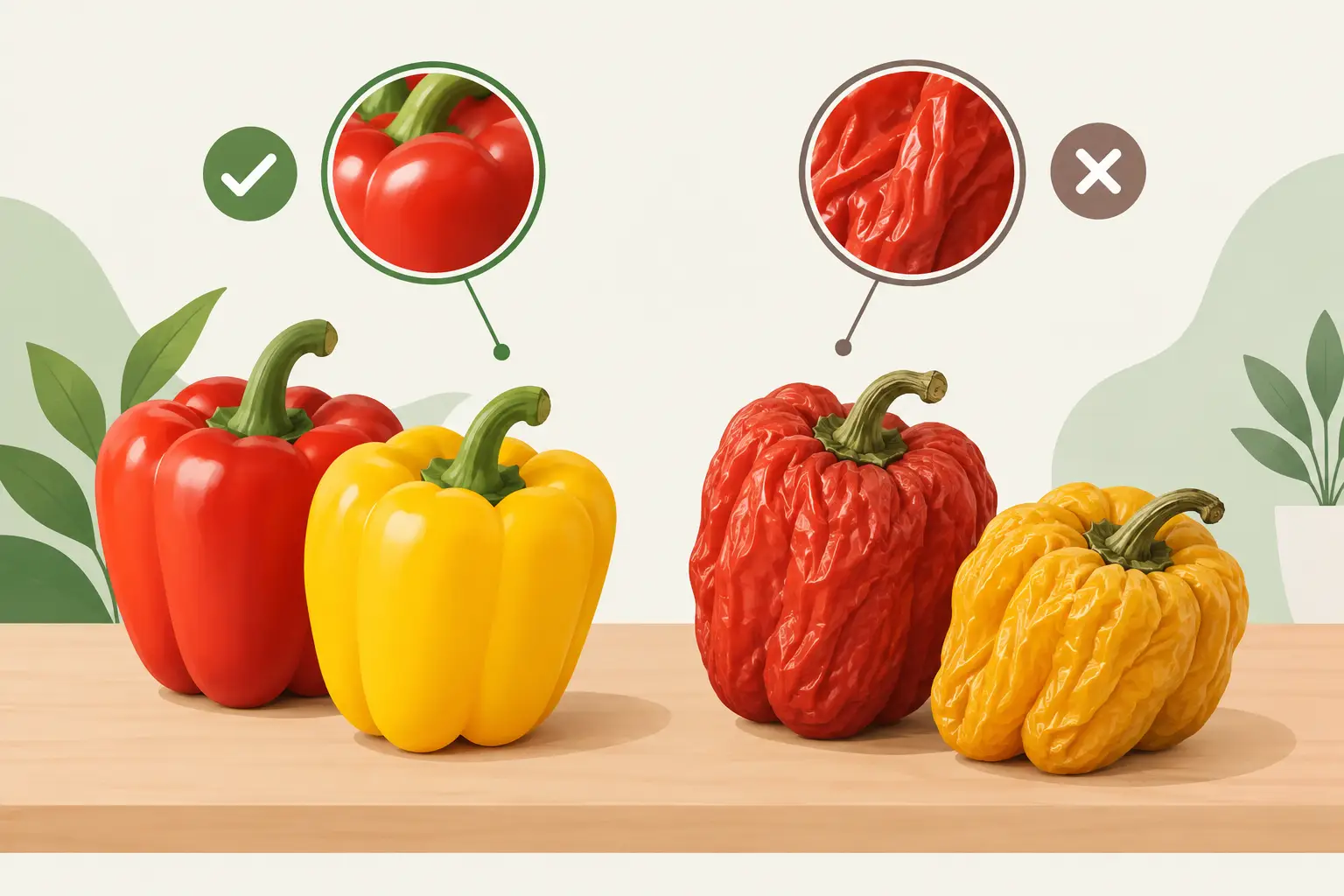
A bell pepper can go from crisp to wrinkly faster than you expect, especially after a busy week. So, are wrinkled peppers still good? Usually, yes - if the wrinkles are the only issue. A pepper that has lost some water is often still safe and useful, even if it is no longer ideal for a crunchy snack.
The key is separating dehydration from spoilage. Wrinkles tell you the pepper is drying out. Mold, slime, a bad smell, or severe decay tell you it is time to let it go. That quick distinction can save a perfectly usable ingredient from the trash.
Why peppers get wrinkled
Peppers are mostly water. After harvest, they slowly lose moisture through their skin, particularly when they sit in a dry refrigerator drawer or are kept too long on the counter. As their cells lose water, the pepper becomes less firm and its skin puckers.
This is a quality change, not automatically a food-safety problem. A slightly wrinkled red, yellow, orange, green, poblano, jalapeño, or mini sweet pepper may still taste good. It will just be less crisp, a little softer, and sometimes slightly sweeter as its flavors become more concentrated.
How quickly this happens depends on the pepper's age, the refrigerator humidity, whether it was cut, and how it was stored. Thin-skinned peppers and cut peppers tend to show their age faster than a whole, thick bell pepper.
Are wrinkled peppers still good to eat?
A wrinkled pepper is generally fine to eat when it is dry to the touch, smells fresh, and has no mold or slimy areas. If it is only mildly soft, you can use it raw in a pinch, but cooking is usually the better move. Heat-based dishes do not rely on a pepper's crisp texture, so a softened pepper can still work beautifully.
Before using it, give it a quick check. The skin may look puckered, but the flesh should not feel slippery. A pepper can have a small dent or a dry brown patch from handling and still be usable. Cut away that dry, damaged area if the rest of the pepper is firm and fresh-smelling.
Once you slice it open, look inside as well. The seeds and inner ribs should look normal, without fuzzy growth, unusual discoloration, or a fermented odor. If the interior is clean, the pepper is likely ready for the pan.
Signs the pepper is past its prime
Toss the pepper if you notice mold, a slimy coating, leaking liquid, a sour or rotten smell, or widespread mushy spots. These are signs of microbial spoilage, not just water loss.
Be extra cautious with mold. Although peppers are firmer than many fruits and vegetables, mold can extend below the surface and may be hard to see. If a pepper is visibly moldy, especially if it is also soft or wet, discard the whole pepper rather than trimming around it. Do not rely on cooking to make a spoiled pepper safe.
A severely shriveled pepper that feels hollow, papery, or very soft is not always unsafe, but it may have little flavor and a poor texture. At that point, inspect it carefully and decide whether it is still worth using. Sometimes the best waste-reducing choice is using it immediately in a cooked dish. Other times, it has genuinely reached the end of its useful life.
The best ways to use soft, wrinkled peppers
Wrinkled peppers are most valuable in recipes where they will be sautéed, roasted, blended, or simmered. Their softened texture disappears once cooked, while their flavor still adds sweetness, color, and depth.
Slice them into a stir-fry with onions and whatever protein or beans you have. Add them to scrambled eggs, breakfast tacos, quesadillas, pasta sauce, chili, soup, curry, or fried rice. Roast them with other vegetables, then blend them into a soup, dip, or sauce. A wrinkled bell pepper is also a practical addition to pizza, grain bowls, or sheet-pan dinners.
If the pepper is only slightly wrinkled and you want it for a salad or snack plate, trim the stem end and soak it in ice water for 10 to 15 minutes. It may regain some firmness because the cells absorb water. This can improve texture, but it does not reverse spoilage. Only try it with a pepper that already looks and smells fresh.
For hot peppers, wrinkles are especially common and can be misleading. A wrinkled jalapeño or serrano may simply be drying out, and its heat can remain strong. Use gloves when handling very hot varieties, and avoid touching your eyes after cutting them.
How to store peppers so they last longer
Whole peppers keep best in the refrigerator's crisper drawer, where humidity is higher than on an open shelf. Store them unwashed and dry. Extra moisture on the surface can encourage decay, so wash them right before you use them.
A loose produce bag or reusable container with airflow can help protect peppers without trapping excess condensation. Avoid packing them tightly against wet produce. If you see moisture collecting in the container or bag, dry the peppers and add a clean paper towel to absorb it.
Once a pepper is cut, refrigerate the pieces in an airtight container and use them soon. Cut produce has more exposed surface area, so it loses moisture and can spoil faster. If you know you will not use your peppers in time, slice and freeze them. Frozen peppers will be soft after thawing, but they are excellent for cooked meals.
Buy and plan with texture in mind
When you bring peppers home, use the softest ones first and save the firmest for later in the week. This small habit keeps good produce from becoming a fridge surprise. It also helps to think beyond one specific recipe. If Tuesday's planned fajitas do not happen, those peppers can still become eggs, pasta, or a quick skillet meal.
You do not need to wait for vegetables to look perfect before cooking them. In fact, using a pepper at the first sign of wrinkling is often the sweet spot: it is still flavorful, but it has become the ingredient that needs your attention next. Quicine can help turn that pepper, plus the odds and ends around it, into a meal before it becomes waste.
A wrinkled pepper is not a kitchen failure. It is a useful nudge to cook what you already have - tonight, while it can still add something good to the plate.