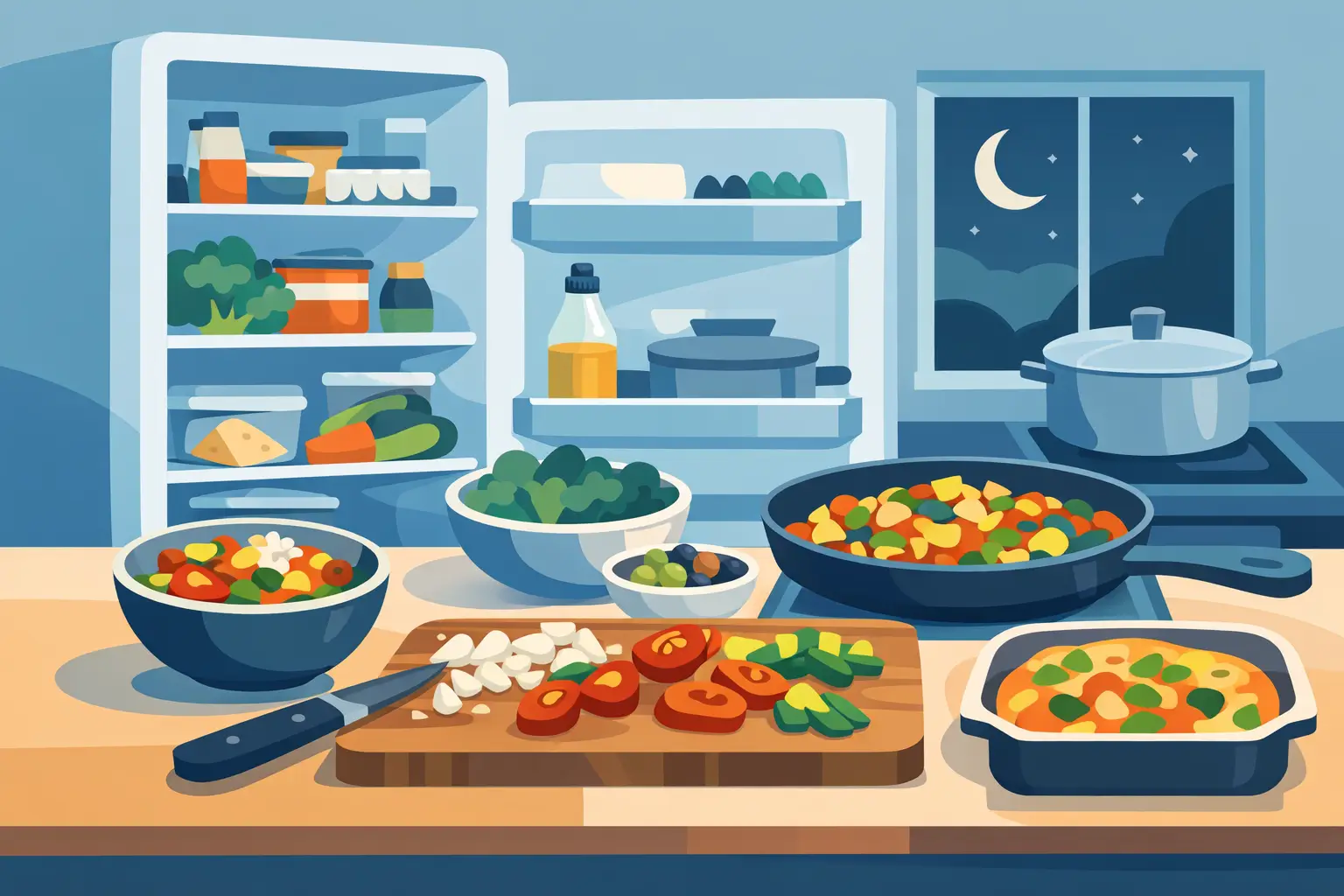
A bag of spinach beginning to wilt, half an onion, cooked rice from Tuesday, and a carton of eggs can look like a collection of loose ends. They are also the start of good fridge cleanout meals. The goal is not to force every last ingredient into one strange dish. It is to make a satisfying meal from the foods that need attention first.
This approach saves time, grocery money, and the mental effort of starting dinner from zero. It also makes food waste prevention feel practical rather than perfect. You do not need a fully stocked kitchen or a detailed recipe. You need a quick way to assess what you have and choose a format that can flex.
Start with a quick fridge priority check
Before choosing a meal, take two minutes to sort ingredients by urgency. Use the items most likely to spoil first, then build around ingredients that add substance and flavor.
Fresh herbs, tender greens, berries, mushrooms, cooked leftovers, opened dairy, and raw meat or fish with a near sell-by date usually belong at the top of the list. Firm vegetables, unopened yogurt, hard cheese, and condiments can wait longer. Pantry staples such as pasta, beans, canned tomatoes, tortillas, and grains are your support system. They turn a small amount of fresh food into dinner.
Appearance is only part of the decision. A few limp spinach leaves can still work beautifully in a soup, scramble, or pasta sauce. On the other hand, moldy food, a sour or unpleasant odor, or a slimy texture that is not normal for that item are reasons to throw it out. When in doubt about a highly perishable food, especially meat, seafood, or cooked leftovers, choose safety over saving it.
It helps to work from a simple order: use delicate produce and leftovers first, then opened items, then stable ingredients. This keeps you from using a fresh package of vegetables while older ones quietly disappear behind the milk.
Choose a flexible meal format, not a strict recipe
The easiest fridge cleanout meals rely on familiar formats. They give varied ingredients somewhere useful to go, without requiring exact amounts. Pick one based on what needs using and how much time you have.
The skillet meal
A skillet is ideal for small amounts of vegetables, cooked protein, and grains. Start with onion, garlic, or any aromatic you have. Add firmer vegetables first, then quick-cooking greens near the end. Stir in leftover rice, potatoes, pasta, beans, chicken, tofu, or sausage. Finish with an egg, shredded cheese, a squeeze of lemon, hot sauce, or a sauce from the fridge.
Fried rice is a reliable example, but the same method works with almost any cooked grain. If your rice is dry, that is actually helpful: it browns better in the pan. If you do not have rice, use couscous, quinoa, chopped potatoes, or even torn tortillas.
The egg-based dinner
Eggs are one of the most useful cleanout ingredients because they bring protein and hold everything together. A frittata, omelet, scramble, or breakfast-for-dinner taco can absorb leftover vegetables, herbs, cheese, and cooked meat.
For a frittata, cook your vegetables first so they release excess water. Add beaten eggs and a pinch of salt, then cook gently until mostly set. Cheese is optional, not required. A small spoonful of ricotta, cottage cheese, or plain yogurt can add tenderness if you have an open container to use.
This format is especially good when you have several small vegetable portions that would not be enough for a side dish on their own.
Soup, stew, or quick broth bowl
Soup makes use of vegetables that are no longer crisp but are still safe to eat. Sauté aromatics, add vegetables, then pour in broth, water with bouillon, canned tomatoes, or coconut milk. Add beans, lentils, leftover chicken, noodles, rice, or frozen vegetables to make it more filling.
A broth bowl is even faster. Heat broth with ginger, garlic, soy sauce, or miso if available. Add greens, mushrooms, leftover protein, and noodles. It is a good choice when you have only one or two servings of odds and ends and want minimal cleanup.
Pasta, noodles, or grain bowls
Pasta and noodles are useful when you have a sauce-adjacent ingredient: tomatoes, pesto, cream, broth, olive oil, butter, or even a little hummus thinned with pasta water. Toss in roasted vegetables, greens, beans, or leftover meat.
Grain bowls work better when ingredients are already cooked or can be eaten raw. Combine rice or another grain with roasted vegetables, chopped greens, beans, avocado, eggs, or leftover protein. A simple dressing of oil, acid, salt, and something savory can make mismatched components taste intentional. Try olive oil and lemon, yogurt and hot sauce, or soy sauce and sesame oil.
Tacos, quesadillas, and open-faced melts
Tortillas, bread, and cheese solve many small-portion problems. Fill tacos with beans, cooked vegetables, eggs, shredded meat, or leftover roasted potatoes. Make a quesadilla with cheese plus any dry cooked filling. Use bread for a toast topped with mashed beans, sautéed greens, eggs, or tomatoes.
The trade-off is moisture. Wet vegetables can make tortillas and bread soggy, so cook them down first or serve them alongside. A little crispness from toasted bread or a hot skillet can make leftovers feel much more like a planned meal.
Build flavor with a few smart anchors
A cleanout meal can become flat when every ingredient is mild. Rather than adding more groceries, look for one or two flavor anchors already in your kitchen.
Acid brightens rich or starchy dishes. Lemon juice, vinegar, pickle brine, or tomatoes can do the job. Salt and savory depth can come from soy sauce, Parmesan, olives, capers, miso, bouillon, salsa, or a spoonful of mustard. Heat might come from chili flakes, hot sauce, fresh peppers, or curry paste. Fresh herbs and scallions are useful, but not essential.
Use a light hand at first. Leftover foods may already be seasoned, and salty ingredients such as cheese, deli meat, soy sauce, and broth can add up quickly. Taste after combining everything, then adjust. This is one reason ingredient-first cooking builds confidence: you learn what the food needs rather than following a fixed instruction blindly.
Keep portions realistic
Not every leftover needs to become a main dish. A half cup of roasted carrots may be better folded into a grain bowl than stretched into a whole soup. One small piece of chicken can become a topping for noodles, tacos, or salad rather than the center of the plate.
You can also separate ingredients that do not belong together. Use fading berries in breakfast, vegetables in dinner, and a small amount of cheese in tomorrow's lunch. A fridge cleanout is not a test of creativity. It is a way to make better decisions before food crosses the line from usable to wasted.
If you are feeding more people, add a low-cost foundation such as beans, eggs, pasta, potatoes, rice, or bread. If you are cooking for one, avoid making a giant batch just because you found several ingredients. The most sustainable meal is one you will actually finish or safely store for later.
Make future cleanouts easier
A little organization reduces the need for emergency cooking. Keep a visible “use first” spot in the fridge for opened containers, ripe produce, and leftovers. Store herbs upright in a small glass with water when appropriate, and move aging fruit or vegetables to the front before your next grocery trip.
A weekly check works well for many households. Choose one evening to make a flexible meal before shopping again. You will buy with a clearer view of what is already available, and your grocery list will reflect real gaps instead of duplicate ingredients.
When dinner feels undecided, start with what is closest to spoiling, choose a flexible format, and let your pantry fill in the rest. That small habit can turn a crowded fridge into tonight's answer.