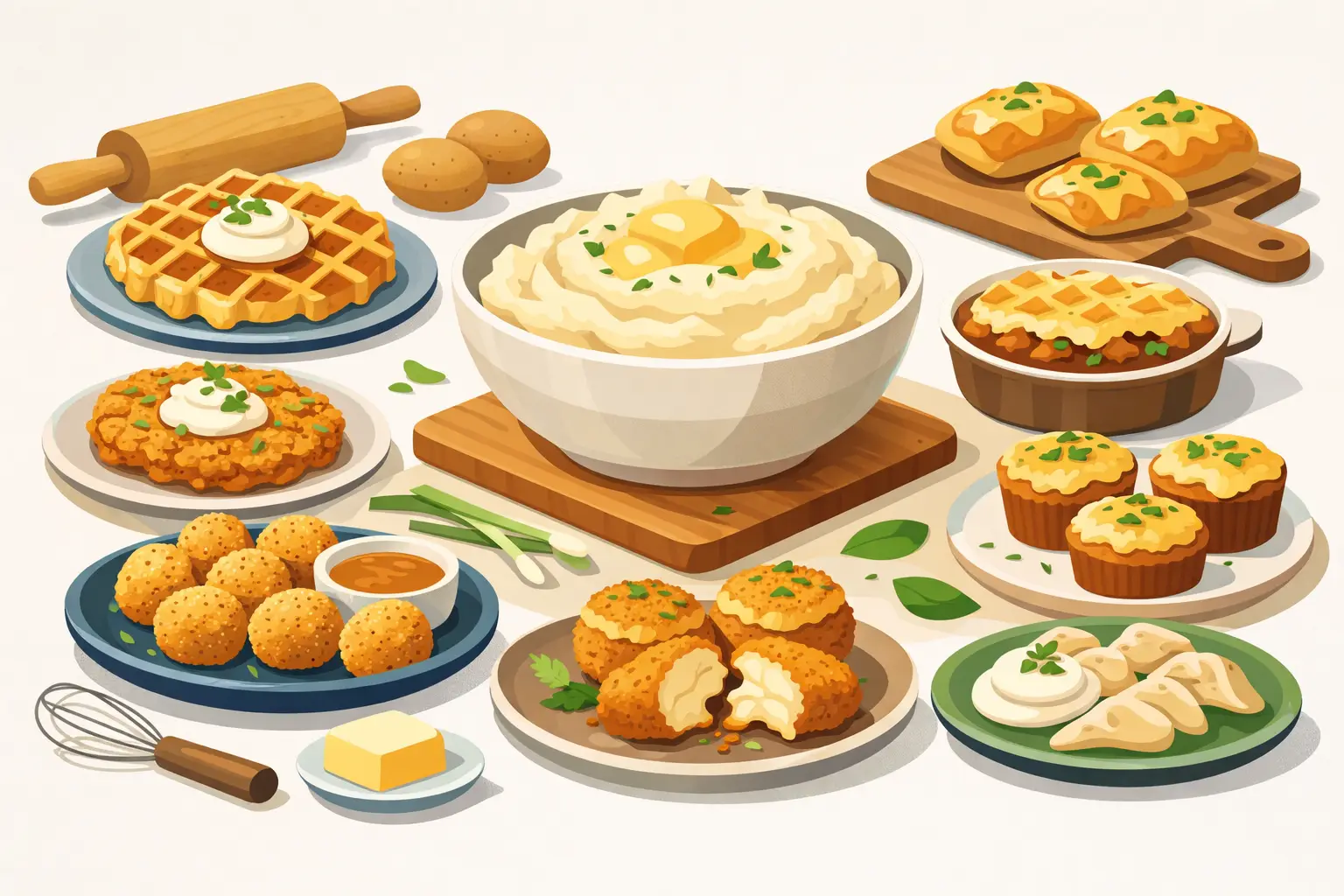
A container of cold mash can look like a repeat dinner waiting to happen. But the best uses for leftover mashed potatoes turn that familiar side into a crispy breakfast, a quick lunch, or the base of a new dinner. Their starch helps bind ingredients, their soft texture makes doughs tender, and a little heat gives them an entirely different personality.
Before you cook, check the basics. Refrigerate mashed potatoes within two hours of serving and use them within three to four days. If they smell sour, look unusually wet, or have been sitting out too long, skip them. Good leftovers are a budget-friendly head start, not a risk worth taking.
Uses for Leftover Mashed Potatoes That Feel Like New Meals
1. Make crisp potato cakes
Potato cakes are the fastest answer when you have a cup or two of mash and want something satisfying. Stir in an egg, sliced scallions, shredded cheese, or chopped cooked vegetables. If the mixture is too soft to shape, add breadcrumbs or flour a spoonful at a time.
Form small patties and pan-fry them in a thin layer of oil until deeply golden on both sides. Serve with eggs, a simple salad, or leftover roasted chicken. The crisp exterior matters here, so avoid crowding the pan.
2. Turn them into a breakfast skillet
Spread mashed potatoes in a hot, well-oiled skillet and let them cook undisturbed until a browned crust forms. Break the potatoes into rough pieces, then add onions, bell peppers, spinach, or any cooked vegetables that need using.
Top the skillet with fried or scrambled eggs. This is especially useful when the original mashed potatoes are already seasoned, because they bring flavor without another round of measuring. If they are very buttery, use less oil in the pan.
3. Use them as a shepherd's pie topping
Leftover mashed potatoes are made for a baked pie with a savory filling underneath. Cook ground beef, turkey, lentils, or chopped mushrooms with onions, carrots, peas, and a little broth. Spoon the filling into a baking dish, spread the potatoes on top, and rough up the surface with a fork so the ridges brown.
Bake until the filling bubbles and the potato peaks turn golden. It is an efficient way to stretch a small amount of protein into a full meal, especially when paired with vegetables that are nearing the end of their fridge life.
4. Add body to soup
A scoop of mashed potatoes can thicken a thin vegetable or chicken soup without relying on cream. Whisk it into simmering broth gradually, then blend if you want a smooth result. It works particularly well with broccoli, cauliflower, corn, leek, or roasted garlic soups.
Use this approach in moderation. Potatoes can make soup gluey if boiled hard or blended aggressively for too long. Add a little at a time, keep the heat gentle, and loosen the soup with stock if it becomes too thick.
5. Make potato waffles
For a crisp, low-effort breakfast or snack, stir an egg and a little flour into the mashed potatoes, then cook the mixture in a greased waffle iron. Cheese, chives, and black pepper are easy additions, while finely chopped leftover ham or cooked broccoli can make the waffles more filling.
They are best eaten right away, when the outside is crisp. If your waffle iron tends to stick, make the mixture slightly firmer with flour or breadcrumbs and grease both plates well.
6. Bake soft potato rolls
Mashed potatoes make yeast dough tender and help rolls stay soft for an extra day. Add cooled potatoes to a basic dough along with flour, yeast, warm milk or water, salt, and a little sugar. Because moisture levels vary, hold back some of the liquid until you see how the dough feels.
This is a better project for a relaxed evening than a rushed weeknight. The payoff is useful, though: fresh rolls can turn a leftover side dish into sandwich bread for lunches later in the week.
7. Fold them into gnocchi
Gnocchi is one of the most satisfying uses for leftover mashed potatoes, but it asks for restraint. Mix cold potatoes with egg and just enough flour to form a soft dough. Too much flour makes the dumplings heavy; too little means they may fall apart in the water.
Roll the dough into ropes, cut small pieces, and simmer them until they float. Finish in a skillet with butter and sage, tomato sauce, or wilted greens. If the mash contains a lot of milk or butter, expect to need a little more flour than usual.
8. Create a quick casserole topping
Think beyond shepherd's pie. Spread mashed potatoes over a dish of leftover chili, beans, sautéed greens, or creamy chicken and vegetables. Add cheese or breadcrumbs, then bake until hot and browned.
This approach is flexible because the potato layer protects a filling that might otherwise dry out in the oven. It also makes small portions of leftovers feel intentional rather than patched together.
9. Make stuffed potato skins easier
If you have baked potato skins left from another meal, refill them with mashed potatoes instead of starting from scratch. Mix in cheese, bacon bits, chopped broccoli, or leftover taco meat, then bake until the edges are crisp.
No skins available? Spoon the mixture into halved bell peppers or large mushrooms. The goal is the same: pair creamy potatoes with a vessel that gets a little texture in the oven.
10. Thicken savory pancakes or fritters
Mashed potatoes are a useful binder for fritters made with zucchini, corn, shredded carrots, or chopped greens. Combine the vegetables with potatoes, an egg, seasoning, and a small amount of flour or breadcrumbs. Pan-fry spoonfuls until browned and cooked through.
This is a smart move for vegetables that are still good but no longer at their crispest. Salt watery vegetables such as zucchini first, then squeeze out excess moisture. Otherwise, the fritters can steam instead of brown.
11. Shape them into croquettes
For a more snackable option, mix mashed potatoes with cheese, herbs, or finely chopped cooked meat. Chill the mixture until firm, shape it into cylinders or balls, then coat with flour, egg, and breadcrumbs. Pan-fry, air-fry, or bake until crisp.
Croquettes take a few more steps than potato cakes, but they are great for using a small amount of several leftovers at once. Serve them with ketchup, mustard, or a yogurt-based dip and call it a casual dinner.
12. Freeze portions for a future shortcut
If you are tired of potatoes today, save them for a day when cooking feels harder. Freeze mashed potatoes in flat, labeled portions or in scoops on a tray before transferring them to a freezer container. They keep best for about one to two months.
Thaw overnight in the refrigerator, then reheat gently with a splash of milk, broth, or water. Freezing can make the texture slightly grainy, especially with very low-fat potatoes, so repurposing thawed mash in cakes, soups, or casseroles often works better than serving it plain.
A Better Way to Plan Potato Leftovers
The amount you save changes the best next move. A single cup is enough for a skillet breakfast, soup, or a few waffles. Two to three cups can cover a casserole or shepherd's pie. If you regularly end up with a large bowl after holiday meals, freeze some immediately rather than waiting until everyone has lost interest.
You can also season leftovers in a new direction. Add cumin and cheddar for a taco-inspired filling, Parmesan and spinach for cakes, or garlic and herbs for a casserole topping. This small shift keeps the meal from tasting like a repeat.
Leftovers work best when you treat them as an ingredient, not an obligation. A quick look at what else needs using - greens, eggs, cheese, cooked meat, or a lonely onion - is often enough to turn cold mashed potatoes into the easiest meal in the kitchen.