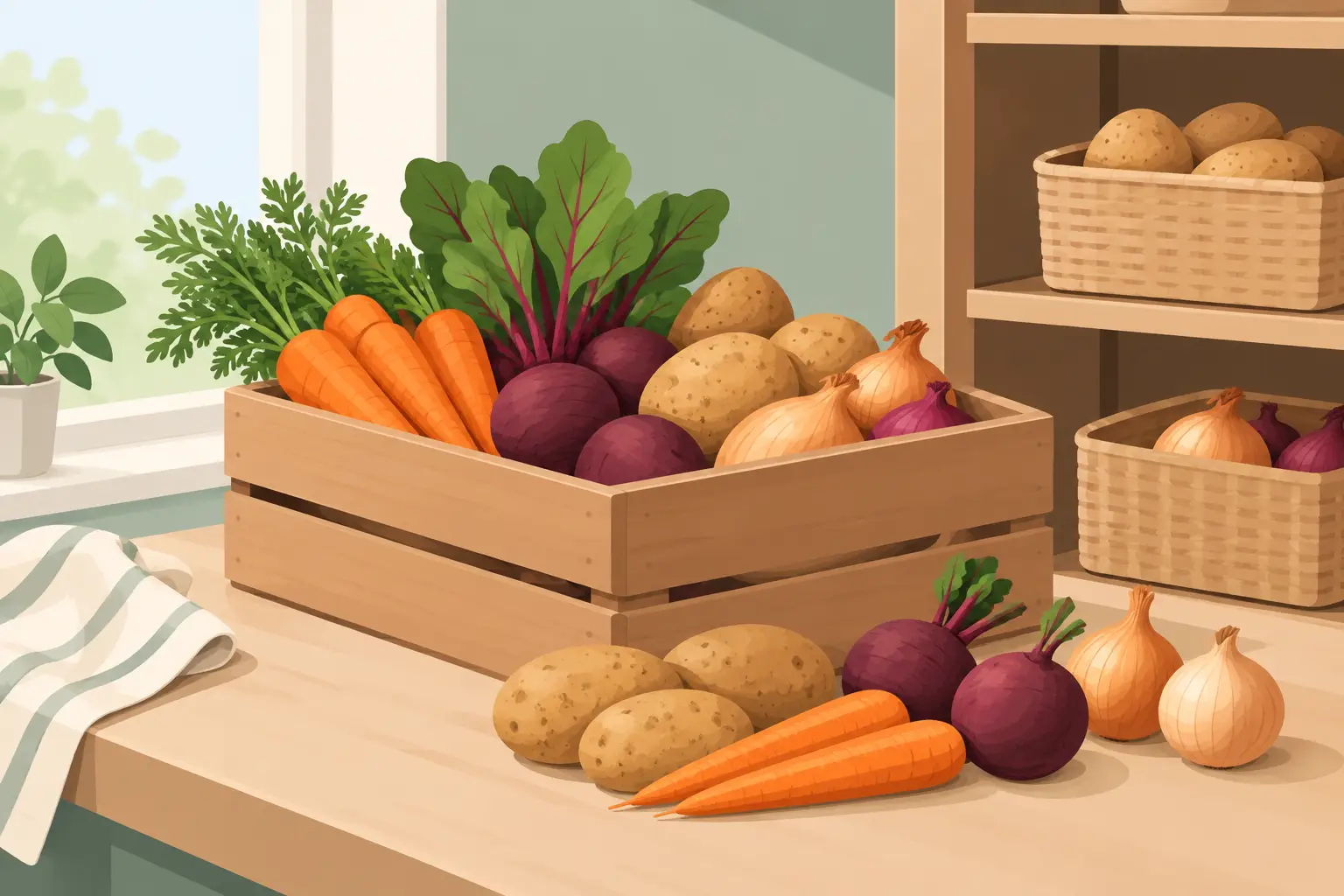
A bag of potatoes in a warm cabinet, carrots left loose in the crisper, beets still attached to their greens - small storage choices can decide whether next week’s dinner is easy or disappointing. This guide to storing root vegetables helps you keep the vegetables you bought usable for longer, so they are ready when you need a sheet-pan side, soup starter, or quick skillet meal.
Root vegetables are built to last, but they do not all want the same conditions. The goal is not to find one perfect spot for everything. It is to create a few simple storage zones, then check them before a vegetable turns from slightly soft to unusable.
Start With the Three Things Root Vegetables Need
Most root vegetables last longest when they are cool, dark, and protected from excess moisture. That does not always mean the refrigerator. Carrots and beets benefit from cold, humid conditions, while potatoes, sweet potatoes, onions, and garlic do better in a cooler pantry or cabinet with airflow.
Light is a problem for potatoes in particular. It can turn their skins green and encourage sprouting. The green areas contain higher levels of solanine, a naturally occurring compound that can cause illness when eaten in meaningful amounts. Cut away small green spots only if the potato is otherwise firm and the discoloration is limited. If it is deeply green, bitter, or heavily sprouted, discard it.
Moisture is the other balancing act. Too little humidity makes carrots, parsnips, and radishes go limp. Too much trapped moisture encourages mold and rot. A breathable bag, a container lined with a lightly damp paper towel, or a perforated produce bag usually gives refrigerated roots the balance they need.
Prep Your Produce for Storage, Not for Cooking
The best time to prevent waste is when groceries come through the door. Do not wash root vegetables before storing them unless they are visibly muddy enough to create a mess. Water left in creases and bags speeds spoilage. Instead, brush off loose dirt and wash right before cooking.
If your carrots, beets, turnips, or radishes come with leafy tops, remove the greens soon after buying them. The leaves pull moisture from the root, which leaves the vegetable soft sooner. Leave about a half-inch of stem on beets and turnips to avoid nicking the skin, then store the greens separately and use them within a few days in sautés, soups, or grain bowls.
Give each item a quick inspection as you put it away. A single crushed potato or soft carrot can spread moisture and decay through the rest of the bag. Use damaged vegetables first rather than storing them for later.
Guide to Storing Root Vegetables by Location
The refrigerator: carrots, beets, radishes, turnips, rutabagas, and parsnips
The crisper drawer is the right place for roots that prefer cold temperatures and higher humidity. Store them unwashed in a perforated plastic bag or reusable produce bag. If your refrigerator tends to dry out produce, add a barely damp paper towel to the bag. It should feel damp, not wet.
Carrots and parsnips can often last several weeks this way. Beets, turnips, and rutabagas also keep well for weeks, especially when their tops have been removed. Radishes are usually best within one to two weeks, though fresh, firm radishes can last longer.
If you have room, keep these vegetables away from the back wall of the refrigerator, where they can freeze. A partly frozen carrot may still be safe to cook, but its texture will turn watery once thawed.
The cool, dark cabinet: potatoes and sweet potatoes
Potatoes need darkness and airflow. A basket, paper bag, cardboard box with ventilation, or open bin in a cool cabinet works better than a sealed plastic bag. Ideal storage is cooler than most kitchens, roughly 45 to 55°F, but not as cold as a refrigerator.
Refrigerating potatoes is not usually dangerous, but it can change their flavor and cooking behavior. Cold temperatures convert some starch into sugar, which can make potatoes taste sweeter and brown faster when roasted or fried. If your home runs warm and the fridge is your only cool option, refrigeration may still prevent sprouting and rot. Let refrigerated potatoes sit at room temperature before cooking if you can.
Sweet potatoes are more sensitive to cold than regular potatoes. Keep them in a dry, dark spot at room temperature or slightly cooler. Do not refrigerate them unless they are already cooked. Chilling can create a hard center and unpleasant flavor.
The dry, airy spot: onions, garlic, and shallots
Onions, garlic, and shallots are technically bulbs, but they belong in the same storage conversation because they often share the pantry. Keep them loose in a mesh bag, wire basket, or open container where air can circulate. A dark cabinet away from the stove is ideal.
Avoid storing them beside potatoes. Potatoes release moisture and gases that can make onions sprout or soften faster. Give each its own basket or shelf. Whole onions and garlic can last for weeks or even months under good conditions, but once cut, they belong in the refrigerator in a sealed container.
Don’t Store Every Root Vegetable Together
Grouping vegetables may look organized, but proximity matters. Potatoes and onions are the most useful pair to separate. Apples, bananas, pears, and avocados can also speed sprouting or aging in nearby produce because they release ethylene gas as they ripen.
For refrigerated roots, the bigger concern is crowding. A packed drawer traps condensation and hides problems. Leave enough room for air to move, and avoid putting very wet produce directly against carrots or beets.
If you buy in bulk, split the produce into two groups. Keep a smaller working supply in the kitchen and place the rest in the coolest appropriate area you have. This makes it easier to notice what needs using first without constantly disturbing everything else.
Know What “Use Soon” Looks Like
A little flexibility is normal. Carrots can become limp but still work well in soup, stock, roasting, or shredding. To revive mildly soft carrots, trim the ends and place them in a container of cold water in the refrigerator for 30 minutes to a few hours.
Potatoes with tiny sprouts can often be used after the sprouts and any green skin are removed, as long as the potato remains firm. A wrinkled sweet potato may still be good for baking or blending into soup.
Discard vegetables that are slimy, moldy, leaking liquid, smell sour, or have large soft black areas. Do not try to rescue moldy onions or garlic cloves by trimming around the affected spot. Mold can spread beyond what you can see in soft produce.
A quick weekly check is enough for most households. Move anything that looks less than perfect to the front of your meal plan. Roast a mix of carrots, beets, parsnips, and potatoes. Turn soft roots into soup. Grate extra carrots or beets into fritters, salads, or quick breads.
Make Storage Part of Meal Planning
Storage works best when it leads to a next step. When you put away groceries, decide which vegetables are for this week and which can wait. Use leafy-topped roots and radishes first, then carrots and beets. Save well-stored potatoes, onions, garlic, and winter-friendly roots for later meals.
Quicine can help turn that quick inventory into meal ideas based on what is already in your kitchen. The result is less produce forgotten at the bottom of a drawer and fewer last-minute grocery runs for ingredients you already had.
Your vegetables do not need a perfect pantry setup to last longer. A dark spot for potatoes, a dry basket for onions, and a humid crisper for carrots can make a real difference. Check them once a week, cook the ones that are changing first, and let your storage habits make dinner easier.