An avocado that is hard as a baseball can derail an otherwise easy meal. If you need to know how to ripen avocados faster, the best approach is to work with the fruit's natural ripening process, not try to force a shortcut that leaves it warm, brown, or bland.
Avocados ripen after harvest because they release ethylene gas, a natural plant hormone that softens the flesh and develops its buttery texture. Your job is simple: keep that ethylene nearby, add a little warmth, and check the avocado before it crosses from ready to overripe.
The fastest reliable method: a paper bag and ripe fruit
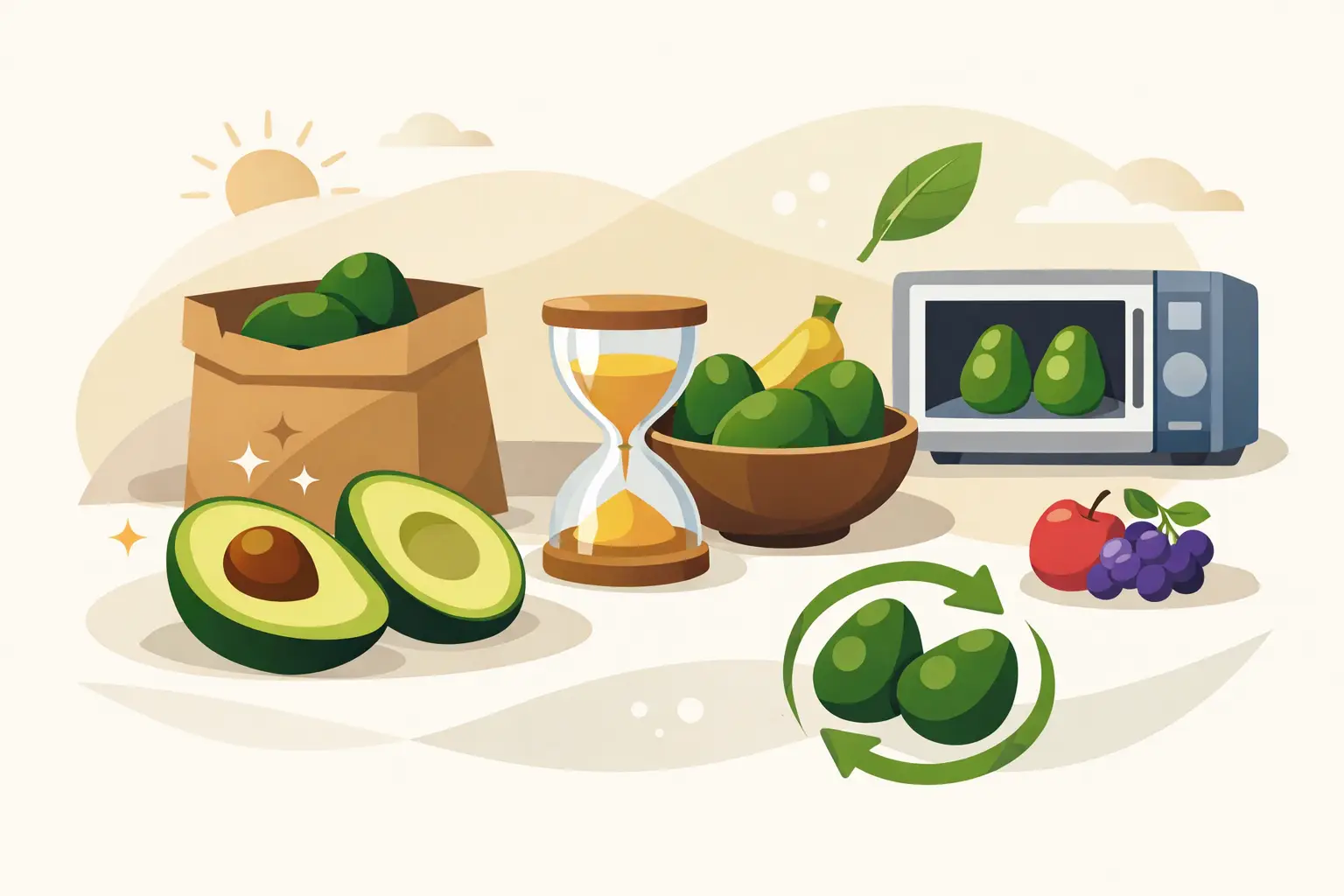
Place the firm avocado in a brown paper bag with a ripe banana, apple, or kiwi. Fold the top of the bag loosely closed and leave it on the kitchen counter, away from direct sun and heat vents.
The companion fruit gives off extra ethylene gas. The paper bag holds some of that gas around the avocado while still allowing air to circulate. In many kitchens, this method can ripen a firm avocado in one to three days, depending on how mature it was when purchased.
A banana is often the easiest choice because it is usually already on hand and produces plenty of ethylene as it ripens. Use one banana for one or two avocados. If the banana is very green, it will help less than one with yellow skin and a few brown spots.
Check the avocado once a day. If you are preparing dinner tomorrow, this small habit is more useful than waiting until the last minute and trying an aggressive heat trick.
Why a plastic bag is not the same
A sealed plastic bag can trap too much moisture. That encourages condensation, which can lead to mold or soft, damaged spots on the skin. A paper bag provides the useful ethylene boost without turning the avocado into a humid little greenhouse.
If you do not have a paper bag, place the avocado in a bowl near ripe bananas or apples and cover it loosely with a clean kitchen towel. It may take a little longer, but it is still better than leaving it in a cold refrigerator.
How to ripen avocados faster when they are already close
If your avocado has started to yield slightly when pressed, skip the bag and keep it on the counter. At this stage, adding more ethylene may push it past its ideal window before you are ready to use it.
A near-ripe avocado can often be ready within 12 to 24 hours at room temperature. Check it morning and evening, especially in a warm kitchen. Once it reaches the right softness, move it to the refrigerator. Refrigeration slows the process and can usually buy you another two or three days.
This is a helpful grocery routine: leave firm avocados out, refrigerate ripe ones, and use the softest fruit first. You will have a better chance of having an avocado ready for toast, tacos, salads, or a quick grain bowl without finding three overripe ones at once.
Know when an avocado is actually ripe
Color can help, but it is not a reliable test on its own. Hass avocados commonly darken as they ripen, while other varieties can remain green even when ready to eat. Feel is the better indicator.
Hold the avocado in your palm and apply gentle, even pressure. A ripe avocado should give slightly, like a ripe peach, without feeling squishy. Avoid pressing with your fingertips, which can bruise the flesh and create brown spots.
The small stem cap offers another clue. Gently remove it only if it comes away easily. If the flesh underneath is green, the avocado is likely ready. If it is brown, the fruit may be overripe inside. If the cap will not lift, give the avocado more time.
A ripe avocado does not need to be used immediately. Put it in the fridge as soon as it reaches that gentle give. That one step turns a narrow ripeness window into a more manageable meal-planning option.
Shortcuts that do not truly ripen an avocado
You may see advice to bake an avocado in foil or microwave it for a few seconds. These methods can soften the fruit, but they do not create the flavor and texture that natural ripening does.
Heat breaks down the avocado's structure quickly. The result may be soft enough to mash, yet it can taste grassy, watery, or slightly bitter. It is not the creamy avocado you expected.
If dinner is already on the table and you only need a soft ingredient for a blended sauce or an emergency dip, gentle warming can be a last-resort workaround. Wrap a whole avocado in foil and warm it at a low oven temperature for a short time, checking often. Do not expect it to taste like a properly ripened fruit, and do not microwave an avocado in its skin. Steam buildup can make it burst.
For guacamole, avocado toast, or any recipe where avocado is the main event, wait for natural ripening if you can. A paper bag method started a day or two ahead gives a much better result and prevents the disappointment of wasting a fruit that was technically soft but not enjoyable.
Avoid these common avocado mistakes
Do not refrigerate hard avocados if you want them to ripen soon. Cold temperatures slow their ripening dramatically and, in some cases, can interfere with texture development. Keep unripe fruit at room temperature until it begins to soften.
Do not store avocados in direct sunlight, on top of the stove, or beside a radiator. Extra heat does not speed ripening evenly. It can damage the flesh or cause the outside to soften much faster than the center.
Also, do not buy every avocado at the same stage unless you have a plan to use them all at once. When shopping for several, choose a mix: one ready to use soon, a couple that give only slightly, and one or two that are still firm. This creates a natural sequence for the week instead of a race against spoilage.
If you cut an avocado too early
A cut avocado will not continue ripening well. If it is firm and unripe inside, use it differently rather than leaving the halves on the counter. Thin slices can add crunch to a salad, taco, or sandwich, much like cucumber. You can also grate a very firm avocado into a slaw-style salad.
To store a ripe cut avocado, leave the pit in the unused half if convenient, brush the cut surface with lemon or lime juice, and press airtight wrap directly against the flesh. Refrigerate it and aim to use it within a day. The citrus slows browning, though it will not stop it completely.
A few brown patches are usually harmless. Scrape away a thin browned layer if the avocado smells fresh and the remaining flesh is green. But discard it if it has a sour smell, visible mold, stringy black areas, or a deeply fermented taste.
Plan ripe avocados into meals, not guesses
The real trick is not just ripening one avocado faster. It is giving each avocado a job before it softens. A ripe avocado can become breakfast on toast, a creamy element in a lunch bowl, or a quick dinner topping. If you have more than you can use, mash one with lime juice and freeze it in a flat, airtight portion for later smoothies, dressings, or guacamole.
Treat ripeness as a small piece of kitchen timing. Put firm avocados with a banana today, check them tomorrow, and refrigerate them when they are ready. That simple rhythm makes fresh food easier to use on your schedule and much less likely to end up in the trash.