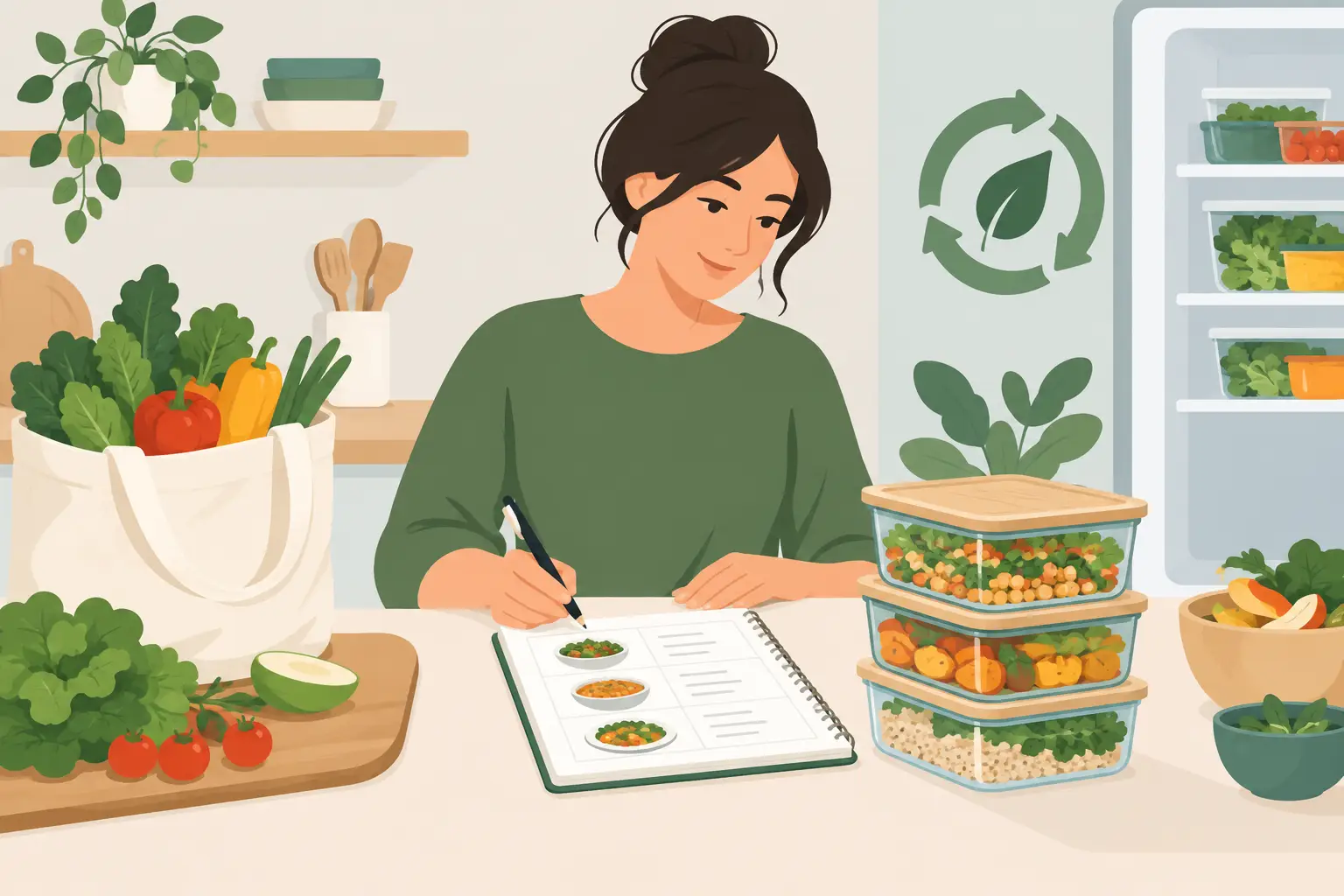
A bunch of cilantro in the crisper drawer should not decide your dinner at 6 p.m. But it often does. When you plan no waste meals, you start with the food that is already asking to be used, then build simple meals around it. That small shift can save money, reduce decision fatigue, and keep good groceries from becoming a weekly guilt trip.
The goal is not a perfectly empty refrigerator or a complicated meal calendar. A no-waste plan gives your ingredients a job before they spoil, while leaving enough room for real life.
Start with an ingredient check, not a recipe search
Traditional meal planning often begins with a list of recipes, followed by a grocery trip. It can work, but it also creates duplicates: another bag of spinach, another jar of sauce, another vegetable that seemed useful in the moment. Ingredient-first planning reverses the order.
Before shopping or planning dinners, take five minutes to check the refrigerator, freezer, and pantry. Look especially for produce, opened packages, cooked leftovers, dairy, and herbs. These foods have the shortest window and should lead the plan.
You do not need a detailed inventory. A quick note such as “two zucchini, half a rotisserie chicken, yogurt, tortillas, rice, spinach” is enough. The point is to see possibilities before buying more food.
Then sort what you find by urgency. Tender greens, berries, fresh herbs, fish, and cut produce usually belong near the top of the list. Carrots, cabbage, whole onions, hard cheese, and unopened shelf-stable items can wait longer. Use your senses, package dates, and storage conditions together. A printed date is useful, but it is not the only signal of freshness.
Build a plan no waste meals can actually follow
A useful meal plan is flexible. If every night requires a specific recipe and several new ingredients, one late meeting can throw off the whole week. Instead, plan a few meal types around your most perishable ingredients.
For example, if you have spinach, mushrooms, eggs, cooked rice, and a lemon, you might plan a vegetable fried rice early in the week. The next night, use remaining mushrooms and spinach in quesadillas or an omelet. If some rice remains, turn it into a quick lunch bowl with an egg, beans, or leftover chicken.
This is not eating the same meal three times. It is choosing ingredients that can move between formats. Roasted vegetables can become grain bowls, tacos, pasta, soup, or a frittata. Cooked chicken can become sandwiches, fried rice, salad, or a simple skillet dinner. One versatile base creates options without requiring a new recipe every night.
Choose three anchor meals
For most households, three planned dinners are more realistic than seven tightly scheduled ones. Pick meals that use the ingredients with the shortest life first, then leave space for leftovers, pantry meals, takeout, or an unexpected change of plans.
A good set of anchor meals might include one sheet-pan meal, one skillet meal, and one soup, pasta, or bowl meal. The formats are simple, but they cover a lot of ingredients. You can adapt seasoning and sauces to prevent repetition.
If you are feeding children or cooking for picky eaters, keep the base familiar. Serve roasted vegetables beside pasta rather than mixed into it, or offer toppings separately for tacos and grain bowls. Reducing waste should not mean turning dinner into a negotiation.
Shop for gaps, not possibilities
Once your anchor meals are set, make a short grocery list only for what is missing. Maybe you need eggs to use up vegetables, tortillas to turn leftovers into tacos, or a can of beans to stretch a small portion of meat.
This is where a no-waste plan becomes a budget tool. Instead of buying ingredients for several unrelated recipes, you buy a few connectors that help existing food become complete meals. Eggs, canned beans, broth, pasta, tortillas, frozen vegetables, and grains are especially useful connectors because they keep well and work across cuisines.
Be honest about capacity, too. A large sale is not a bargain if half of it spoils. Buy the amount your household can cook, freeze, or repurpose before the next shopping trip.
Use a simple order for the week
The order of meals matters more than most people realize. Put delicate foods at the beginning of the week and durable foods later. If you bought asparagus, berries, fresh fish, and bagged greens, plan those first. Save potatoes, cabbage, frozen items, and pantry staples for later.
A practical rhythm looks like this: cook the most perishable dinner first, use leftovers the next day or freeze them, then make a flexible meal that can absorb odds and ends. Near the end of the week, make a clean-out meal before shopping again.
Clean-out meals are not a failure to plan. They are part of the plan. Fried rice, soup, tacos, pasta, omelets, grain bowls, and sheet-pan dinners all welcome small amounts of leftover vegetables, protein, and sauces. The key is to combine ingredients with compatible cooking times. Add sturdy vegetables first, tender greens last, and already cooked food just long enough to warm through.
Give leftovers a clear future
Leftovers become waste when they disappear behind newer food. Store them in clear containers when possible, label them with the date, and place them where you will see them first. Even a piece of masking tape and a marker can prevent the mystery-container problem.
More importantly, decide how you will use leftovers before you put them away. A container of roasted vegetables is vague. “Tomorrow’s lunch bowl” has a purpose. A cup of cooked beans can become taco filling. Half a pot of soup can be frozen in single portions for a busy night.
Not every leftover deserves to be saved. A spoonful of a side dish may not be enough for another meal, and storing it indefinitely creates clutter. Combine small compatible portions into lunch, add them to an egg scramble, or let them go. The aim is less waste, not a refrigerator full of obligations.
Make your freezer part of the plan
Freezing is most useful before food reaches the edge of its life. Freeze ripe bananas for smoothies, herbs in oil or water in an ice cube tray, bread before it molds, and cooked grains in meal-size portions. If you wait until food looks questionable, freezing will not improve it.
The trade-off is texture. Frozen lettuce will not make a good salad, and thawed cucumbers will be soft. But many foods are excellent after freezing when headed for soup, sauce, smoothies, baking, or cooked dishes. Blanched broccoli, chopped peppers, cooked beans, shredded chicken, and tomato sauce are all practical freezer helpers.
Keep a small freezer list on your phone or near the door. Food you cannot see is easy to forget, even when it is frozen.
Plan for the nights when plans change
The best plan includes backup meals. Keep two or three low-effort options that use long-lasting ingredients: pasta with beans and jarred sauce, eggs with toast and frozen vegetables, or quesadillas with cheese and whatever vegetables need using.
This protects the more perishable food, too. If Tuesday becomes a takeout night, move Wednesday’s planned meal forward instead of abandoning it. Planning is not about following a calendar perfectly. It is about knowing what needs attention next.
A kitchen assistant such as Quicine can make this step faster by turning the ingredients you have into meal ideas, rather than sending you back to the store for a long list of extras.
Keep the habit light
A no-waste meal plan should take minutes, not become another household project. Start with one weekly check, three anchor meals, and one clean-out meal. After a couple of weeks, you will notice which foods your household regularly leaves behind and which flexible meals everyone will actually eat.
That is useful data. Maybe you buy too much salad mix but reliably finish cabbage. Maybe fresh herbs keep going slimy while frozen herbs work fine for your cooking. Better meal planning is not about copying someone else’s ideal grocery haul. It is about building a kitchen routine that fits your real schedule, appetite, and budget.
Tonight, open the refrigerator before opening a recipe app. Pick the ingredient that needs help first, and let it tell you what dinner can be.