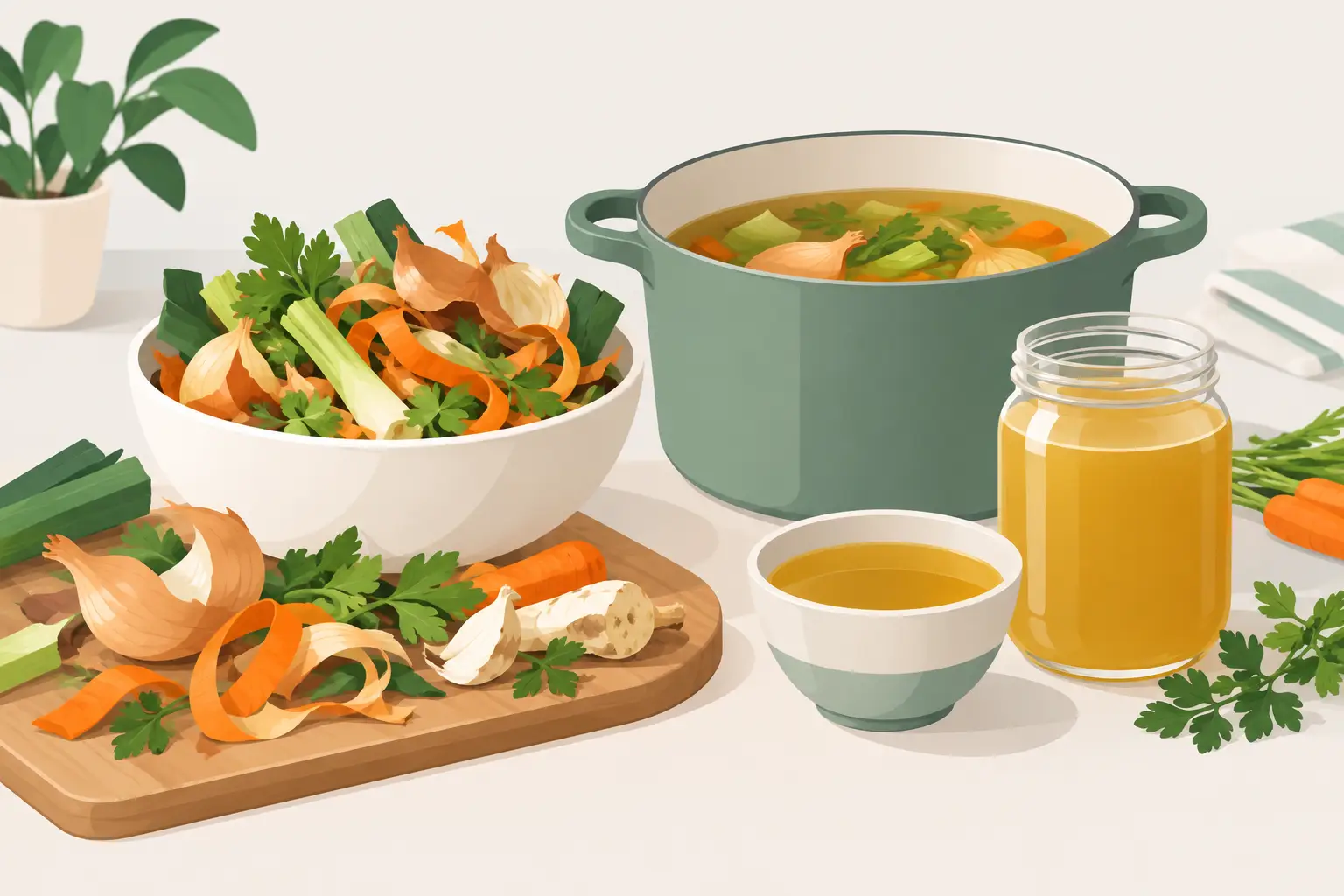
That container of onion ends, carrot peels, and celery leaves in your freezer is not kitchen clutter. It is the start of dinner. When you make stock from vegetable scraps, you turn the parts that usually head to the trash into a flavorful base for soup, rice, beans, sauces, and more.
This is one of the easiest low-waste cooking habits to build because it does not require a special shopping trip or precise recipe. You collect clean scraps as you cook, simmer them when the bag is full, and freeze the finished stock for the days when a simple meal needs more flavor.
How to Make Stock From Vegetable Scraps
Start with a freezer-safe bag or container. Each time you prep vegetables, add scraps that are clean, fresh, and full of flavor. Keep collecting until you have about 6 to 8 cups. There is no need to thaw the scraps first.
Put the frozen scraps in a large pot and cover them with 8 to 10 cups of cold water. Add one bay leaf, a few black peppercorns, and a small pinch of salt if you like, though leaving it unsalted makes it easier to use later. Bring the pot just to a boil, then reduce the heat until the liquid is gently simmering.
Cook for 45 minutes to 1 hour. A longer simmer is not always better for vegetable stock. Unlike meat bones, vegetables can turn bitter, dull, or sulfurous when cooked for too long. When the liquid smells savory and tastes pleasantly vegetable-forward, strain out the solids. Let the stock cool, then refrigerate or freeze it.
A good basic ratio is flexible: enough water to cover the scraps by about an inch is usually right. If you want a stronger stock, use less water or simmer the strained liquid for a few more minutes to reduce it.
The Scraps Worth Saving
The best stock starts with vegetables that bring natural sweetness, savory depth, or a fresh aromatic note. You do not need every item below. A mix of onion, carrot, and celery scraps makes a dependable all-purpose base, and everything else can build on it.
Save these in your freezer bag:
- Onion ends, skins, and outer layers
- Carrot peels and ends
- Celery leaves, ends, and slightly limp stalks
- Leek tops and green onion trimmings
- Garlic skins and ends
- Mushroom stems and caps
- Fennel fronds and cores
- Herb stems from parsley, thyme, dill, or cilantro
- Corn cobs, cut into smaller pieces after the kernels are removed
Mushroom stems are especially useful when you want a deeper, more savory stock. Corn cobs add subtle sweetness, while herb stems make a lighter stock taste more finished. If you have a lot of one ingredient, such as carrot peels, balance it with onions and celery so the flavor does not become overly sweet.
You can also add a whole vegetable that is nearing its end but is still safe to eat. A soft carrot, tired celery, or parsley that is starting to wilt is often more valuable in stock than in a salad. The key distinction is freshness: use produce that is past its peak, not produce that is spoiled.
What Not to Put in Your Scrap Bag
Not every vegetable scrap improves stock. Some ingredients create bitterness, cloudiness, or flavors that take over the pot. Others are simply not safe to use.
Skip moldy, slimy, rotten, or questionable produce. Cooking does not reverse spoilage. Also leave out waxed produce stickers, rubber bands, and any scraps that have been sitting in a dirty sink or mixed with raw meat juices.
A few vegetables are safe but better used sparingly. Broccoli, cauliflower, cabbage, Brussels sprouts, and kale can make stock smell strongly sulfurous. Potato peels may make it cloudy and starchy. Beet scraps turn everything red and earthy, which can be great for a specific soup but less useful for an everyday stock.
Very bitter greens, large amounts of bell pepper, and too many turnip or radish trimmings can also dominate the flavor. Tomato scraps are another choice that depends on your goal. They add acidity and color, which works well for minestrone or tomato-based sauces, but they can make a neutral stock less versatile.
Think of your freezer bag as an ingredient mix, not a catch-all bin. A little variety gives you better results than saving every last peel.
Clean Scraps First, Then Freeze Them
Vegetable stock is only as clean as the scraps you save. Rinse produce before peeling or chopping it, especially root vegetables with visible dirt. Drying is not essential, but avoid adding scraps that are soaked, greasy, or covered in sauce.
Freeze scraps as you go. The freezer slows quality loss and keeps the bag from becoming a science experiment in the back of the refrigerator. Press out excess air, label the bag with the date, and aim to use it within three to four months for the best flavor.
If you cook often, keep one bag for mild everyday scraps and another for stronger ingredients such as mushroom stems, fennel, corn cobs, or tomato pieces. This gives you more control. A delicate spring risotto may benefit from a pale, mild stock, while a pot of lentils can handle something darker and more concentrated.
Add Flavor Without Overcomplicating It
Scraps provide the foundation, but a few small additions can make your stock taste more rounded. Bay leaf, parsley stems, thyme, black peppercorns, and a smashed garlic clove are enough for most batches. Avoid adding much salt during simmering. Stock reduces as it cooks, and a salty batch can limit how you use it later.
If your scraps are mostly mild peels and ends, adding one chopped onion or carrot is not cheating. It is a practical way to make a more useful batch. The goal is to extract value from what you have, not to force every pot into a zero-purchase challenge.
For a richer flavor, roast the scraps first. Spread frozen or thawed scraps on a sheet pan, roast at 425 F until browned in spots, then simmer as usual. This takes extra time and creates another pan to wash, so it is best when you want a dark, full-bodied stock for gravy, mushroom soup, or braised beans.
Cool and Store Stock Safely
After straining, cool the stock promptly. Do not leave a large hot pot on the counter for hours. For faster cooling, divide it into smaller containers or set the pot in a sink of ice water, stirring occasionally.
Refrigerate stock in covered containers and use it within four days. For longer storage, freeze it in portions that match how you cook. Two-cup containers work well for soups and grains. Ice cube trays are useful for small amounts needed to loosen a pan sauce or add flavor to a skillet of vegetables.
Leave a little space at the top of freezer containers because liquid expands as it freezes. Label each container with the date and, if helpful, whether it is mild, mushroom-heavy, roasted, or tomato-based. This tiny step prevents mystery containers and makes weeknight cooking faster.
Put Your Stock to Work
Vegetable stock does more than make soup. Use it instead of water when cooking rice, quinoa, couscous, lentils, or beans. Add a splash to a skillet when reheating leftovers, sautéing greens, or building a quick pan sauce. It can also stretch a small amount of canned soup into a fuller meal without making it taste watered down.
Because homemade scrap stock varies from batch to batch, taste it before using it in a recipe. If it is light, use it where seasoning and other ingredients will do most of the work. If it is intensely savory, dilute it with water or use it as a flavor booster rather than the entire cooking liquid.
A freezer bag of scraps will not solve every dinner decision, but it makes the next one easier. Save what is useful, cook it before it is forgotten, and let a few overlooked trimmings give your everyday meals a little more depth.