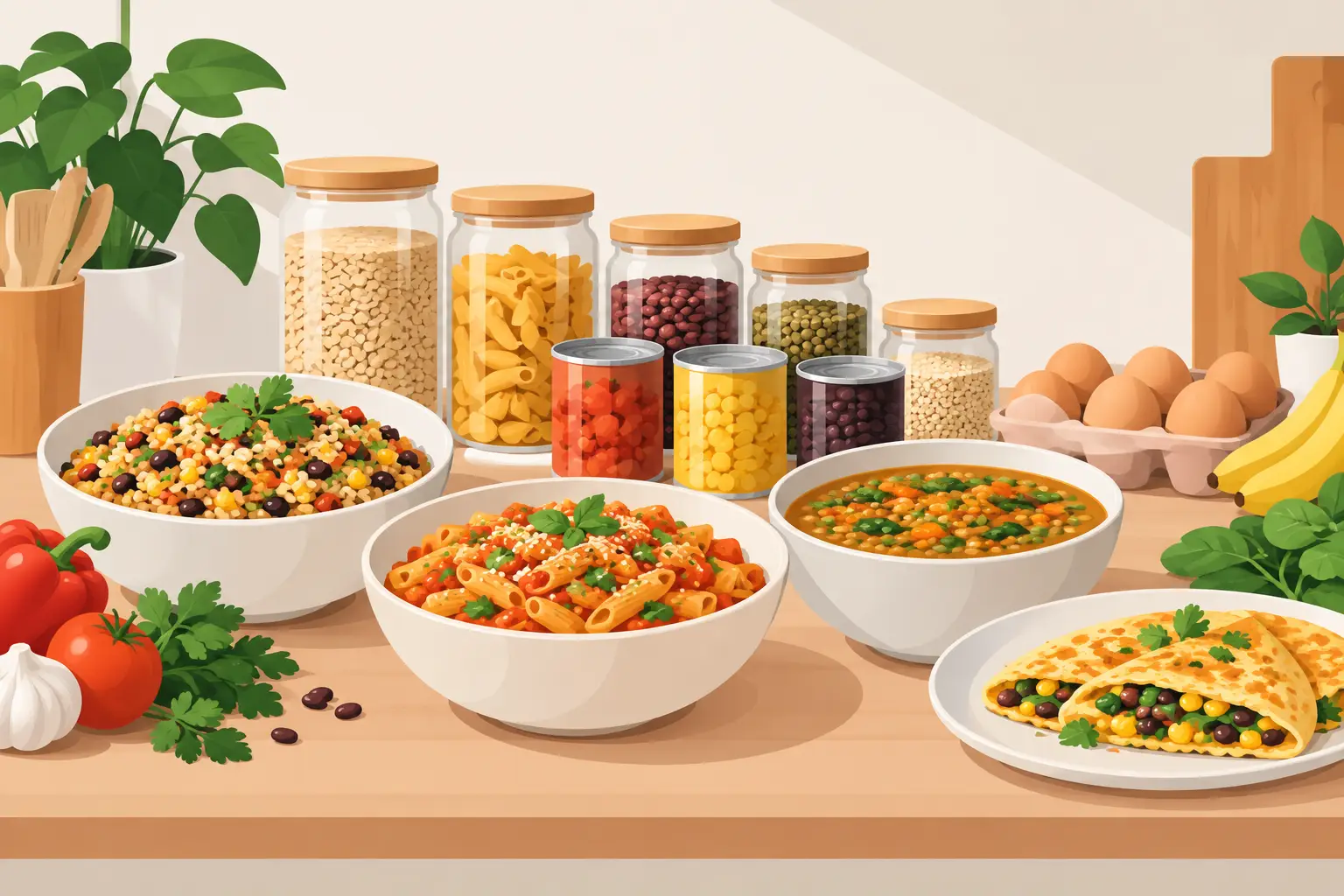
A can of beans, half a bag of rice, and an onion can look like a meal emergency. They are usually the start of dinner. The best budget pantry meals work because they use inexpensive staples as a base, then make room for the perishable ingredients that need attention first. That means fewer last-minute grocery runs, less food tossed from the fridge, and more meals that feel intentional.
A useful pantry meal is not a recipe that requires buying six specialty items. It is a flexible framework. Keep a few dependable building blocks on hand, learn what they do, and adjust based on what is already open, ripe, or nearing its use-by date.
What makes a pantry meal budget-friendly?
Cost matters, but so does how much of the food you actually use. A low-cost bag of lentils is a better value when it becomes soup, tacos, and a grain bowl instead of sitting untouched behind the cereal. The same goes for canned tomatoes, pasta, oats, rice, peanut butter, and canned fish.
The strongest budget meals usually combine a starch, a protein, a flavorful sauce or seasoning, and at least one vegetable. The vegetable can be fresh, frozen, canned, or a leftover roasted carrot that needs a purpose. That structure helps you cook from what you have without eating the same thing every night.
Some ingredients do more work than others. Eggs, onions, garlic, canned beans, broth concentrate, soy sauce, vinegar, and shredded cheese can turn plain staples into a satisfying meal. You do not need every item at once. Start with the flavors your household uses often.
10 best budget pantry meals for real weeknights
1. Tomato bean pasta
Cook any pasta shape and warm canned tomatoes with garlic, dried herbs, and a drained can of white beans or chickpeas. Toss everything together with a splash of pasta water. Add spinach, zucchini, or wilted greens if they are in the refrigerator.
Beans make the meal more filling without requiring extra meat. If you have Parmesan, use it. If not, a little olive oil, black pepper, and red pepper flakes still make a complete bowl.
2. Fried rice with fridge vegetables
Cold leftover rice is ideal, but freshly cooked rice works after it cools slightly. Sauté onion or any vegetables that need using, then add rice, scrambled egg, soy sauce, and a small amount of sesame oil if you have it.
Frozen peas, carrots, broccoli stems, mushrooms, and leftover chicken all belong here. The trade-off is texture: very wet vegetables can make rice soft, so cook them first until excess moisture evaporates.
3. Lentil soup that clears the produce drawer
Brown or green lentils cook into a hearty soup with onion, garlic, canned tomatoes, broth, and dried spices. Add carrots, celery, potatoes, kale, or whatever sturdy vegetables are still good.
Lentils are especially useful when the grocery budget is tight because they are filling, shelf-stable, and cook faster than many dried beans. A squeeze of lemon or spoonful of vinegar at the end makes a simple pot taste brighter.
4. Black bean tacos or quesadillas
Mash black beans in a skillet with cumin, chili powder, salsa, or canned tomatoes. Spoon them into tortillas with cheese, cabbage, avocado, or leftover roasted vegetables.
Use tortillas for tacos when you want a lighter meal, or make quesadillas when you need something fast and crisp. Both options are good candidates for small leftovers that are not enough to serve on their own.
5. Chickpea coconut curry
Simmer chickpeas with canned tomatoes, curry powder, and coconut milk. Serve over rice or with flatbread. A handful of spinach, frozen green beans, or cauliflower adds vegetables without changing the basic method.
Coconut milk adds richness, but it is not essential. For a lower-cost version, use broth or water and finish with a spoonful of peanut butter for body. Keep the heat level adjustable with chili flakes or hot sauce at the table.
6. Savory oatmeal bowls
Oats are not only for breakfast. Cook them with water or broth until creamy, then top with a fried egg, beans, sautéed greens, cheese, or leftover vegetables. Season with salt, pepper, and hot sauce.
This is a smart choice for one-person lunches because it uses small amounts of toppings well. Steel-cut oats take longer, while old-fashioned oats are the quickest option for a weeknight bowl.
7. Pantry minestrone
Start with onion and garlic, then add canned tomatoes, beans, broth, pasta, and any vegetables that need to be used. There is no single correct combination. Cabbage, green beans, carrots, spinach, potatoes, and zucchini all work.
Add pasta near the end so it does not absorb all the broth. If you expect leftovers, cook the pasta separately and add it to each bowl. That small step keeps tomorrow's soup from turning overly thick.
8. Tuna or salmon cakes
Canned tuna or salmon, breadcrumbs or crushed crackers, an egg, and seasoning become quick patties. Pan-fry them until browned and serve with rice, potatoes, a simple salad, or frozen vegetables.
This meal depends on what is available. No egg? Make a tuna-and-white-bean salad instead. No breadcrumbs? Use oats pulsed briefly in a blender, or skip the patties and turn the mixture into sandwich filling.
9. Peanut noodles with vegetables
Whisk peanut butter with soy sauce, vinegar or lime juice, a little warm water, and chili sauce if you like heat. Toss with noodles and thinly sliced vegetables such as cabbage, carrots, cucumber, or bell pepper.
Peanut noodles are a reliable way to use vegetables before they soften. They can be served warm or cold, which also makes them practical for packed lunches. Add tofu, edamame, chicken, or a fried egg when you have it.
10. Sheet-pan potatoes, beans, and eggs
Roast chopped potatoes with onion, canned beans, oil, and spices until crisp at the edges. Crack eggs onto the pan for the last several minutes, or fry them separately. Finish with salsa, yogurt, cheese, or a squeeze of lemon.
Potatoes are one of the most flexible budget staples because they can anchor breakfast, lunch, or dinner. Keep an eye on the beans: rinsed canned beans brown nicely, but they can dry out if they go into the oven too early.
Build a pantry that prevents expensive decisions
You do not need a picture-perfect stocked shelf. A small rotation of ingredients you enjoy is more useful than an ambitious pantry full of foods you never reach for. Keep your staples visible and place older cans, grains, and pasta at the front so they get used first.
A practical starting set includes grains or pasta, canned beans, canned tomatoes, lentils, oats, tortillas, shelf-stable broth, cooking oil, and a few high-impact seasonings. Frozen vegetables are worth treating as pantry partners, too. They reduce the pressure to use every fresh vegetable immediately and can fill gaps on busy nights.
Before shopping, take two minutes to check what needs using. Plan one meal around a fragile ingredient, such as spinach or mushrooms, and another around a leftover. Quicine can help turn that quick inventory into meal ideas based on the ingredients already in your kitchen.
Use a simple order of operations
When deciding what to cook, start with food that will spoil first. Fresh herbs, delicate greens, opened dairy, cooked grains, and leftover meat should get priority. Then choose a pantry base that makes those ingredients feel like dinner.
This approach also helps with substitutions. If a recipe calls for chickpeas but you have black beans, use black beans. If rice is gone, serve the curry over pasta, potatoes, or toast. The goal is not to follow a recipe perfectly. The goal is to make a good meal before good food becomes waste.
A well-used pantry gives you more than cheap dinners. It gives you options on the nights when planning slipped, groceries are running low, and you still want something warm on the table. Start with one shelf, one can, and one ingredient that needs using today.