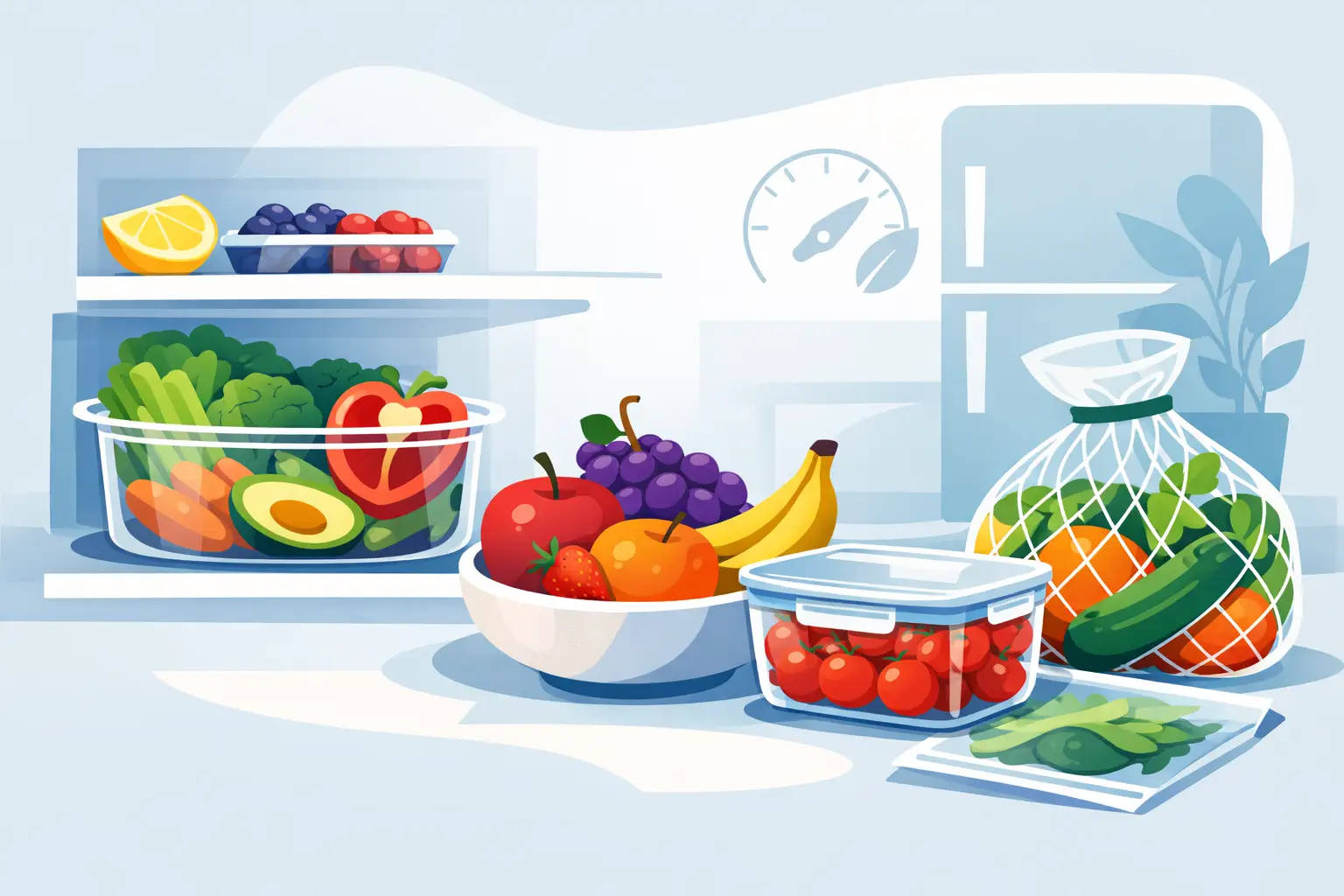
A bag of spinach can go from dinner plan to slimy disappointment in two days. A few small produce storage habits can change that. The goal is not to make every fruit and vegetable last forever. It is to keep what you bought in usable condition long enough to actually cook it.
Start by giving produce a job when it comes home: use soon, store for later, or freeze for a future meal. That quick decision prevents the familiar problem of finding perfectly good food after it has passed its best moment.
Produce Storage Starts With Moisture and Air
Fruits and vegetables are still alive after harvest. They lose water, breathe, and respond to temperature. Most storage mistakes come down to too much moisture, too little moisture, or putting something in the wrong place.
Leafy greens, herbs, broccoli, carrots, and many other vegetables do best cold with some humidity. The refrigerator crisper drawer is designed for this. Use the high-humidity setting, if your drawer has one, for vegetables that wilt easily. Keep them in a reusable container or partially open bag with a dry paper towel to catch excess moisture.
Berries, mushrooms, and tender greens need a different balance. They spoil quickly when trapped in standing water. Store them dry and unwashed, with room for a little airflow. A paper towel in the container helps absorb condensation. If berries came in a vented clamshell, that is often a good place to keep them until you are ready to eat them.
For most produce, wash right before using, not right after shopping. Rinsing can leave behind moisture that speeds decay, especially when food goes back into a closed container. The exception is produce you deliberately wash and dry very thoroughly for grab-and-go snacks. If you prep it ahead, make sure it is genuinely dry before refrigerating.
Know What Belongs on the Counter
Not everything improves in the refrigerator. Cold temperatures can dull flavor, change texture, or interrupt ripening.
Tomatoes are the classic example. Keep whole tomatoes on the counter, out of direct sunlight, until they are ripe. Refrigerate only if they are becoming too soft to use in time. Letting a chilled tomato sit at room temperature before eating can improve its flavor, though its texture may not fully recover.
Bananas, avocados, peaches, nectarines, pears, plums, and mangoes should usually ripen on the counter first. Once ripe, move them to the refrigerator to buy a few extra days. This is especially useful when your meal plans change or you have more ripe fruit than expected.
Potatoes, sweet potatoes, onions, garlic, and winter squash prefer a cool, dark, dry spot with airflow. A pantry, cabinet away from the stove, or open basket works better than the refrigerator. Do not store potatoes and onions together. Onions release moisture and gases that can make potatoes sprout or soften faster.
Fresh basil is another counter exception. Treat it more like a bouquet: trim the stems, place them in a glass with a little water, and loosely cover the leaves if your kitchen is dry. Refrigeration can blacken basil leaves. Cilantro and parsley, on the other hand, usually last longer in the refrigerator with their stems in a little water and a loose cover over the leaves.
Separate Ethylene Producers From Sensitive Produce
Some fruits release ethylene, a natural ripening gas. That is useful when you want a firm avocado or pear to soften. It is less useful when nearby greens, cucumbers, or berries suddenly age faster than expected.
Keep high ethylene producers away from sensitive produce when possible. The main ones to watch are:
- Apples, bananas, pears, peaches, plums, and avocados
- Tomatoes and ripe melons
- Leafy greens, broccoli, cucumbers, carrots, and herbs
- Berries and mushrooms
You do not need a perfectly organized produce laboratory. A simple rule works: keep ripening fruit on one counter area or shelf, and keep delicate vegetables and berries elsewhere. If you want to ripen an avocado or banana faster, place it in a paper bag with an apple or banana. Check it daily so “not ready yet” does not turn into “too soft.”
Use the Fridge Zones Better
Your refrigerator is not equally cold everywhere. The back of the lower shelves is usually colder, while the door is warmer and changes temperature often. Put highly perishable items where the temperature is most stable.
Store leafy greens, herbs, cut vegetables, berries, and ripe fruit toward the back of the fridge. Keep less sensitive items, such as citrus or whole apples, in easier-to-reach spots. The refrigerator door is better for condiments than fragile produce.
Crisper drawers help, but they are not magic. A crowded drawer blocks airflow and makes it harder to see what you have. Try grouping produce by when you plan to use it. Put this week’s salad greens, herbs, and snack vegetables where they are visible. Move sturdy backups, like cabbage or carrots, behind them.
A clear container can help with cut peppers, celery, broccoli, or carrots. Prepped vegetables are more likely to become lunch, a sheet-pan dinner, or a quick stir-fry when they are easy to spot. Just label them mentally with a deadline: use cut produce within a few days, not whenever you get around to it.
Give Each Grocery Run a “Use First” Plan
Good produce storage reduces waste, but it works best with a realistic cooking order. When you unpack groceries, identify the most perishable items and plan around them first.
Use delicate greens, berries, mushrooms, herbs, and ripe avocados early in the week. Save cabbage, carrots, beets, potatoes, onions, apples, and citrus for later. This is not a rigid rule. It is a way to make dinner decisions easier when the week gets busy.
A visible “use first” bin or section in the fridge can be more effective than buying another storage gadget. Put the half cucumber, softening bell pepper, open bag of spinach, and ripe fruit there. Before planning a meal, look in that spot first.
If you use Quicine, add those ingredients while they are still fresh. Ingredient-first meal ideas can turn a collection of odds and ends into a soup, frittata, pasta, grain bowl, tacos, or smoothie before another grocery trip adds more to manage.
Freeze Before Produce Becomes a Rescue Project
Freezing is not a failure. It is often the smartest option when you know you will not cook something in time. The best moment to freeze produce is when it is still good, not after it has become questionable.
Freeze bananas in pieces for smoothies, ripe berries for yogurt or baking, and spinach or kale for soups and sauces. Bell peppers, onions, broccoli, and zucchini can be chopped and frozen for cooked dishes. Their texture will soften after thawing, so they are better for stir-fries, sauces, omelets, and soups than for raw salads.
For longer freezer storage, blanch sturdy vegetables such as green beans, broccoli, and corn before freezing. A short boil followed by a quick ice bath slows the enzyme activity that affects flavor and color. For a small amount you will use soon, simple chopped-and-frozen produce is often practical enough.
Keep frozen pieces from becoming one solid block by spreading them on a tray first, then transferring them to a freezer-safe container. Labeling is worth the extra minute. A mystery bag is easy to ignore, even when it contains the start of a useful meal.
Check Produce Before It Spoils
A quick midweek check is one of the highest-return kitchen habits. Remove anything that is leaking, moldy, or badly bruised so it does not affect nearby produce. Then make a decision about the rest: cook it, freeze it, or leave it alone.
Not every imperfection means food is unusable. Wilted greens can often revive in cold water and still work well in cooked dishes. Soft tomatoes belong in sauce or soup. Slightly wrinkled peppers can be roasted. Overripe bananas are excellent for smoothies, pancakes, or baking.
Trust your senses, but be selective. Surface bruises can be trimmed from firm produce. Mold on soft fruits, berries, or moist vegetables is a stronger reason to discard the item because it can spread below the surface. When food smells fermented, feels slimy, or has widespread mold, it is time to let it go.
The best produce storage system is the one you can maintain after a long workday. Keep it simple: protect delicate items from extra moisture, let ripening fruit do its work on the counter, and make the next meal from what needs attention first. That is how groceries become meals instead of refrigerator clutter.