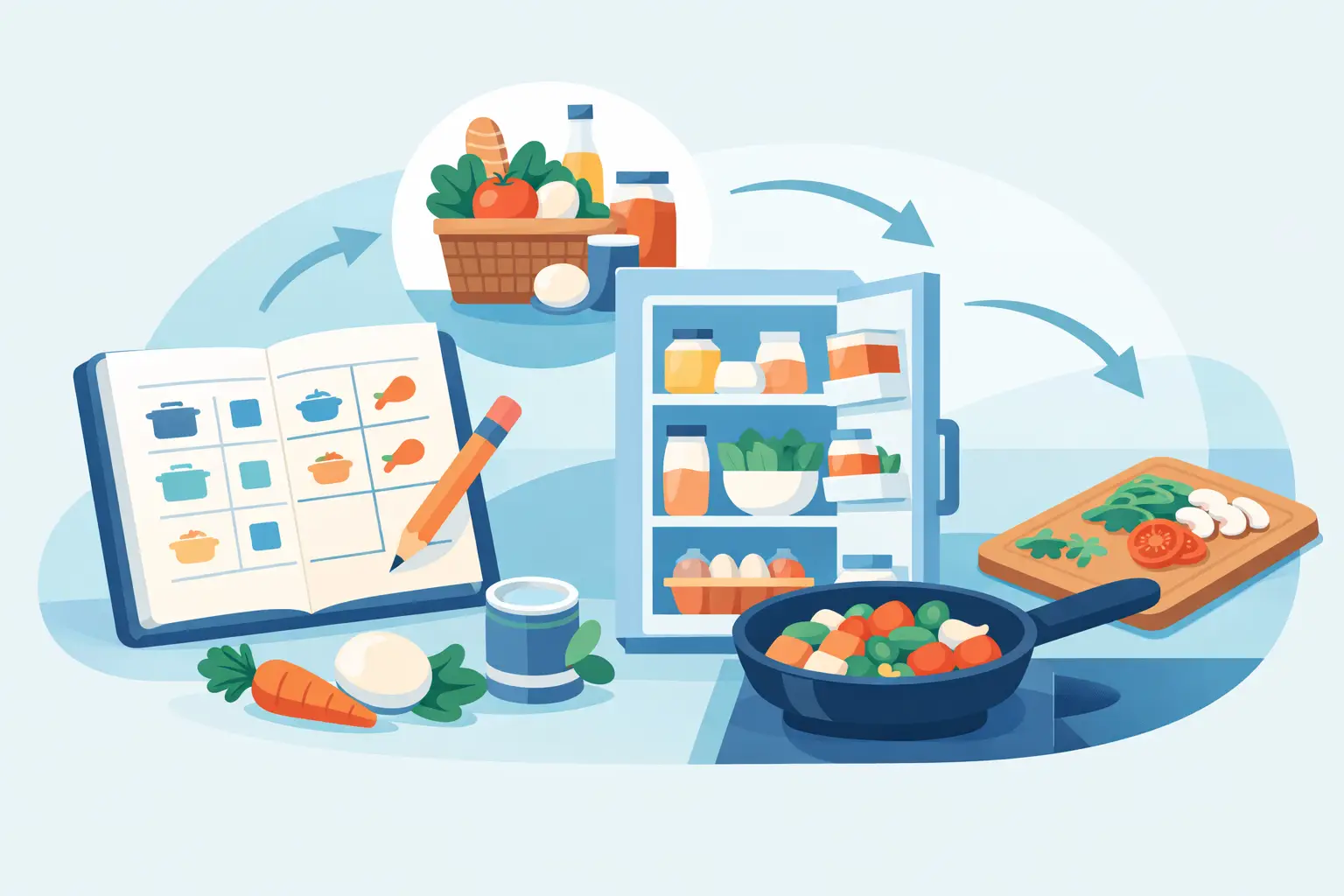
The bag of spinach is wilting, half an onion is wrapped in foil, and dinner is still an open question. That is the moment meal planning should help - not by handing you a rigid menu, but by giving the food already in your kitchen a job to do.
For most households, the hardest part of cooking is not cooking. It is deciding. A practical plan reduces that daily decision, makes grocery spending work harder, and helps you use fresh food before it turns into a cleanup project at the back of the fridge.
Meal Planning Starts With an Inventory
Traditional meal plans often begin with a list of recipes and a long grocery run. That approach can work when you enjoy planning ahead and have a predictable week. But it can also create duplicates, leave leftovers without a purpose, and ignore the ingredients you already paid for.
A more useful starting point is a quick inventory. You do not need a spreadsheet or a perfectly organized pantry. Take two minutes to look at your refrigerator, freezer, and cupboard before you decide what to make.
Start with the ingredients that have the shortest window: tender greens, berries, herbs, cooked rice, opened dairy, and leftover protein. Then notice the supporting ingredients that can turn them into a meal, such as eggs, canned beans, pasta, tortillas, broth, grains, cheese, or frozen vegetables.
This changes the question from “What recipe should I buy for?” to “What can I make before this goes to waste?” It is a small shift, but it keeps your plan connected to real life.
Build a Plan Around Ingredients, Not Perfect Recipes
A weeknight plan does not need seven different recipes. It needs enough structure to make dinner easier when you are tired, short on time, or missing one ingredient.
Choose two or three ingredients to prioritize, then assign them to flexible meal formats. For example, roasted vegetables can become grain bowls one night and quesadillas the next. Cooked chicken can go into a salad, pasta, soup, or fried rice. A carton of eggs can cover breakfast-for-dinner, a vegetable scramble, or a quick rice bowl.
Flexible formats are valuable because they absorb substitutions. If a recipe calls for broccoli but you have green beans, use the green beans. If you are out of sour cream, try plain yogurt or skip the creamy element altogether. A plan that falls apart when one item is missing is not very helpful on a Wednesday night.
Think in components: a protein, a vegetable, a satisfying base, and a sauce or seasoning. Those four parts can create many meals without requiring a new recipe every time.
Pick Three Anchor Meals
Rather than planning every bite you will eat, choose three anchor meals for the week. These are meals with enough leftovers, flexibility, or familiar ingredients to carry more than one dinner.
A pot of chili can become chili-stuffed baked potatoes. Roasted vegetables and sausage can be served over couscous, folded into wraps, or added to eggs. A tray of chicken thighs can cover a simple dinner, lunch salads, and tacos later in the week.
The right number depends on your household. A family with busy evenings may want four anchors. Someone who lives alone might plan two larger cooks plus one freezer meal. The goal is not maximum variety. It is fewer decisions and less forgotten food.
Shop to Fill Gaps, Not Restart the Kitchen
Once you know what you have, make a short grocery list that fills the gaps. If you already have pasta, spinach, and Parmesan, you may only need lemons and a protein. If your freezer has shrimp and your pantry has rice, a few fresh vegetables can complete several meals.
This approach helps with budget control because it prevents the common pattern of buying a full set of ingredients for a single recipe, then leaving the extras unused. It also makes shopping faster. You are buying a few useful connectors, not rebuilding your pantry every week.
Good gap-fillers tend to be versatile and relatively long-lasting: onions, carrots, tortillas, eggs, canned tomatoes, beans, yogurt, shredded cheese, and frozen vegetables. What makes sense for you depends on your usual meals and storage space. There is no need to stock ingredients you do not actually enjoy using.
Put Perishables on a Timeline
Not every ingredient needs the same urgency. Meal planning works better when you use food in the order it is likely to decline.
Plan delicate produce and opened items for the first few days after shopping. Use sturdier vegetables, frozen foods, and pantry staples later in the week. This can be as simple as scheduling salads and fresh herbs early, then relying on carrots, cabbage, potatoes, frozen peas, and canned beans toward the end of the week.
Leftovers need a timeline too. Give them a specific next use rather than hoping they will become lunch. If you made roasted chicken on Monday, decide whether Tuesday means sandwiches, soup, or a grain bowl. A labeled container helps, but a clear plan helps more.
If you will not realistically use something in time, freeze it while it is still in good shape. Bananas can become smoothie ingredients, herbs can be blended into sauce, and cooked grains can be frozen in meal-size portions. Freezing is not a sign that your plan failed. It is a way to protect food and give yourself an easier meal later.
Leave Room for Real Life
The most common meal planning mistake is planning too tightly. A late meeting, a spontaneous dinner out, a child refusing the planned meal, or simple lack of energy can change the week quickly.
Build in one or two low-effort backup meals. This might be frozen soup, pasta with a pantry sauce, breakfast tacos, or a bagged salad paired with something already cooked. Backups keep you from ordering food just because the original plan became inconvenient.
It also helps to plan one “use-it-up” meal near the end of the week. Fried rice, soup, frittatas, tacos, grain bowls, and sheet-pan dinners are especially useful because they welcome small amounts of vegetables, proteins, grains, and sauces. They are not a way to hide bad food. They are a smart way to use good food that no longer fits a specific recipe.
Make the Plan Visible and Easy to Adjust
A meal plan only works if you can see it when you need it. Keep it where dinner decisions happen: on the refrigerator, in a notes app, or in the kitchen assistant you already use. Write the meal idea, not a demanding recipe title. “Chicken tacos with slaw” is more useful than a complicated dish name you may not want to make later.
Review the plan briefly once or twice during the week. Move meals around if produce is ripening faster than expected, if leftovers are building up, or if your schedule changes. Planning is not a contract. It is a tool for making the next choice easier.
Quicine can support this ingredient-first approach by turning what is already in your kitchen into useful meal ideas, so you spend less time searching and more time using what you have.
A Simple Meal Planning Rhythm
A sustainable routine can fit into about 15 minutes. First, check what needs attention. Next, choose a few flexible meals around those ingredients. Then shop only for the missing pieces, and decide when you will use leftovers.
Over time, you will notice patterns. Maybe you buy more greens than you can use, so you start choosing one fresh green and one frozen option. Maybe Sunday cooking saves time, but only if you prepare components instead of complete meals. Maybe your household needs a designated leftover night to keep containers from accumulating.
The best plan is not the most ambitious one. It is the one that helps you open the fridge, see possibilities, and make dinner without letting good food slip away.