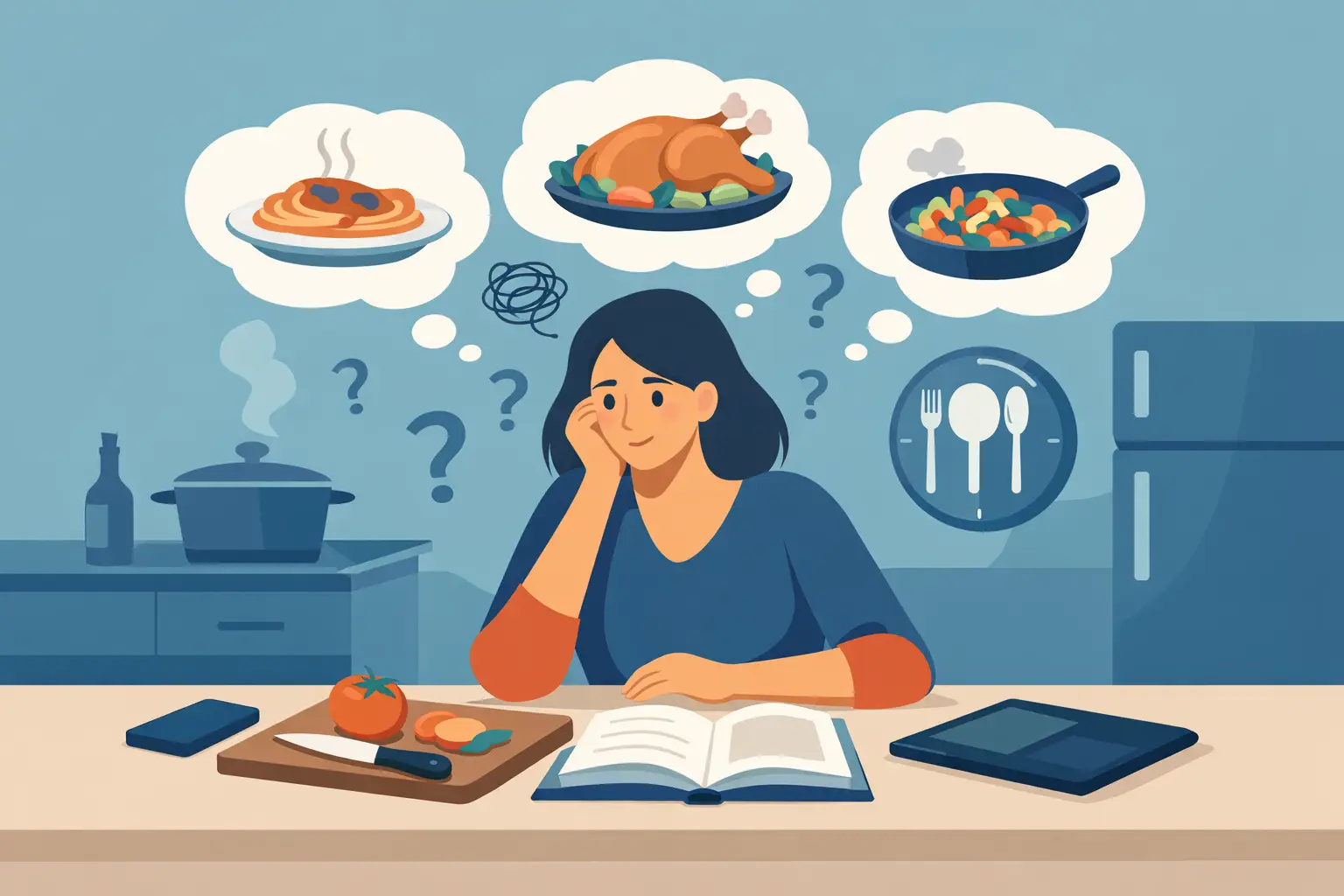
The hardest part of dinner is often not cooking it. It is the 5:30 p.m. moment when everyone is hungry, the fridge looks full but unhelpful, and you have to make another choice. Dinner decision fatigue is what happens when that small daily question - “What should we eat?” - arrives after a day already packed with decisions.
The result is familiar: takeout ordered by default, groceries that sit untouched, or a last-minute meal that feels more stressful than satisfying. The goal is not to create a perfect meal plan or cook from scratch every night. It is to reduce the number of decisions standing between you and dinner.
Why dinner feels harder than it should
Choosing dinner asks your brain to do several jobs at once. You have to remember what you bought, notice what needs to be used soon, account for time and energy, consider dietary needs, and decide what sounds good. Then there is the quiet pressure to avoid wasting the spinach, leftovers, or expensive protein in the back of the fridge.
That mental load is real, especially for people managing work, school, kids, roommates, or all of the above. Recipe sites can make it worse when they offer thousands of appealing options but none that match the ingredients on hand. More choices do not always create more freedom. At the end of a long day, they can create more friction.
A useful dinner system narrows the field. Instead of asking, “What could I make?” ask, “What can I make from the foods that need attention first?” That shift turns an open-ended search into a practical next step.
The real cost of dinner decision fatigue
Decision fatigue does more than make weeknights irritating. It can affect how much of your grocery budget reaches the plate. When choosing feels difficult, it is easy to buy another prepared meal while fresh ingredients lose time in the refrigerator.
There is no shame in takeout, frozen pizza, or a bagged salad. Convenience food has a place in a realistic kitchen. The problem is when it becomes the automatic answer because the food you already own is too hard to translate into a meal.
Repeated last-minute decisions can also make cooking feel like a chore rather than a useful skill. You may start buying the same few meals, even when you are bored of them, because familiar options require less thought. A lighter system protects your time while making room for variety when you actually want it.
Build a lower-effort dinner system
You do not need a detailed calendar with seven different recipes. For many households, a flexible framework works better because schedules, cravings, and leftovers change. The key is to make a few decisions before hunger is doing the thinking.
Start with an “use first” check
Before shopping or planning, take two minutes to identify the ingredients with the shortest runway. Look for tender greens, berries, herbs, opened dairy, cooked grains, leftovers, and proteins approaching their use-by date. Put these foods where you can see them, ideally in one section of the fridge.
Then choose one ingredient to anchor the next dinner. A bell pepper can become fajitas, fried rice, pasta, eggs, or a grain bowl. Rotisserie chicken can go into tacos, soup, salad, sandwiches, or quesadillas. You are not selecting a complete recipe yet. You are simply giving tonight’s meal a starting point.
This approach is more practical than shopping for a long list of recipe-specific ingredients. It helps you use what is already paid for, and it allows the meal to change based on your energy level.
Keep a short list of default meals
A default meal is not a boring meal. It is a combination you can make with little planning and adjust with what is available. Think pasta with vegetables and beans, breakfast-for-dinner, tacos, grain bowls, sheet-pan meals, soup and sandwiches, or a quick stir-fry.
Choose four to six defaults that your household genuinely eats. Keep the ingredients flexible rather than buying for one exact version. For tacos, that might mean tortillas, canned beans, eggs, ground meat, cheese, salsa, and any vegetables that need using. For bowls, it could mean rice or another grain, a protein, a sauce, and raw or cooked vegetables.
Defaults reduce the stakes. When the day gets away from you, dinner does not need a new idea. It needs a reliable format.
Plan for energy, not just time
A 30-minute recipe is not always a 30-minute dinner. It may require chopping, finding ingredients, cleaning multiple pans, and staying focused when you are already tired. Match meals to the kind of evening you expect.
On high-energy nights, cook something that creates useful leftovers, such as roasted vegetables, a pot of rice, baked chicken, or a bean-based soup. On low-energy nights, use those components in a low-assembly meal. This is not meal prep in the all-or-nothing sense. It is giving your future self fewer tasks.
It also helps to keep a few intentional backup dinners in the pantry or freezer. Frozen vegetables, canned beans, pasta, broth, eggs, tortillas, and a favorite sauce can become a meal without an extra store trip. A backup dinner is not a failure of planning. It is part of good planning.
Give leftovers a purpose
Leftovers create fatigue when they feel like a repeat performance. They become easier to use when you see them as an ingredient instead of a finished meal.
Last night’s roasted vegetables can become a frittata filling, a pizza topping, or a blended soup. Cooked rice can become fried rice or rice bowls. A small amount of chicken can stretch further in quesadillas, salad, or noodle soup than it can as a second identical plate.
When putting food away, label what it is and, if helpful, add a simple idea: “rice - use for fried rice” or “chili - lunch or baked potato.” That tiny prompt can save you from rediscovering mystery containers three days later.
A five-minute reset that prevents waste
Pick one consistent time each week to check the fridge, freezer, and pantry. It could be before grocery shopping, on Sunday afternoon, or while making your coffee on Friday. The habit matters more than the day.
First, identify what needs to be used soon. Next, choose two or three dinners that can absorb those ingredients. Finally, shop only for the gaps: a sauce, a grain, a protein, or a few staples that turn partial ingredients into meals.
Ingredient-first cooking is especially useful here. Rather than searching for a perfect recipe and buying everything it requires, begin with what is already in your kitchen. Quicine is built around that simple idea: turn available ingredients into useful meal options, so food gets used before it becomes waste.
When a plan is too much
Some weeks are unpredictable. Travel, sick kids, deadlines, and changing schedules can make even a simple plan feel unrealistic. In those weeks, skip the menu and make a “save this food” list instead. Write down the three items that are most likely to spoil and build around them when you can.
If even that feels like too much, choose one rescue meal. Toss aging vegetables into pasta sauce, eggs, soup, or a sheet-pan dinner. Freeze herbs in oil, freeze bread, or cook and freeze meat before it passes its best point. Saving food does not always mean using it tonight.
The system should serve your life, not create another standard to meet. Some dinners will be cereal, delivery, or leftovers eaten straight from the container. The win is making those choices consciously while giving the groceries you buy a better chance of being used.
Tomorrow’s dinner does not need to be exciting right now. It only needs one clear starting point: the ingredient you want to use, the default meal you can rely on, or the backup already waiting in your freezer. That is enough to make the next decision easier.