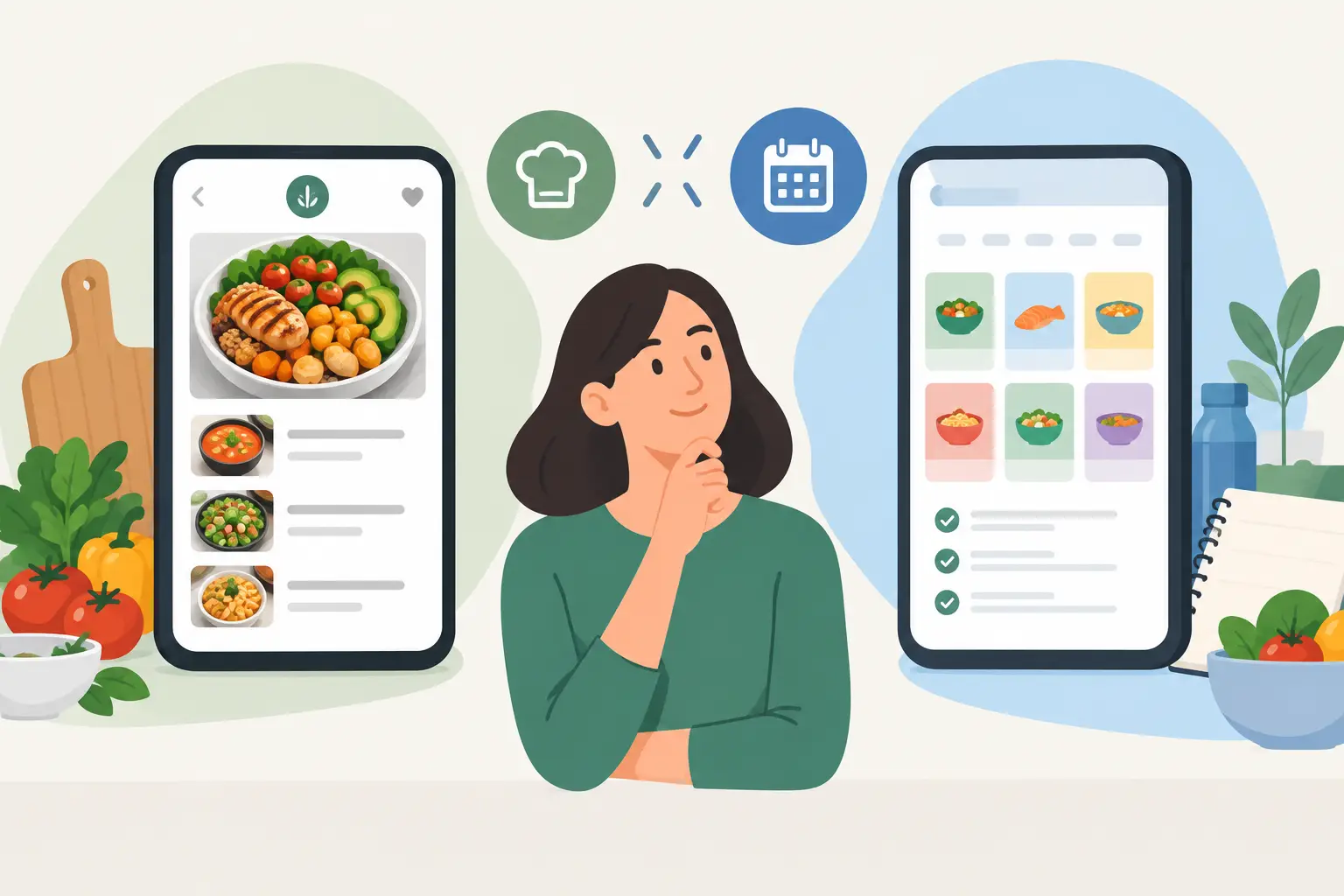
A bag of spinach is starting to wilt, half an onion is wrapped in the fridge, and dinner is 30 minutes away. That is where the recipe app versus meal planner question becomes practical. One tool helps you respond to what is already in your kitchen. The other helps you decide what to buy and cook before the week gets busy.
Both can make dinner easier. But they solve different parts of the problem. Choosing the right one depends less on how organized you want to be and more on how your household actually cooks, shops, and uses leftovers.
Recipe App Versus Meal Planner: The Core Difference
A recipe app is usually built for inspiration and instruction. You search for a dish, browse by cuisine or dietary preference, save favorites, and follow a recipe. Some apps also let you enter ingredients to find recipes that match what you have.
A meal planner starts earlier. It helps you choose meals for specific days, build a grocery list, and sometimes coordinate servings, nutrition targets, or household schedules. Its job is to reduce the repeated question of what is for dinner this week.
The distinction matters because a beautiful weekly plan does not automatically help when Tuesday runs late and the chicken you planned to cook is still frozen. Likewise, a great recipe suggestion does not necessarily prevent you from buying duplicate groceries on Saturday.
For many households, the best answer is not strictly one or the other. It is identifying which friction costs you more: planning ahead or using what you already bought.
When a Recipe App Is the Better Fit
A recipe app is often more useful for cooks whose weeks change quickly. Maybe you work irregular hours, share meals with roommates, or shop based on what looks good and affordable at the store. In those cases, a fixed seven-day schedule can feel like another obligation rather than a helpful system.
The biggest advantage is flexibility. You can open the app when you are standing in front of the refrigerator and make a decision based on reality. That makes ingredient-first recipe tools especially helpful for perishables such as greens, herbs, berries, mushrooms, yogurt, and leftover cooked grains.
It helps turn inventory into meals
Traditional recipe browsing starts with a craving: tacos, pasta, soup, or stir-fry. Ingredient-first cooking starts with a constraint: three zucchini, a can of beans, and rice from last night. That small shift can reduce waste because it puts the food with the shortest shelf life at the center of the decision.
A useful recipe app should give you more than one exact-match result. Most home cooks do not have every listed ingredient, and they should not need a special grocery trip for one teaspoon of something. Look for suggestions that support substitutions and let you work around what is available.
This approach also makes leftovers easier to use. Roast chicken can become tacos, grain bowls, soup, fried rice, or a salad topping. A recipe app helps you see those options before the leftovers turn into a container you avoid opening.
It reduces last-minute decision fatigue
Planning every meal in advance sounds efficient, but not everyone wants to decide on Sunday what they will feel like eating Friday. Recipe discovery can be a better fit for people who prefer a short, daily decision supported by what is on hand.
That does not mean browsing endlessly. The most helpful tools narrow the choices. Filters for cooking time, main ingredients, dietary needs, and available equipment can turn a vague search into a realistic dinner plan.
Recipe apps are also useful for building cooking confidence. If you are learning how to cook, clear instructions and basic kitchen guidance can help you use an ingredient rather than letting uncertainty send it to the trash. Quicine is designed around this kind of practical kitchen help: turning available ingredients into useful meal ideas before they are forgotten.
When a Meal Planner Is the Better Fit
Meal planners work best when predictability is part of your household routine. If you cook for a family, follow a grocery budget, manage dietary requirements, or prefer one focused shopping trip each week, planning ahead can save time and money.
The main benefit is coordination. You choose meals before shopping, then buy ingredients with a purpose. Done well, this can reduce impulse purchases and the common problem of buying five different recipes' worth of specialty ingredients that only get used once.
It makes grocery shopping more intentional
A meal plan can turn a scattered grocery list into a connected set of meals. Monday's roasted vegetables can become Wednesday's grain bowls. A large container of spinach can appear in pasta, eggs, and smoothies. A rotisserie chicken can cover two dinners and a lunch.
That kind of overlap is where meal planning earns its place. It is not simply assigning a new recipe to every day. It is planning how ingredients move through the week so you buy less, use more, and avoid a refrigerator full of partial packages.
Meal planning is particularly useful when you are feeding several people. It helps with portions, school-night timing, and the logistics of having enough food ready when everyone is hungry at once. It can also make dietary goals easier to manage because you can see the week as a whole rather than improvising every meal.
It works best when the plan can bend
The downside of meal planners is rigidity. A plan fails when it assumes every day will go exactly as expected. Takeout happens. Leftovers stretch further than expected. A meeting runs long. Someone gets sick. Fresh produce ripens faster than the schedule anticipated.
A practical meal plan leaves space for this. Plan four or five dinners, not seven mandatory ones. Include one leftover night and one flexible pantry meal. Put the most perishable ingredients earlier in the week, then shift dishes as needed.
The goal is not to follow a calendar perfectly. The goal is to make fewer expensive, stressful decisions while keeping food in circulation.
Compare the Tools by Your Real Kitchen Habits
If you are choosing between a recipe app and a meal planner, start with the pattern behind your food waste. A planner can help if you regularly overbuy because you shop without a list or do not know how many meals a package will cover. A recipe app can help if you buy groceries with good intentions but lose track of how to use them before they spoil.
Consider your cooking style, too. People who enjoy choosing dinner in the moment often get more value from recipe suggestions based on available ingredients. People who dislike grocery shopping, cook on a predictable schedule, or need to coordinate meals for others may get more value from a weekly plan.
Budget is another factor. Meal planners can support a lower grocery bill by helping you shop with a clear purpose. Recipe apps can protect that same budget after shopping by helping you use the food you already paid for. Both matter, but at different points in the food cycle.
The Most Useful Approach: Light Planning, Flexible Cooking
For most busy home cooks, the strongest system combines the two ideas without creating extra work. Plan a few anchor meals before shopping: perhaps two quick dinners, one larger batch meal, and one meal designed around a favorite protein or produce item. Build your list around those meals, but do not schedule every bite of the week.
Then use a recipe app during the week to adapt. Check what is ripening, what is left from earlier meals, and what needs to be used soon. If the planned pasta night no longer sounds good, turn the vegetables into eggs, soup, a grain bowl, or a sheet-pan dinner instead.
This is also a simpler way to reduce food waste. You do not need a perfect inventory system or a color-coded meal calendar. You need a quick habit: look in the fridge before deciding what to cook, and give the most perishable food a job first.
A simple weekly rhythm
Shop with a short plan, not an overbuilt menu. When you unpack groceries, place foods with shorter shelf lives where you will see them first. Midweek, scan the refrigerator for produce, leftovers, and open packages that need attention. Before your next shopping trip, make one flexible meal from what remains.
That rhythm protects your time without requiring you to predict every meal in advance. It also keeps cooking connected to the food you actually have, which is the decision that matters most on a busy night.
The right tool is the one that gets used when dinner feels inconvenient. If a weekly plan gives you calm, use it. If a quick ingredient-based idea saves the spinach in your crisper drawer, use that. Cook smarter, waste less, and let your kitchen guide the next meal.