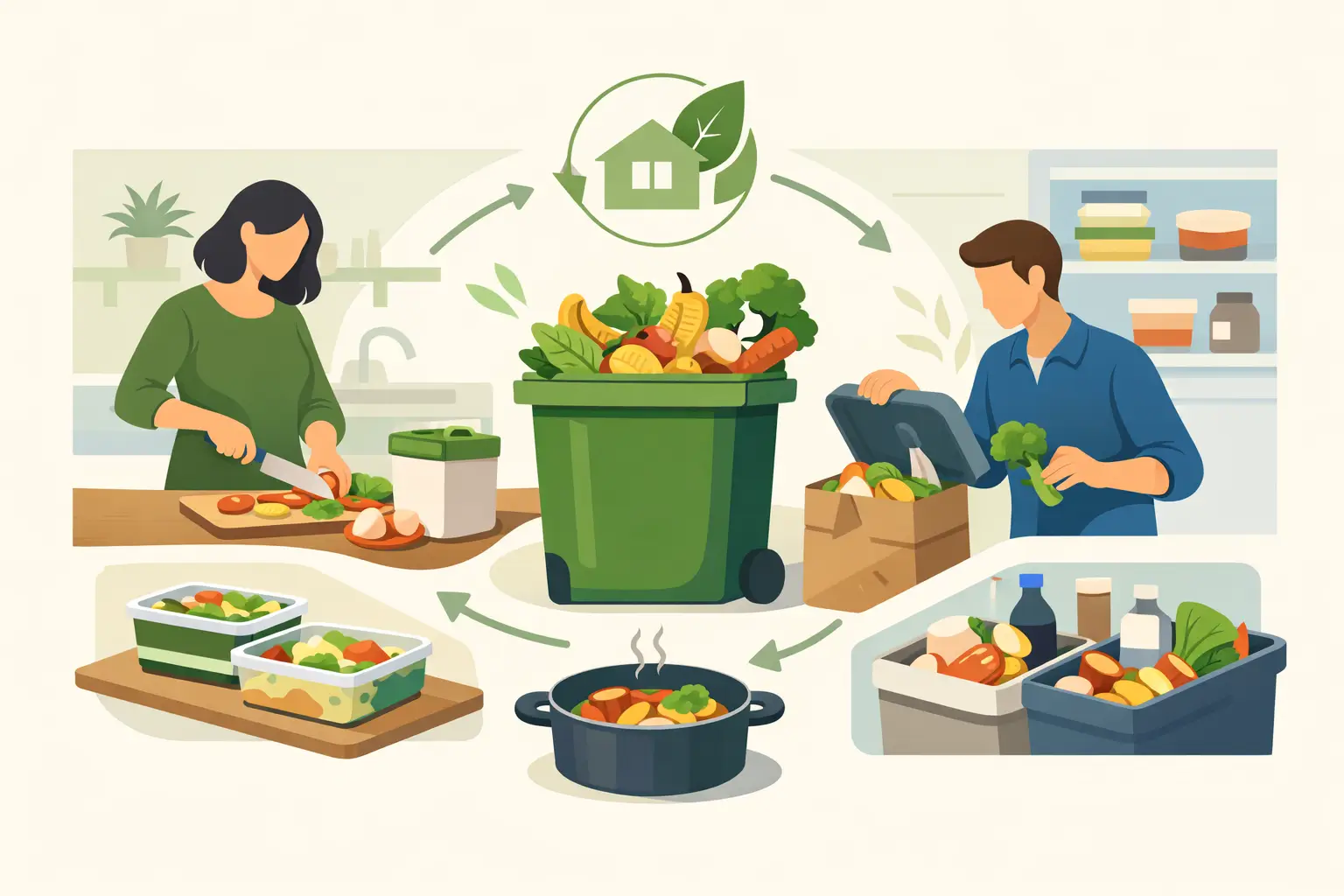
A bag of spinach disappears behind the milk. Three days later, it is limp, slimy, and headed for the trash. That small moment is where food waste solutions matter most: not in a perfect zero-waste kitchen, but in the ordinary decisions between grocery day and dinner.
For most households, less waste starts with less friction. You need to know what you have, what needs attention first, and what can become dinner without an extra store run. The goal is not to use every last scrap. It is to make better use of the food you already paid for.
Food Waste Solutions Start Before You Cook
The easiest food to waste is food you never planned to use. Before shopping, take two minutes to check the refrigerator, freezer, and pantry. Look specifically for produce, opened containers, leftovers, and proteins with a nearer date. Then build the next few meals around those items.
This does not require a strict meal plan with seven assigned dinners. In fact, overly rigid plans can create waste when a late meeting, takeout night, or change in appetite gets in the way. A flexible plan works better: choose two or three meals that use perishables, then keep a few versatile backup options such as eggs, pasta, beans, tortillas, or frozen vegetables.
Shop with a purpose, but leave room for real life. If you are buying ingredients for one recipe that calls for a tablespoon of herbs or half a bunch of celery, decide how you will use the rest before it enters your cart. The answer can be simple: herbs go into eggs or a sauce; celery goes into soup, tuna salad, or a snack plate.
Buy for your actual week
Bulk sizes can look like a bargain, but only if your household will use them. A large package of berries is not cheaper than a smaller one if half spoils. The same applies to family-size greens, specialty sauces, and produce purchased with good intentions.
Consider your schedule, not just the price tag. On a busy week, frozen produce, canned beans, bagged salad, and pre-cooked grains may create less waste than ingredients that need more prep. Convenience is not the enemy of sustainability when it helps food get eaten.
Make Your Fridge Easier to Read
A crowded refrigerator hides food. If you cannot see an ingredient, you are unlikely to cook it. Organizing for visibility is one of the most useful food waste solutions because it changes decisions before food reaches the spoilage stage.
Create a small “use first” area at eye level. Put ripe fruit, opened items, leftover containers, soft vegetables, and foods nearing their best-by date there. This is not a special storage system you need to maintain perfectly. It is simply a visual reminder of what dinner should work around.
Store food based on how it keeps best, not where it happens to fit. Most berries last longer when they stay dry until use. Leafy greens benefit from a container or bag with a paper towel to absorb extra moisture. Herbs can often be treated like flowers, with their stems in a small glass of water and a loose cover over the leaves. Keep ethylene-producing fruits, such as apples and bananas, away from sensitive produce when possible, since they can speed ripening.
There is one useful rule for the freezer: freeze food while it is still good, not when it is already questionable. Bananas, bread, cooked rice, shredded cheese, broth, and leftovers all freeze well. Add a quick label with the item and date. Mystery containers are far less likely to become a meal.
Cook the Most Perishable Ingredient First
When deciding what to make, start with the ingredient that has the shortest window. Tender greens, mushrooms, berries, fresh fish, and opened dairy products usually need attention before carrots, potatoes, onions, or unopened shelf-stable items.
This simple approach makes meal planning more useful than choosing recipes based on cravings alone. You can still eat what sounds good. Just ask one extra question: what in my kitchen needs a job tonight?
Ingredient-first cooking helps here. Instead of searching for a specific dish and buying everything it requires, start with what is available and choose a format that can absorb it. A few reliable formats make this easy: grain bowls, fried rice, pasta, tacos, frittatas, soups, sheet-pan meals, and blended sauces.
A soft bell pepper, half an onion, cooked chicken, and a scoop of rice do not need to become a perfectly planned recipe. They can become fried rice. Roasted vegetables, beans, and a nearly empty jar of salsa can become tacos. Slightly wilted greens can be sautéed into eggs, soup, or pasta. Quicine is designed around this practical shift: begin with the ingredients you have, then find a meal that makes sense.
Know the line between ripe and unsafe
Using food before it spoils does not mean ignoring food safety. A bruised apple can be trimmed and baked. Limp carrots can often be revived in cold water or cooked into soup. Wilted herbs may still work in sauces and dressings.
But mold on soft foods, a sour or off smell, a swollen package, or an unusual slimy texture are different signals. When safety is uncertain, throw it out. Reducing waste should never mean taking unnecessary risks.
Treat Leftovers as Ingredients, Not Repeat Dinners
Leftovers become waste when they feel like a less exciting version of last night’s meal. The fix is often a change in format. Roast chicken can become a quesadilla, chicken salad, noodle soup, or grain bowl. Cooked vegetables can go into a frittata, pasta sauce, wrap, or blended soup.
Store leftovers in shallow, clear containers so they cool quickly and stay visible. If possible, portion them into lunch-size servings right away. A full casserole dish in the back of the refrigerator is easy to forget; a ready-to-grab lunch is much more likely to be eaten.
Set a leftover night when your schedule supports it, but do not force it into a rule. For some households, Friday works. For others, a quick lunch buffet on Sunday is more realistic. The point is to create a regular moment when prepared food gets used before you cook something new.
Small amounts count, too. Half a cup of cooked grains, a spoonful of beans, and a few roasted vegetables can be the base of a lunch bowl. Save those bits in a dedicated container only if you will use them within a few days. Otherwise, combining random leftovers can create a container no one wants to open.
Use Dates Correctly and Trust Your Senses
Many people throw away perfectly good food because a date on the package sounds more final than it is. In the United States, dates such as “best if used by” often refer to quality, not safety. Food may still be fine after that date when stored properly.
Check the product type, storage history, appearance, smell, and texture. Dairy, meat, seafood, and ready-to-eat foods deserve extra caution, while dry goods, canned foods, and many frozen items can remain usable well beyond a quality date. When in doubt, follow food safety guidance and avoid guessing with high-risk items.
This is also a reason to rotate your pantry. Put newer purchases behind older ones, especially pasta, canned goods, snacks, and baking supplies. It takes seconds and prevents the familiar discovery of three expired boxes of something you forgot you owned.
Build a Few Low-Waste Defaults
The best systems are the ones you can repeat on a tired Tuesday. Keep a few meals in your rotation that use flexible ingredients and do not depend on a perfect grocery haul. Pasta with vegetables and beans, breakfast-for-dinner, soup, baked potatoes, grain bowls, and tacos can adapt to what is already around.
A short weekly reset helps, too. Before the next grocery trip, scan for food that needs using, freeze what will not get eaten, and make one “use it up” meal. You do not need to inventory every spice jar. Focus on the foods most likely to spoil or get forgotten.
Food waste is rarely caused by one bad habit. It usually comes from small gaps between shopping, storage, planning, and cooking. Close one gap this week. Put a use-first container in the fridge, cook the greens before buying more, or turn leftovers into lunch. A smarter kitchen starts with the next ingredient you save.