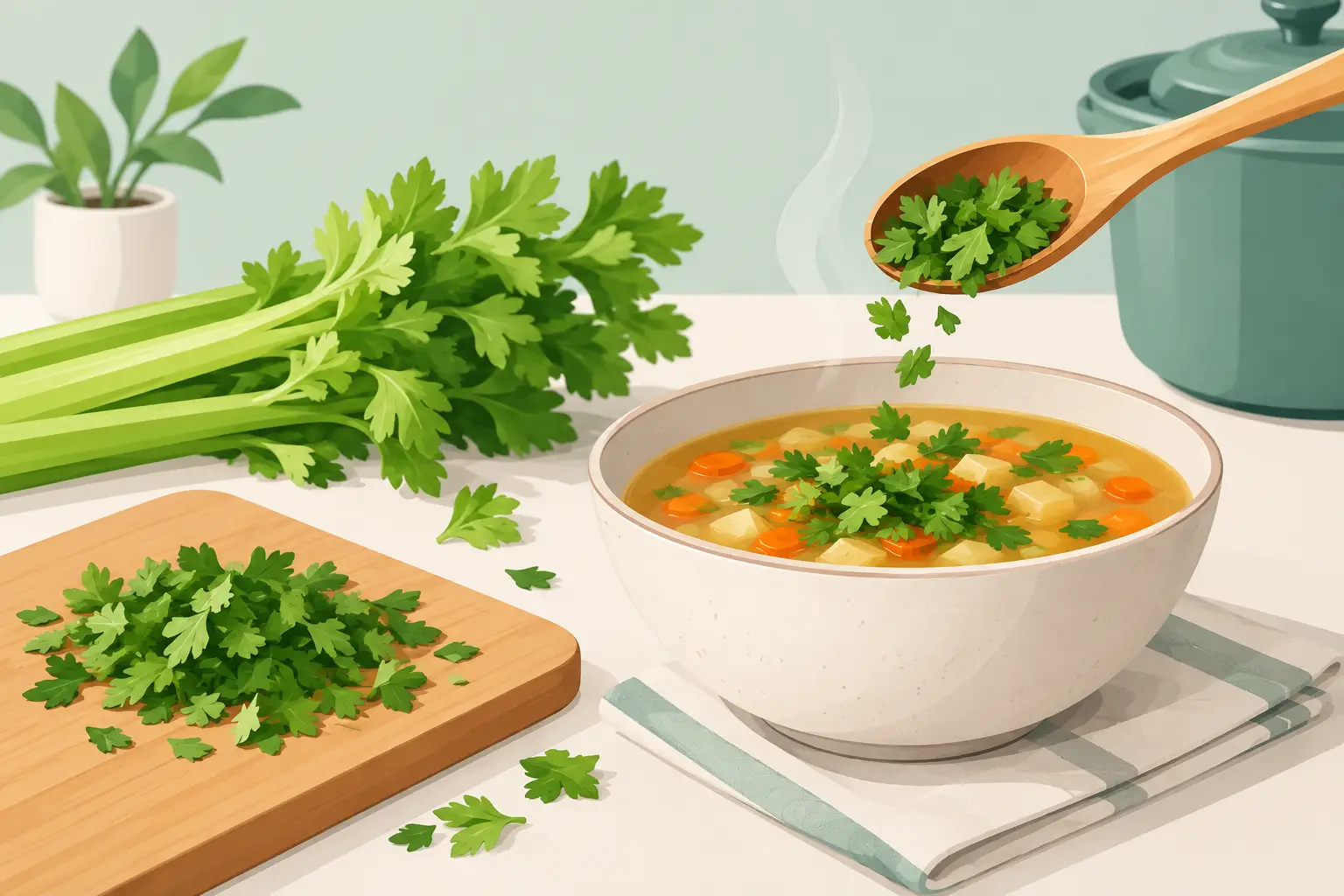
A bunch of celery often leaves the refrigerator with one familiar survivor: leafy tops that look too good to toss but too bitter to treat like salad greens. You can use celery leaves in soup, and they can add a bright, savory flavor that makes an ordinary pot taste more finished. The key is treating them as an herb, not as a full replacement for celery stalks.
Celery leaves are a small win for smarter grocery use. They cost nothing extra, take seconds to prep, and help you get more meals from an ingredient you already bought. Add them thoughtfully and they bring freshness to bean soup, chicken soup, vegetable broth, lentils, and more.
What celery leaves taste like in soup
Celery leaves taste like celery, but more concentrated. The tender inner leaves are mildly grassy and fresh, with a parsley-like quality. Darker outer leaves can be more assertive, sometimes edging toward bitter, especially when they are older or cooked for a long time.
That stronger flavor is useful when a soup needs lift. A rich potato soup, for example, can taste heavy even after salt and pepper. A handful of chopped celery leaves added near the end gives it a cleaner finish. In chicken noodle soup, they reinforce the familiar celery flavor already in the broth without requiring another stalk.
Think of the leaves as you would parsley, dill, or the greens from a bunch of carrots. They are not the main vegetable in the pot. They are a final layer that helps the rest of the ingredients taste more awake.
How to use celery leaves in soup
Start by separating the leaves from the tougher stems at the top of the bunch. Rinse them well under cool water, especially around the base where soil can hide. A salad spinner is helpful, but a clean kitchen towel works too.
For most soups, chop the leaves roughly and stir them in during the last two to five minutes of cooking. This preserves their color and fresh flavor. If the soup will sit off the heat before serving, you can add some then as well. The residual heat will soften the leaves without dulling them.
Use a little at first. For a pot serving four to six people, begin with about 1/4 cup of loosely packed, chopped leaves. Taste, then add more if the soup needs it. Tender pale leaves can handle a heavier hand. With large, dark green leaves, use less until you know how sharp they taste.
You can also reserve a few leaves as a garnish. Sprinkle them over bowls of tomato soup, white bean soup, chowder, or a blended vegetable soup just before serving. This works particularly well when the soup is soft and creamy, because the leaves add contrast without requiring a separate topping.
Add the stems earlier, the leaves later
The leafy celery tops often include thin stems. Do not throw those away either. Chop the firmer stems and add them with onion, carrot, and celery at the beginning of a soup. They contribute the same aromatic base as the stalks, though they may be a little more fibrous.
Save the leaves for later. Long cooking can mute their fresher notes and make the most mature leaves taste bitter. This simple split timing lets you use the entire top of the celery bunch effectively.
The soups that benefit most
Celery leaves fit best in soups that already welcome herbal, savory flavors. Chicken and rice, turkey soup, vegetable minestrone, split pea soup, lentil soup, and white bean soup are easy matches. They also work in brothy ramen-style bowls, especially when the broth includes ginger, garlic, mushrooms, or miso.
In a simple vegetable soup, celery leaves can replace part of the parsley called for in a recipe. In chicken soup, use them alongside parsley rather than instead of it if you want a more rounded herb flavor. In lentil or bean soups, their clean bitterness cuts through earthy legumes and smoky ingredients such as ham or paprika.
Creamy soups need a lighter touch. A small amount is excellent in potato, cauliflower, corn, or mushroom soup, but too much can pull attention away from the main ingredient. Stir leaves in at the end, then taste before adding a second handful.
Tomato soups are another good option, although it depends on the recipe. Celery leaf pairs well with garlic, white beans, and Italian-style seasoning. For a tomato soup built around basil and cream, use just a few leaves as garnish so their flavor does not compete with the basil.
When celery leaves are not the best choice
If the leaves are yellowed, slimy, or have a sour smell, compost them rather than adding them to dinner. Wilted but dry leaves are usually still usable in cooked soup, although they will be less vibrant. Taste one first. If it is aggressively bitter, use only a small amount or skip it.
Celery leaves can also be too strong for delicate soups. A clear fish broth, a mild egg-drop soup, or a carefully balanced miso soup may not need their extra herbal note. In those cases, save the leaves for stock, pesto, or a later vegetable soup.
Be mindful of salt when using celery leaves in homemade stock or broth. They do not contain enough sodium to salt a soup, but their savory, vegetal flavor can make a lightly seasoned broth taste fuller. Season gradually after the leaves have had a minute to warm through.
Use celery leaves to improve homemade stock
Celery leaves are especially useful when you are building stock from kitchen scraps. Keep clean celery tops, carrot peels, onion ends, herb stems, and mushroom trimmings in a freezer container. When it is full, simmer the scraps with water for a flexible vegetable stock.
For stock, add celery leaves near the end of simmering or use a modest amount from the start. A long, hard boil can pull out bitterness from mature leaves. Aim for a gentle simmer, and taste after 30 to 45 minutes. If the stock tastes pleasantly vegetal, strain it. There is no prize for cooking scraps until every bit of flavor is extracted.
If you are making chicken stock, celery leaves can go in with the bones and aromatics, but keep the proportion sensible. One celery top is usually plenty for a medium stockpot. You can always add fresh leaves later when the stock becomes soup.
A quick soup formula for celery tops
When you need dinner and have a celery bunch nearing its end, build a soup around what is already available. Sauté chopped onion, garlic, and the thin celery-top stems in a little oil. Add canned beans, leftover chicken, lentils, or diced potatoes, then cover with broth or water and seasoning.
Once the vegetables are tender, add a handful of chopped celery leaves. A squeeze of lemon, a spoonful of vinegar, or grated Parmesan can make the flavors feel even more complete. The leaves are not a rescue trick that fixes every bland soup, but they are a useful finishing ingredient when the pot needs freshness.
This approach also reduces the pressure to follow a recipe exactly. If you have two carrots instead of three, or a partial bunch of celery with plenty of leaves, you can still make a good soup. Cooking from what is on hand is often faster than another grocery run.
Store celery leaves so they stay usable
If you will use celery within a few days, wrap the leaves loosely in a slightly damp paper towel and store them in a container or reusable bag in the refrigerator. Keep them separate from the stalks if possible, since the leaves tend to soften first.
For longer storage, chop the leaves and freeze them in a small container or freezer bag. Frozen celery leaves are best for stock, simmered soups, and sauces rather than garnish, but they retain plenty of flavor. You can drop in a pinch straight from the freezer.
The next time celery stalks go into a recipe, pause before sending the tops to the trash. A small handful of leaves can make tonight's soup taste brighter, while helping tomorrow's grocery budget stretch a little further.