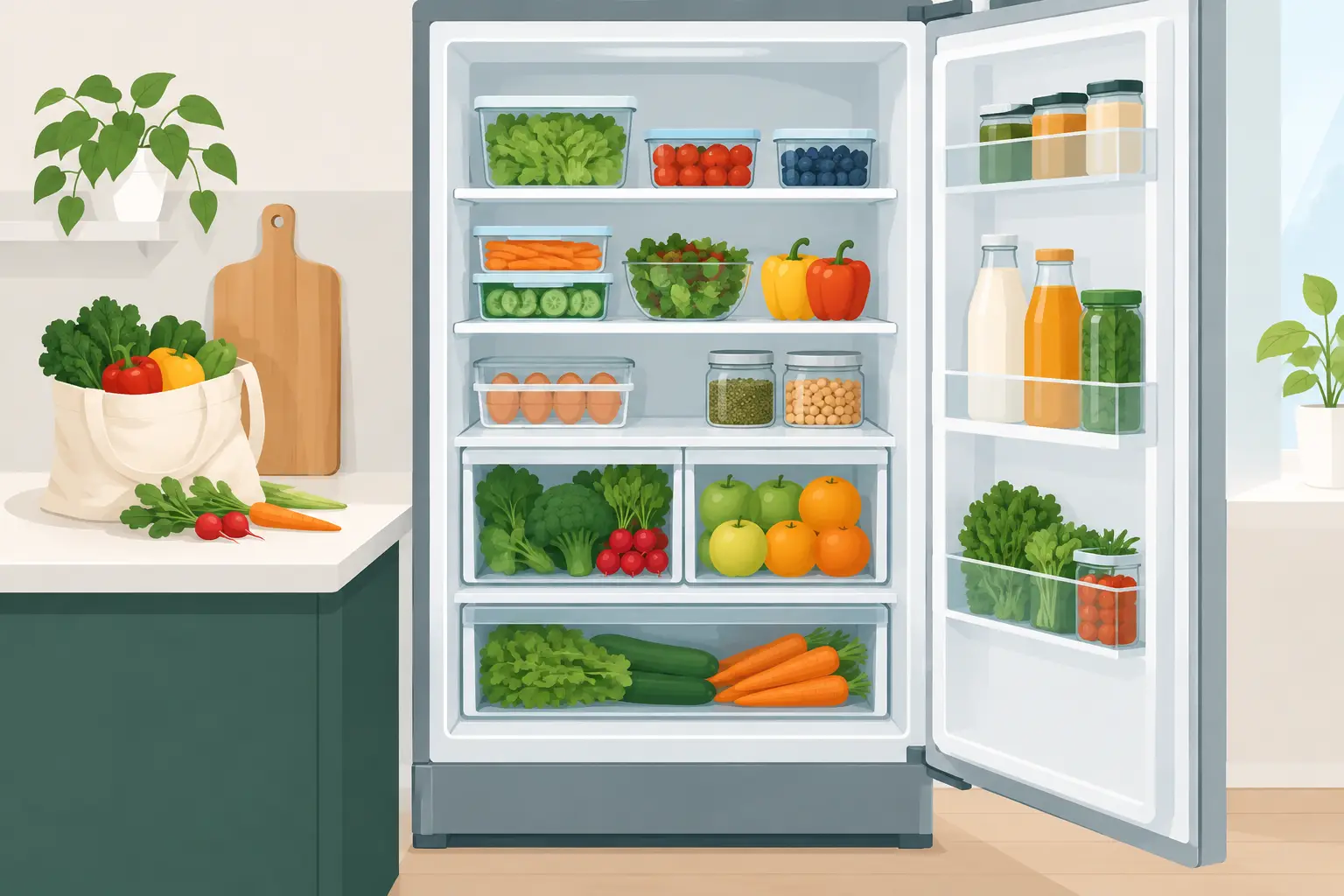
A crowded refrigerator can hide a surprising amount of money. The half-used herbs behind the milk, the berries under a container of leftovers, and the yogurt pushed to the back all have the same problem: you cannot use what you cannot see. This refrigerator organization guide is designed to make ingredients easier to find, meals easier to plan, and grocery waste easier to prevent.
The goal is not a picture-perfect fridge filled with matching bins. It is a system that works on a busy Tuesday, after a big grocery run, and when you need dinner from what is already there. A few smart zones and a simple reset routine can do more for your food budget than an elaborate storage makeover.
Start With Food Safety, Not Aesthetic Shelves
A refrigerator has warmer and colder areas, so where food goes affects both freshness and safety. The door is typically the warmest spot. Lower shelves tend to be colder, while crisper drawers help manage humidity for produce. Organizing around those differences helps food last longer without adding much effort.
Before rearranging, take everything out in sections. Check dates, look for leftovers you no longer recognize, and set aside ingredients that need to be used first. Be practical about date labels: a "best by" date often refers to quality, not an automatic spoilage deadline. Use your senses and follow food-safety guidance for anything questionable.
Wipe shelves, then put back only what you intend to use. This is also the right moment to move unopened extras to the pantry or freezer if they do not need refrigerator space yet. An overfilled fridge blocks air circulation and makes food harder to spot.
Build Refrigerator Zones That Match How You Cook
You do not need specialty organizers to create useful zones. Clear containers can help contain small items, but the layout matters more than the container. Give each shelf a job, then keep that job consistent.
Top shelf: ready-to-eat food
Use the upper shelf for foods that are ready to eat: leftovers, prepared lunches, cooked grains, deli items, and opened dairy products. These are the foods most likely to become invisible after a few days, so keep them at eye level whenever possible.
Store leftovers in shallow, clear containers with a date. Shallow containers cool food more quickly and make it easier to see what is inside. If a container is opaque, label it. “Pasta sauce, Monday” is much more useful than promising yourself you will remember.
Middle shelf: everyday staples
Make the middle shelf your easy-access zone for items you reach for often, such as milk, yogurt, eggs if you prefer them there, cheese, and breakfast foods. Grouping these items reduces rummaging and keeps the fridge door open for less time.
Milk lasts longest in the main body of the refrigerator, not the door. If your household goes through milk quickly, the door may be convenient, but it is a trade-off between access and consistently cold storage.
Bottom shelf: raw proteins
The bottom shelf is the safest place for raw meat, poultry, and seafood. Keep them in a tray or rimmed container so any leaks cannot drip onto produce or ready-to-eat food. Place proteins you plan to cook soon toward the front and freeze items that will not be used within a day or two.
This zone is less about looking tidy and more about preventing cross-contamination. A simple washable tray is enough.
Crisper drawers: produce with a plan
Crisper drawers are useful when you organize produce by humidity needs. As a general rule, leafy greens, herbs, broccoli, and other vegetables that wilt easily benefit from higher humidity. Apples, citrus, grapes, and other fruits generally do better with lower humidity.
You do not need to memorize every exception. The bigger win is separating produce that releases a lot of ethylene gas, such as apples, bananas, avocados, and tomatoes, from sensitive vegetables. Ethylene speeds ripening, which can be helpful when you want an avocado to soften, but less helpful when your greens are already on their last day.
Do not wash berries, mushrooms, or leafy greens until you are ready to use them unless you can dry them very thoroughly. Extra moisture encourages faster spoilage. For greens, a container or bag with a dry paper towel can help absorb condensation.
Door shelves: stable condiments and drinks
The refrigerator door is best for condiments, jams, pickles, bottled beverages, and other items that handle small temperature changes well. It is not the ideal home for highly perishable foods.
Group condiments by use rather than brand. Put sandwich spreads together, cooking sauces together, and frequently used flavor boosters where you can grab them quickly. A less crowded door also makes it easier to notice the nearly empty mustard or the sauce that has been open for months.
Create a “Use First” Zone
The most effective refrigerator organization habit is also the simplest: reserve one visible spot for food that needs attention. It can be a small bin, a tray, or one section of the top shelf. Put nearly ripe produce, opened packages, leftover ingredients, and meals with a short window there.
This zone turns vague intentions into a clear cooking prompt. When dinner planning starts, look there first. A few mushrooms, half a bell pepper, cooked rice, and spinach may not look like a meal at a glance, but together they can become a stir-fry, omelet, grain bowl, or soup.
If you use Quicine, adding those ingredients before they disappear can make the next step easier: finding meal ideas that fit what is actually in your kitchen. The point is not to force a recipe. It is to give food one more useful chance before it becomes waste.
Use First In, First Out for Groceries
Every grocery trip creates a small inventory problem. New food naturally gets placed in front, while older food drifts backward. Reverse that pattern: move older items forward before putting new groceries away.
This first-in, first-out approach works especially well for yogurt, eggs, deli meat, cheese, bagged salads, and produce. It takes about a minute after unpacking groceries and prevents the common problem of finding two open containers of the same thing.
For households with multiple people, a simple rule helps: no one opens a new package until the open one is checked first. It will not be perfect, but it reduces duplicates and makes shopping lists more accurate.
Organize for Your Household, Not a Trend
A fridge layout should reflect your actual habits. A family that packs lunches may need a dedicated grab-and-go shelf. Someone who cooks mostly once or twice a week may need more room for meal-prep containers. A small apartment refrigerator may benefit from fewer bins because bins can take up valuable space.
Clear bins are useful for corralling snack cups, cheese sticks, or small jars. They are less useful if they make a shelf harder to adjust or turn every item into a separate category. Start with what you already own, then add storage only when you can name the problem it solves.
The same goes for labels. Labels help if your household follows them. If they become another task to maintain, use broader labels like “snacks,” “use first,” or “lunches” and keep the system flexible.
Give the Fridge a 10-Minute Weekly Reset
Organization lasts when it is connected to a routine. Choose a time that naturally happens before grocery shopping or meal planning. Spend 10 minutes checking produce, moving aging food into the use-first zone, and identifying one or two meals that will use it up.
You do not need to clean every shelf each week. Focus on visibility and decisions. Toss anything spoiled, freeze ingredients you will not reach in time, and make a quick plan for leftovers. A soup, frittata, pasta, taco filling, smoothie, or sheet-pan dinner can absorb a wide range of odds and ends.
Keep one shelf or section slightly open after each reset. That empty space is useful. It makes grocery day less chaotic, improves airflow, and gives new leftovers somewhere to go without burying older food.
A well-organized refrigerator is not one that stays perfectly arranged. It is one that helps you notice what you have, cook with it while it is good, and spend less time asking what to make tonight.