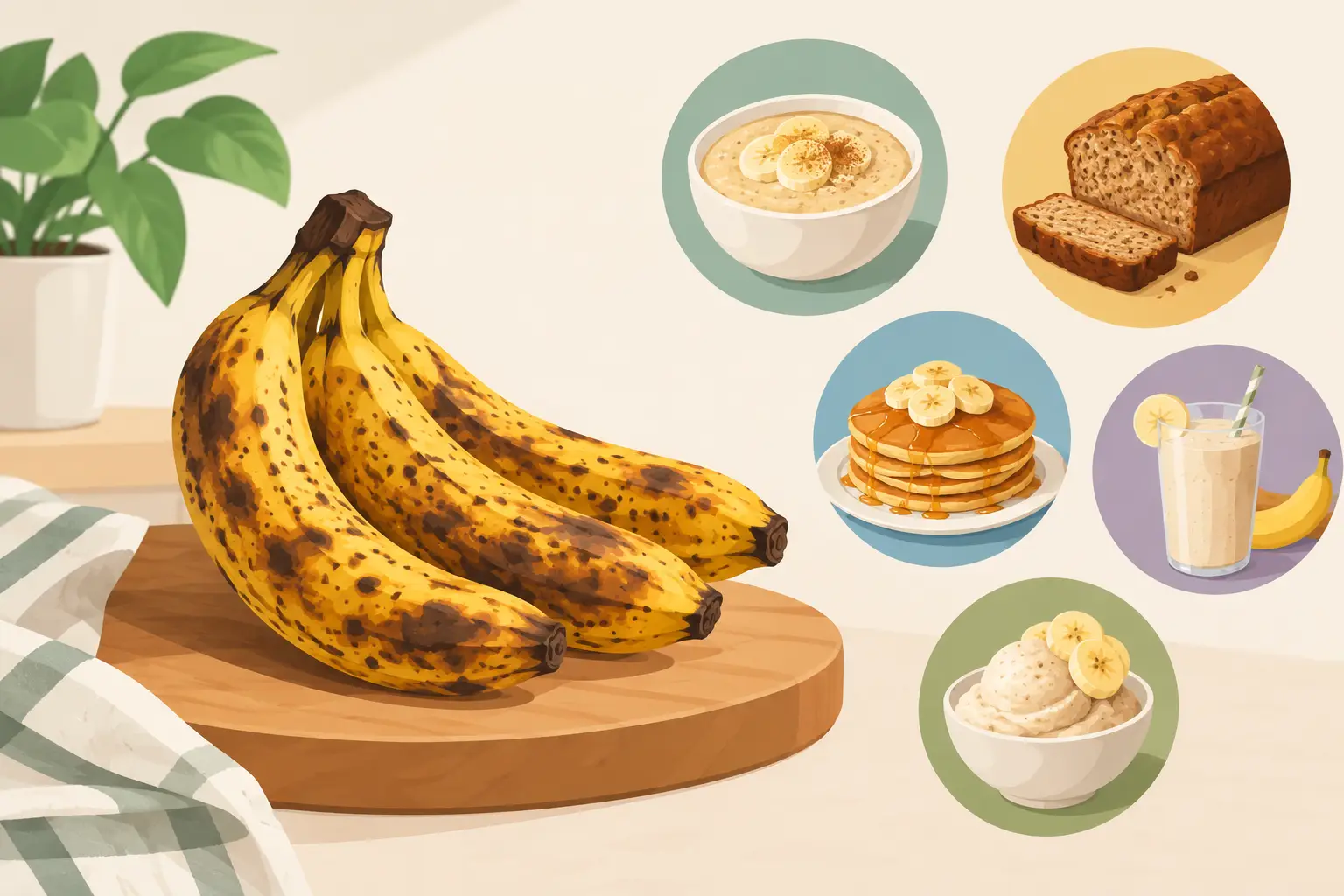
A banana with a freckled or nearly black peel can look like a grocery mistake. Usually, it is a cooking advantage. If you are wondering how to use overripe bananas, start with what they do best: add concentrated sweetness, moisture, and a soft texture without requiring much prep.
As bananas ripen, their starches convert to sugars. That is why a greenish banana tastes mild and firm while a brown one tastes sweeter and mashes easily. It also means overripe bananas work differently from fresh ones. They are excellent in batters, blended drinks, and freezer treats, but less useful when you need neat slices or a firm bite.
First, make sure the bananas are still good
A dark peel alone is not a reason to throw a banana away. Peel it open and check the fruit. A banana that is soft, fragrant, and brown-speckled inside is generally ready for baking or blending. Even a fully brown peel can protect perfectly usable fruit.
Toss bananas if you see fuzzy mold, notice liquid leaking from the peel, or smell a sharp fermented, sour, or rotten odor. If one banana in a bunch is moldy, inspect the others closely rather than assuming they are all unsafe. When in doubt, compost it. Saving food is useful only when the food is still safe to eat.
How to use overripe bananas in everyday meals
The easiest choice depends on how ripe they are and how much time you have. Bananas with a few brown spots can still go into breakfast bowls. Very soft bananas are best mashed, blended, or frozen.
Blend them into a no-sugar smoothie base
Overripe bananas bring sweetness and body to smoothies, which can reduce the need for honey, syrup, or sweetened yogurt. Blend one with milk or a plant-based alternative, peanut butter, oats, and a pinch of cinnamon for a filling breakfast. For a fresher option, pair it with frozen berries, spinach, and yogurt.
If your banana is very soft, it will blend especially smoothly. Balance its sweetness with tart ingredients such as berries, plain Greek yogurt, lemon juice, or cocoa powder. A little salt also makes chocolate-banana smoothies taste more rounded.
Make instant banana pancakes
For a quick breakfast, mash one banana with two eggs and a few tablespoons of oats. Cook small pancakes in a lightly oiled skillet over medium-low heat. The batter is delicate, so wait until the bottom sets before flipping.
This version is convenient, but it will not have the fluffy texture of traditional pancakes. If that matters, add a little flour and baking powder, or use the mashed banana in your usual pancake batter instead. The banana replaces some sweetness and adds moisture, so start by reducing any added sugar slightly.
Stir mashed banana into oatmeal or yogurt
A mashed overripe banana turns plain oatmeal into something closer to banana bread flavor. Stir it in during the last few minutes of cooking, then add cinnamon, walnuts, chia seeds, or peanut butter. The same approach works with overnight oats: mix the banana into the oats and milk before refrigerating.
For yogurt, use half a mashed banana and add a crunchy topping such as granola or toasted seeds. This is a good use for bananas that are soft but not yet liquid-like, when you want sweetness without making a separate recipe.
Bake banana bread, muffins, or snack bars
Baking is the classic answer for a reason. Ripe bananas add sweetness, moisture, and a tender crumb to quick breads and muffins. For most recipes, mash the bananas thoroughly before measuring. Lumps are fine if you like pockets of banana flavor, but a smoother mash gives more even results.
The trade-off is that banana bread can become dense or gummy if you add more banana than the recipe can support. Follow the stated amount when possible. If you are adapting a recipe, replace no more than about half of the added fat with mashed banana, and expect a softer, less rich result.
Overripe bananas also work well in oatmeal snack bars. Combine mashed banana with oats, nut butter, cinnamon, and a handful of raisins or chocolate chips, then bake until set. Think of them as a flexible use-it-up option, not a precise pastry. The ripeness of the banana will change the sweetness and moisture, so adjust dry ingredients as needed.
Turn them into one-ingredient frozen dessert
Peel very ripe bananas, slice them, and freeze the pieces in a single layer. Once firm, blend or process until creamy. You get a soft-serve-style frozen dessert with no added sugar required.
A food processor usually handles frozen banana better than a standard blender, though a powerful blender can work with a small splash of milk. Add cocoa powder for a chocolate version, peanut butter for a richer texture, or frozen strawberries for a fruitier result. Eat it right away for soft serve, or freeze it briefly for a scoopable texture.
Use them in savory cooking, too
Bananas do not have to stay in dessert territory. Their sweetness can soften spice and acidity in savory dishes. Blend half a ripe banana into a curry or peanut sauce with lime juice, ginger, garlic, and chili. It creates body and a mild sweetness similar to coconut milk or added sugar, though with a noticeable banana note.
This works best in boldly flavored dishes. A very ripe banana is less likely to taste out of place alongside peanut butter, curry paste, tomato, or hot sauce than in a delicate cream sauce. Start small, taste, and add more only if the sauce needs sweetness.
Freeze bananas before they become a project
You do not need to bake the day your bananas turn brown. Freezing is often the smartest move when your schedule is full. Peel bananas first, because peeling a frozen banana is messy and frustrating. Slice them for smoothies and frozen desserts, or freeze whole bananas for banana bread later.
Store the pieces in a freezer-safe container or bag, with as much air removed as possible. Label it with the date. Frozen bananas are best used within a few months for the best flavor and texture, although they remain safe longer when consistently frozen.
For baking, thaw frozen bananas in a bowl and use both the fruit and the brown liquid that collects. That liquid carries flavor and moisture. If your batter seems too loose, add a spoonful or two of flour or oats rather than discarding it.
A simple plan for the bananas on your counter
When bananas start spotting, choose a path instead of waiting for perfection. Use lightly spotted fruit for oatmeal or lunchbox snacks. Blend soft fruit into smoothies or pancake batter. Freeze very soft bananas if you do not have time to cook. Save the darkest, sweetest bananas for bread, muffins, and sauces.
That small decision prevents the familiar cycle of buying bananas with good intentions and tossing them a week later. One bunch can become breakfast today, a freezer ingredient for next week, and a less expensive answer to the question of what to make with what you already have. Cook smarter, waste less.