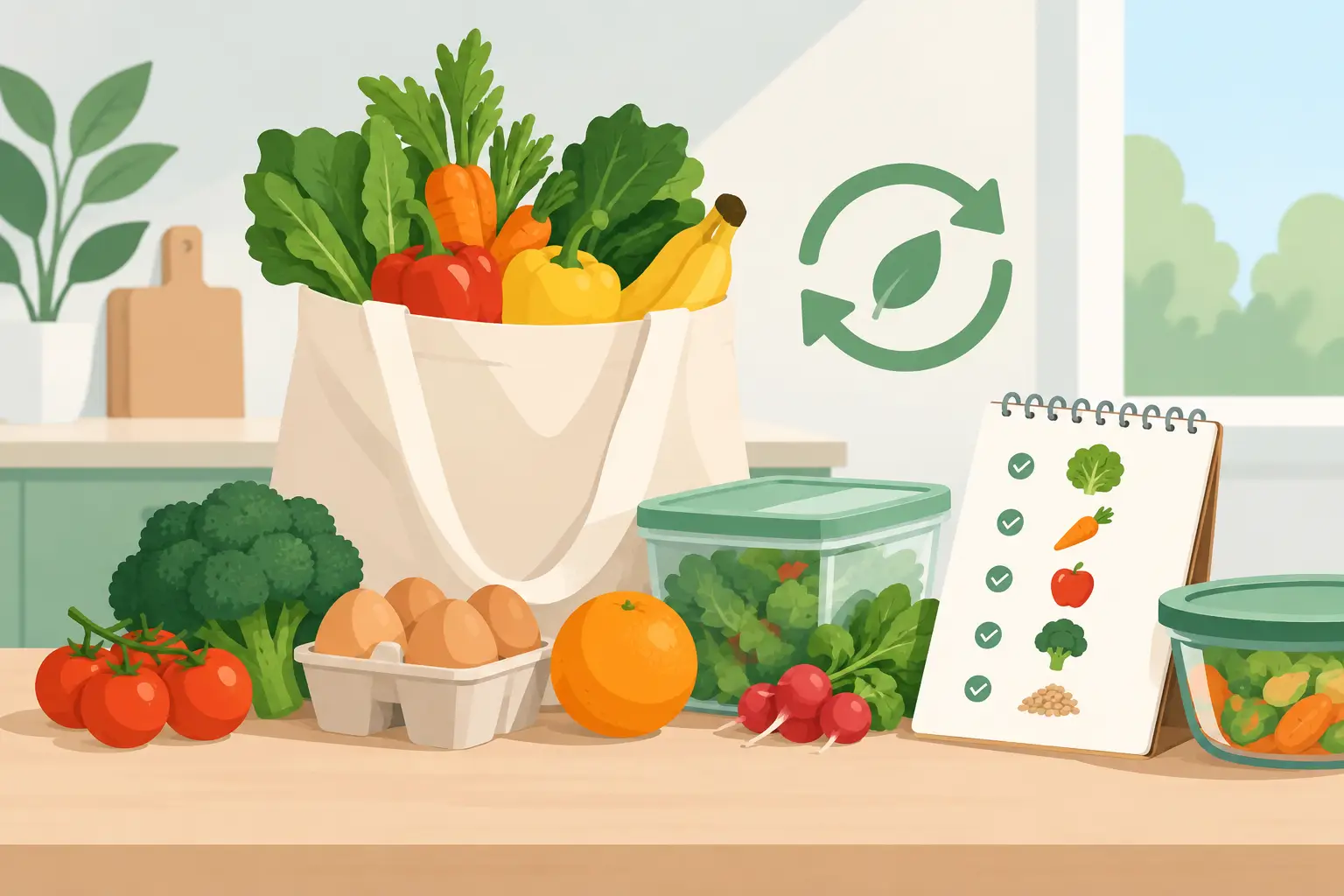
A good budget grocery guide starts before you reach the store. The biggest savings rarely come from finding one perfect coupon. They come from buying food with a clear job, using the ingredients already at home, and giving perishables a plan before they disappear into the back of the fridge.
That approach also makes dinner easier. Instead of shopping for a new recipe every night, build a small system that connects your inventory, your week, and the meals you actually have time to cook.
Start With What You Already Have
Before making a list, take five minutes to check the fridge, freezer, pantry, and any produce sitting on the counter. Look for foods that need attention first: wilting greens, opened yogurt, half an onion, cooked rice, aging fruit, or a bag of frozen vegetables you forgot about.
This is not about creating an elaborate inventory spreadsheet. A quick scan is enough. The goal is to avoid buying a second carton of eggs or another bag of spinach while the first one is nearing its limit.
Choose two or three ingredients to anchor the week. A rotisserie chicken can become tacos, grain bowls, and soup. A bunch of broccoli can work in pasta, stir-fry, and egg fried rice. Cooked beans can fill burritos, bulk up a salad, or become a quick skillet meal.
Ingredient-first planning is especially useful when your schedule is unpredictable. Rather than assigning every meal to a specific night, create a short list of flexible options based on what you have. That leaves room for takeout, leftovers, or a late workday without turning a carefully planned meal into wasted groceries.
Build a Grocery List Around Real Meals
A low-cost cart is not always a low-cost week. Buying inexpensive ingredients that never get used still wastes money. Shop with a few repeatable meal formats in mind, then fill gaps from your kitchen scan.
For most households, four to six dinner plans are enough. Leave at least one night open for leftovers or a pantry meal. If you cook for one or two people, you may need fewer planned dinners than you think, especially if lunches come from the same batch.
A useful list has three parts: meals you want to make, ingredients you need to finish those meals, and a small set of staples running low. Keep staples practical. Rice, pasta, canned tomatoes, beans, eggs, oats, tortillas, frozen vegetables, and a few seasonings can turn odds and ends into dinner without another store trip.
Try to give each fresh item more than one use. If a recipe calls for cilantro, plan tacos one night and a bean-and-rice bowl another. If you buy a lemon, use the zest in a dressing and the juice on roasted vegetables. This is where a meal idea tool such as Quicine can help: enter the ingredients you have and find ways to use them together before buying more.
Buy the right amount, not the biggest package
Warehouse-size packages can be a strong value when your household reliably uses them. They are not automatically cheaper if half the package spoils. The better deal is the quantity you can store and finish.
This matters most for produce, bakery items, dairy, and prepared foods. A large bag of salad greens may cost less per ounce, but a smaller clamshell can cost less overall if it prevents weekly waste. For shelf-stable or freezer-friendly basics, larger sizes often make more sense.
Shop in an Order That Protects Your Budget
Grocery stores are designed to encourage extra purchases. A list helps, but a simple shopping order helps too. Start with your planned staples and produce, then move to proteins, dairy, and frozen foods. Save snacks, specialty items, and impulse displays for last, when you can decide whether they still fit the budget.
Store brands are usually worth trying for basic ingredients such as canned beans, flour, oats, frozen fruit, broth, and spices. Brand-name products can be worthwhile when a specific flavor, texture, or dietary need matters to you. The point is not to buy the cheapest version of everything. It is to spend intentionally on the items where you will notice a difference.
Unit prices can clarify choices, but they need context. Compare price per ounce or pound when deciding between similar items. Then factor in waste. A larger container with a lower unit price loses its advantage if it expires untouched.
Seasonal produce is often a practical place to save, especially when it is used in simple meals. But do not buy a large amount just because it is on sale. A deal becomes useful only when it fits a meal plan, can be frozen, or replaces something you would have bought anyway.
Store Food So It Stays Useful
Your grocery budget continues at home. How you store food in the first 15 minutes after unpacking can decide whether it becomes dinner or landfill.
Put older foods toward the front of the fridge and newer foods behind them. Keep a visible "use first" area for leftovers, opened jars, cut produce, and anything close to its best quality. Best-by dates generally indicate quality, not a hard safety deadline, but use your senses and follow storage guidance. When food has an off odor, mold, or an unusual texture, do not gamble with it.
A few habits make a noticeable difference:
- Store leafy greens dry, with a paper towel to absorb excess moisture.
- Keep berries unwashed until you are ready to eat them, then remove any damaged fruit quickly.
- Freeze bread, meat, and extra cooked grains before you are tired of seeing them.
- Label leftovers with the date so they do not become a mystery container.
Not every item belongs in the refrigerator. Tomatoes, bananas, onions, potatoes, and winter squash often keep better at room temperature, though onions and potatoes should be stored separately. Learn the few foods your household buys most often, rather than trying to memorize every storage rule at once.
Turn Leftovers Into Planned Meals
Leftovers are not a backup plan. They are one of the easiest ways to lower the cost of a week of meals.
Cook once with a second meal in mind. Roast extra vegetables for tomorrow's frittata. Make double rice for fried rice. Reserve cooked chicken for quesadillas or a soup. A component-based approach gives you variety without starting from zero each night.
When leftovers feel repetitive, change the format instead of adding lots of new ingredients. Roasted vegetables can become a wrap with hummus, a pasta sauce with canned tomatoes, or a grain bowl with an egg. Leftover chili can top baked potatoes. Stale bread can become croutons, breadcrumbs, or a savory strata.
The freezer is useful here, but it works best with small portions. Freeze soup, beans, cooked grains, and sauces in meal-sized containers or flat bags. You will be more likely to use a ready-to-heat portion than a large frozen block that needs a plan of its own.
Make Room for Convenience Without Losing Control
A budget grocery guide should make life easier, not demand perfect cooking habits. Convenience foods can be smart purchases when they prevent expensive takeout or wasted ingredients. Bagged salad, frozen chopped vegetables, canned beans, jarred sauce, and precooked grains can all earn their place in a budget-conscious kitchen.
The trade-off is simple: some convenience costs more per serving, while some scratch cooking costs more time and planning. Choose the option that you will realistically use. A bag of frozen diced onions is a better value than whole onions that repeatedly spoil because prep feels like one more task after work.
Set a flexible weekly target instead of aiming for a flawless number at every trip. Notice what gets thrown away, what runs out too quickly, and what never makes it onto the menu. Those patterns are more useful than guilt. Adjust one category at a time, whether that means buying less produce, adding one freezer meal, or planning a leftover night.
The most effective grocery budget is not built on restriction. It is built on a kitchen that makes it easy to see what you have, cook it while it is still good, and enjoy the money you kept from going to waste.