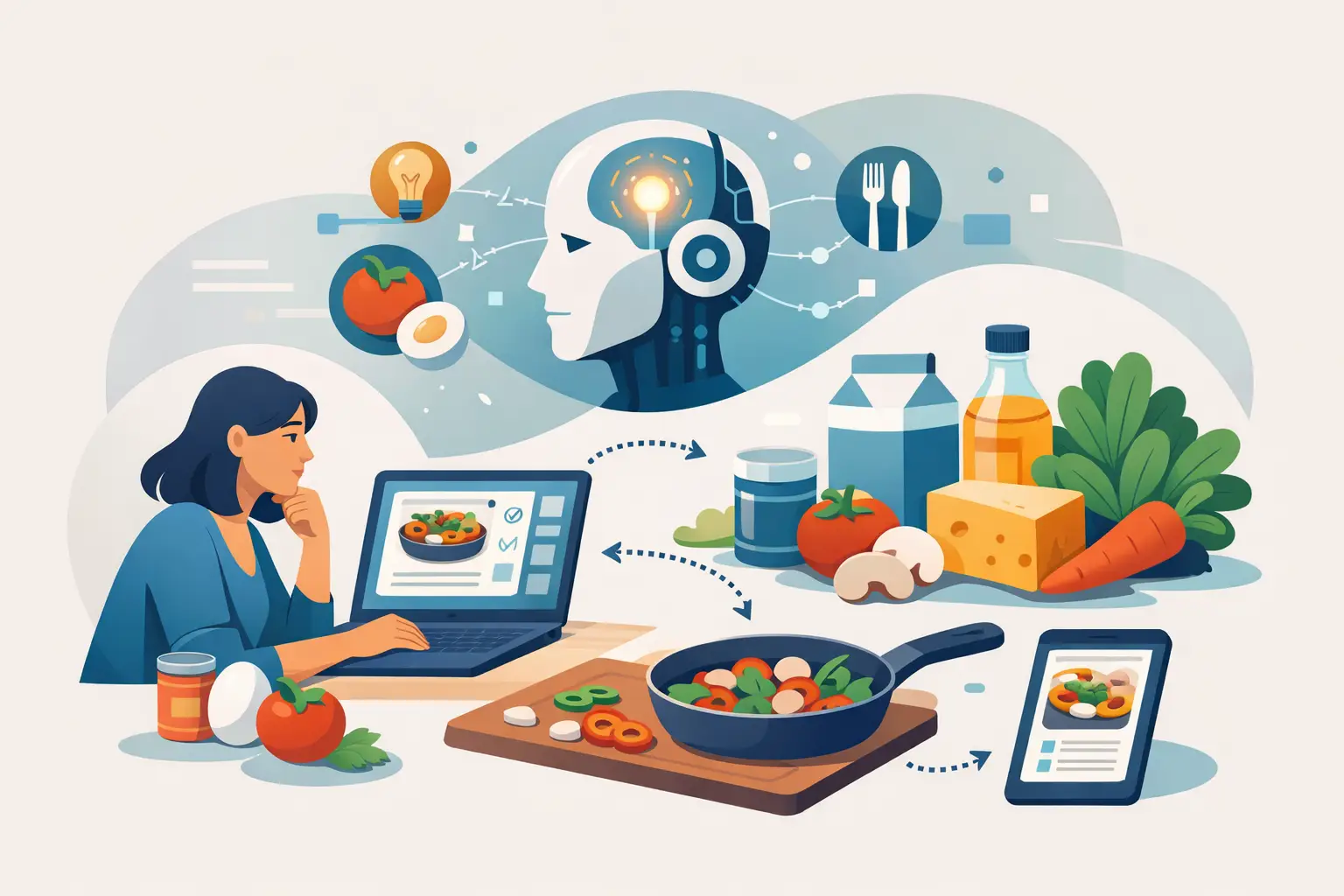
The half-used spinach is starting to soften. There is cooked rice in the fridge, a can of beans in the pantry, and no energy left for another broad recipe search. This is where AI meal planning earns its place: not by telling you to buy a long list of ingredients, but by helping you make a practical dinner from food you already own.
For busy households, meal planning is rarely about a lack of recipes. It is about time, visibility, and decision fatigue. You need to know what should be used first, what works together, and what can become tomorrow's lunch. A useful AI assistant can turn that daily puzzle into a quicker, lower-waste habit.
What AI Meal Planning Actually Does
AI meal planning uses your inputs - ingredients, dietary needs, available cooking time, serving size, and preferences - to suggest meals that fit your real kitchen. Instead of beginning with a finished recipe and asking you to shop for it, ingredient-first planning begins with what is already there.
That shift matters. Traditional meal plans can be helpful when you are starting from a blank slate, but they often create more leftovers, more specialty purchases, and more pressure to follow a schedule exactly. An AI-powered plan can be more flexible. Have broccoli instead of green beans? Need to use tortillas before they go stale? Only have 20 minutes? Those details can shape the suggestion.
The best results feel less like a rigid weekly menu and more like a capable kitchen companion. It can surface meal ideas, suggest substitutions, organize ingredients by priority, and help you turn one dinner into a second meal. You still make the final call. The technology simply narrows down the options.
Why Ingredient-First Planning Reduces Waste
Food waste often starts before anything reaches the trash. It starts when groceries are put away without a plan, when produce gets hidden behind leftovers, or when a recipe calls for one tablespoon of an ingredient that sits unused for weeks.
AI meal planning can help by putting perishables at the center of the decision. If you tell an app that you have mushrooms, chicken, yogurt, carrots, and pasta, it can prioritize meals that use the mushrooms and yogurt while they are still at their best. That is more useful than a generic list of popular dinners.
It also supports a better sequence for the week. Tender greens, berries, fresh herbs, and opened dairy usually need attention first. Root vegetables, frozen foods, dry grains, and unopened canned goods can wait. Planning around that natural order gives your groceries a better chance of becoming meals.
There is a budget benefit, too. Using food you have already paid for is one of the simplest ways to lower grocery spending. You may still need a few items to complete a meal, but a short, targeted list is different from buying ingredients for five disconnected recipes.
Start With a Better Kitchen Inventory
An AI tool is only as useful as the information it receives. You do not need to catalog every spice jar or count every grain of rice. Start with the ingredients that are easiest to forget and most likely to spoil.
Before planning meals, take two minutes to check the refrigerator, freezer, and pantry. Add fresh produce, leftovers, proteins, opened items, and anything approaching its use-by date. Include simple details when they matter: “half a bag of spinach,” “two cooked chicken thighs,” or “opened salsa.”
Then add your real constraints. Say whether you need meals for one, two, or a family. Mention allergies and dietary preferences. Be honest about time. A 15-minute skillet meal is a different request than a Sunday cooking project, and both have a place in a week.
You can also name the equipment you have available. If the oven is not an option, or you are relying on a microwave, air fryer, slow cooker, or one pan, say so. Good meal planning works with your routine instead of asking you to rebuild it.
Give It Priorities, Not Just Ingredients
A list of ingredients is helpful. A list with priorities is better. Tell the tool which items need to be used first, which meals must be quick, and which foods you would rather avoid.
For example, you might ask for three dinners that use zucchini and ground turkey before the weekend, plus one lunch that uses leftover rice. You might also ask for meals with minimal cleanup or recipes that make extra servings. Those prompts produce a plan that is more likely to survive a busy week.
Build a Flexible Week, Not a Perfect Menu
The goal is not to plan seven flawless dinners. The goal is to make fewer last-minute decisions while leaving room for life.
A practical approach is to choose a few anchor meals, then leave space for leftovers, freezer meals, takeout, or a night when plans change. If you cook four portions of a soup, grain bowl, or roasted sheet-pan meal, schedule the extras intentionally. Leftovers become useful when they have a job.
Try to connect meals through shared ingredients. Roast vegetables for dinner, then fold them into eggs or wraps the next day. Cook extra rice for fried rice or grain bowls. Use a rotisserie chicken for tacos first, then soup or salad later. AI suggestions can make these links easier to spot, especially when your fridge looks like a collection of unrelated items.
This is also where substitution ideas matter. If a meal calls for kale but you have spinach, that swap may work well in a quick sauté or pasta. If you do not have breadcrumbs, crushed crackers or oats may be fine for certain dishes. A good tool should offer options, not make you feel that one missing ingredient ends the plan.
Use AI as a Decision Tool, Not a Food Safety Expert
AI can be excellent at generating ideas, but it does not see, smell, or touch your food. It cannot confirm whether leftovers have been stored safely or whether produce is still good to eat. Use your own judgment and follow food safety guidance for storage, reheating, and expiration dates.
The same applies to nutrition and dietary restrictions. AI can help you find meals that fit a vegetarian pattern, reduce added sugar, or use higher-protein ingredients, but it is not a substitute for medical advice. If you manage an allergy or health condition, review ingredients and portions carefully.
There are trade-offs with any planning system. Adding inventory takes a little effort, and suggestions can be imperfect if the details are vague. A meal that looks great on screen may not suit your family's taste or your Tuesday night energy level. That is normal. The value comes from having a strong starting point, then adjusting it quickly.
Make the Habit Easier to Keep
The most effective system is the one you will use after a long day. Keep the routine light: check perishables once or twice a week, add a few ingredients, choose a few meals, and update the list when something gets used.
Quicine is built around this ingredient-first approach, helping home cooks turn what is on hand into useful meal ideas rather than starting every dinner decision from scratch. The habit is simple: look at what needs using, make a plan around it, and save new purchases for the gaps that truly matter.
Over time, you may notice that meal planning becomes less about control and more about awareness. You recognize what is in your kitchen, buy with more purpose, and stop treating a random collection of groceries as a problem to solve.
Tonight, start small. Choose the ingredient most likely to be forgotten, give it a place in tomorrow's meal, and let that one decision make your kitchen work a little harder for you.