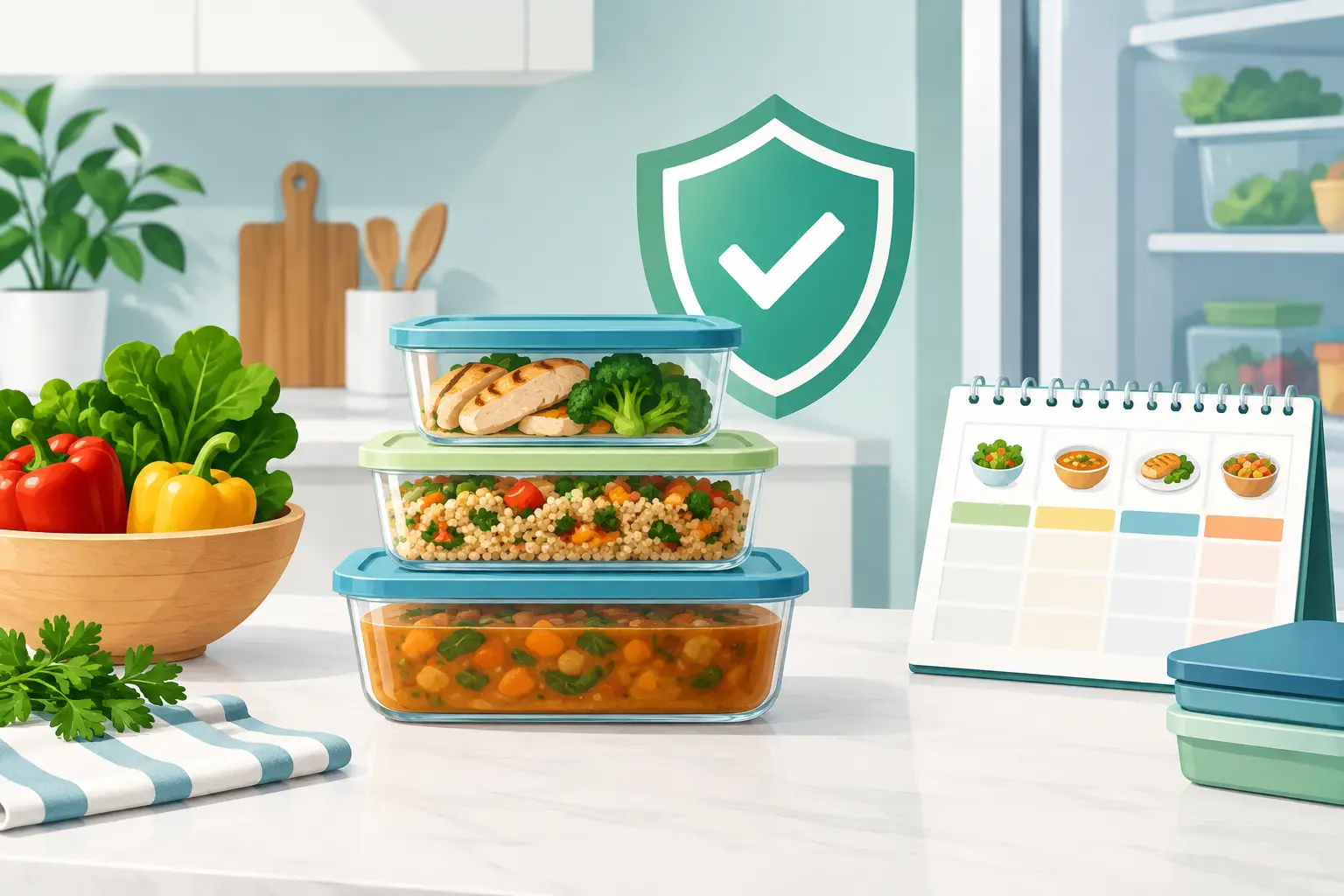
That takeout container at the back of the fridge is either tomorrow’s easy lunch or a small food-safety gamble. The difference usually comes down to a few decisions made right after dinner. Good leftover food safety is not about throwing food away at the first sign of doubt. It is about cooling, storing, and using meals on a timeline that protects both your grocery budget and the people eating them.
The leftover food safety clock starts after cooking
Bacteria grow fastest between 40°F and 140°F, often called the temperature danger zone. A dish can look and smell perfectly normal while bacteria multiply, which is why timing matters more than appearance alone.
The practical rule is simple: refrigerate perishable cooked food within two hours. If the room, patio, car, or picnic area is hotter than 90°F, make that one hour. This applies to cooked meat, poultry, fish, eggs, rice, pasta, beans, soups, casseroles, pizza, dairy-based dishes, and cut produce.
Do not wait for a large pot of soup or a roasting pan to feel fully cool on the counter. That approach keeps the center warm for too long. Instead, divide food into smaller, shallow containers so heat can escape faster. A container that is about two inches deep is a useful target for dense foods such as chili, curry, and mashed potatoes.
You do not need to let food reach room temperature before refrigerating it. Putting warm leftovers into the fridge is generally safer than leaving them out. Just avoid packing several large, steaming containers tightly together, since that can temporarily warm the refrigerator. Leave a little space around containers until they chill.
Store leftovers so you will actually use them
A safe leftover that disappears behind a carton of milk is still likely to become waste. Make storage visible and specific. Use clear containers when possible, seal them well, and place newer items behind older ones so the food that needs attention stays in front.
Labeling is one of the highest-return kitchen habits. Write the food and the date it was cooked or opened. “Chicken tacos - Monday” is more useful than promising yourself you will remember. If several people use the fridge, a label prevents the familiar cycle of everyone assuming someone else knows what is in the container.
Keep your refrigerator at 40°F or below and your freezer at 0°F. The fridge door runs warmer than the shelves inside, so reserve it for condiments and drinks rather than cooked meals, milk, eggs, or raw meat. If your refrigerator is crowded, avoid stacking warm containers or blocking air vents.
For most cooked leftovers, plan to eat them within three to four days. That includes cooked meat, poultry, seafood, pasta dishes, cooked vegetables, casseroles, pizza, soups, and stews. If you will not use them in that window, freeze them while they are still in good condition.
Some foods have shorter timelines. Prepared salads containing chicken, tuna, egg, or macaroni are best used within three to four days, but they are more vulnerable if they sat out during serving. Cooked seafood deserves extra attention: refrigerate it promptly and use it early in the window. When handling leftovers from a buffet, potluck, or delivery that arrived late, be more conservative because you may not know how long the food spent unrefrigerated.
Freezing is a pause button, not a rescue plan
Freezing stops bacterial growth, but it does not reverse time. Freeze food before it has spent several days in the refrigerator, not on the day you are already questioning it.
Portion meals before freezing. A single-serving container of lentil soup, taco filling, or baked pasta is easier to thaw than one large frozen block, and it gives you a fast meal on a busy night. Press excess air out of freezer bags, use freezer-safe containers, and leave a little room for liquids to expand.
Food kept continuously frozen stays safe for a long time, though flavor and texture gradually decline. For the best quality, try to use most homemade frozen leftovers within two to three months. Saucy dishes, soups, beans, shredded meat, and cooked grains tend to freeze well. Crisp salads, creamy sauces, and delicate fried foods may be safe after freezing but less enjoyable once thawed.
Thaw leftovers in the refrigerator, in cold water that is changed regularly, or in the microwave. Do not thaw them on the counter. If you use the cold-water or microwave method, reheat and eat the food promptly.
Reheating leftovers safely without drying them out
Reheat leftovers to 165°F throughout. A food thermometer is the clearest way to check thick foods such as chicken, stuffed peppers, casseroles, and large portions of meat. For soups, sauces, and gravies, bring them to a rolling boil.
Microwaves heat unevenly, so pause halfway through to stir soups and grains, rotate plates, or rearrange pieces of food. Covering the dish helps hold steam and heat. Let microwaved food stand for a minute or two before eating, which gives heat time to distribute through the center.
Only reheat the portion you expect to eat. Repeatedly warming and cooling the same container shortens its useful life and makes it harder to track how it has been handled. If a family-sized lasagna is on the menu, scoop out individual servings and heat those instead.
There is a quality trade-off here. High heat can dry out chicken and make pasta soft, but underheating is not a good workaround. Add a spoonful of water or broth, cover the food, and use moderate heat for longer when texture matters. Safety and a good meal can coexist.
When smell is not enough
The sniff test can catch obvious spoilage, but it cannot confirm safety. Some harmful bacteria do not create a strong odor, visible mold, or dramatic texture change. If leftovers were left out too long, do not taste a bite to “check.” Reheating may kill some bacteria, but it cannot reliably destroy every toxin that certain bacteria may have produced.
Discard leftovers if you know they were left out beyond the two-hour rule, if your refrigerator lost power for an extended period, or if you cannot tell when the food was made. Also toss food with visible mold, a swollen container, a leaking package, an unusual smell, or a sticky, slimy texture. Cutting mold off soft, moist leftovers is not a safe fix because growth can extend below the surface.
Use extra care when serving pregnant people, older adults, young children, or anyone with a weakened immune system. For these households, clear dates, prompt refrigeration, and thorough reheating are especially worthwhile.
A low-waste routine that works on weeknights
The easiest system is to decide the future of dinner while you are cleaning up. Put tomorrow’s lunch in one container, refrigerate the remaining portions in shallow containers, and freeze anything you realistically will not eat within a few days. That is faster than facing a crowded fridge later and trying to identify mystery meals.
Build leftovers into your meal plan rather than treating them as an afterthought. Roast vegetables can become grain bowls or frittatas. Cooked chicken can move into quesadillas, soup, or fried rice. A small amount of chili can top baked potatoes. Ingredient-first meal ideas make these portions feel like a starting point, not a repeat performance.
Quicine can help turn what is already in your fridge into a useful next meal, but the safest ingredient is still one you stored with a date and a plan. A quick label tonight can save tomorrow’s lunch, your grocery budget, and the question of whether that container is worth the risk.