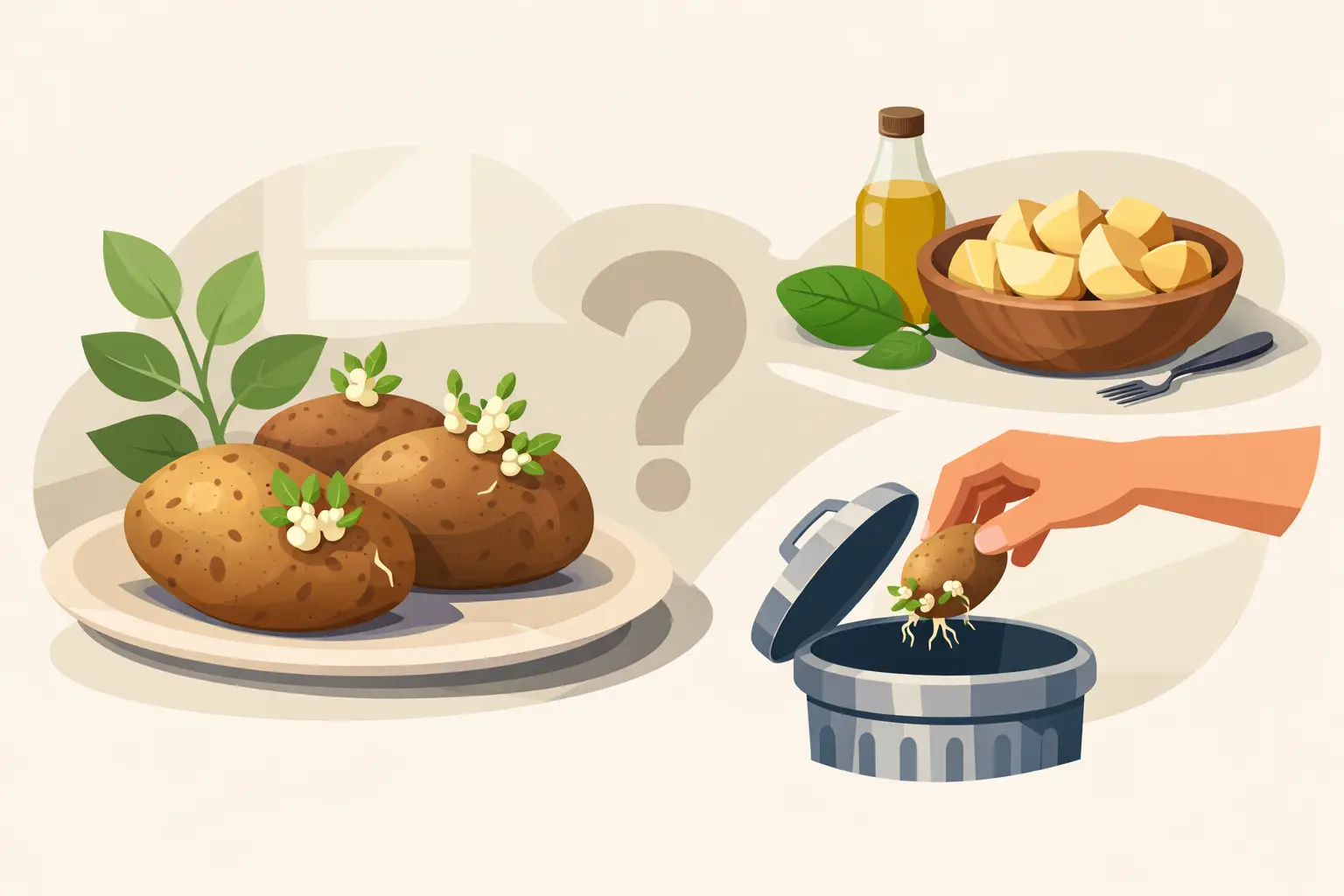
A potato with one small white sprout can create an annoying dinner decision: can you eat sprouted potatoes, or is the whole bag headed for the trash? The practical answer is that it depends on the potato's overall condition. A firm potato with tiny sprouts and no green skin may be usable after careful trimming. A soft, shriveled, green, or heavily sprouted potato is not worth the risk.
That distinction helps you avoid two unhelpful extremes: throwing away every potato with an eye, or trying to rescue one that has clearly passed its prime. Food waste matters, but so does food safety.
Why potatoes sprout in the first place
Potatoes are living tubers, not shelf-stable objects. Given enough time, warmth, and light, they begin preparing to grow. The small buds that appear in the potato's eyes are sprouts, and they can show up even in a pantry that seems reasonably cool.
Sprouting alone does not mean a potato is instantly dangerous. But it is a signal that the potato is aging and that naturally occurring compounds called glycoalkaloids may be more concentrated around the eyes, sprouts, and any green areas. Solanine and chaconine are the glycoalkaloids most often discussed in potatoes.
These compounds are part of the potato's natural defense system. In larger amounts, they can cause stomach pain, nausea, vomiting, diarrhea, headache, or other unpleasant symptoms. The risk is why a sprouted potato deserves a closer look instead of an automatic spot in tonight's hash.
Can you eat sprouted potatoes safely?
If a potato is still firm, mostly smooth, and free from green coloring, a few very small sprouts are usually a quality issue more than a reason to panic. You can cut away the sprouts, the eyes they grew from, and a generous amount of surrounding flesh. Then peel the potato and inspect it again before cooking.
This is a judgment call, not a guarantee. You cannot see or taste every trace of glycoalkaloids, and cooking does not reliably make a questionable potato safe. Boiling, baking, frying, and microwaving are great for making potatoes delicious, but they should not be treated as a fix for a potato that is green, bitter, or badly sprouted.
When the potato looks and feels good aside from a couple of short buds, trimming it can be a sensible way to use food you already bought. When multiple warning signs show up together, discard it. The money saved by rescuing one poor-quality potato is small compared with the downside of making someone sick.
A quick decision check before you cook
Use your senses and the potato's condition together. Keep a lightly sprouted potato only when it is firm, not green, and not noticeably shriveled. Remove every sprout and eye deeply, peel it, and use it promptly.
Discard the potato if it has green skin or green flesh, long or numerous sprouts, a soft or wrinkled texture, mold, leaking moisture, a bitter taste, or an unusual odor. One of these signs may be enough to make the choice easy. Several at once are a clear no.
Do not taste a raw piece to test it. If a cooked potato tastes distinctly bitter, stop eating it and throw the rest away. Bitterness can be a warning sign of elevated glycoalkaloids.
Green potatoes need a stricter rule
Green coloring is not chlorophyll itself causing the problem. Chlorophyll is harmless, but it develops when potatoes are exposed to light, often under the same conditions that encourage glycoalkaloid production. Think of green skin as a visible warning flag.
A tiny green patch on an otherwise firm potato may tempt you to cut it off. For the lowest-risk choice, especially if the green area is widespread or the potato has also sprouted, discard it. Green potatoes are not a good candidate for a waste-saving rescue project.
This matters even more for children, who have smaller bodies and may be more affected by a given amount of a food toxin. If you are cooking for kids, pregnant people, older adults, or anyone who is medically vulnerable, choose a potato without green areas or sprouts rather than trying to salvage a questionable one.
How to use a lightly sprouted potato
Once you decide a potato is still in good shape, do the prep work thoroughly. Cut off sprouts and dig out the eyes with the tip of a vegetable peeler or paring knife. Peel the potato, trim any discoloration, and rinse away loose debris.
Use it in a dish where peeled, cut potatoes make sense: mashed potatoes, breakfast potatoes, soup, a frittata, or a simple sheet-pan dinner. There is no need to disguise a good potato. The goal is simply to use it soon, before more sprouts develop.
If the rest of the bag is still firm and unsprouted, separate the borderline potato from the others and cook it first. This small habit keeps your meal plan aligned with what needs attention, rather than with what looks most convenient in the moment.
Don't let storage create the problem
Most sprouting starts long before you notice it. Potatoes last best in a cool, dark, dry, well-ventilated place. A cabinet away from the stove can work well. A basement pantry is often even better if it stays dry and does not get too cold.
Avoid storing potatoes in direct light, on an open counter, or in a sealed plastic bag that traps moisture. Also keep them away from onions. Both vegetables release gases and moisture that can speed up deterioration in the other.
The refrigerator is not ideal for raw potatoes because very cold temperatures can change their starches and affect flavor and texture. If your home is consistently hot and you have no cool storage space, refrigeration may still be better than a warm counter for a short period, but use the potatoes soon and expect some quality changes.
A paper bag, basket, or ventilated bin gives potatoes airflow while blocking light. Check the container once a week. Remove any potato that is soft, moldy, or heavily sprouted so it does not encourage the rest of the batch to decline.
Buy and plan with potato life in mind
Potatoes are a budget-friendly staple, but buying the largest bag is only a bargain if you will use it. For a one- or two-person household, a smaller bag may prevent more waste than a bulk purchase. If you do buy in bulk, make potatoes part of the plan for the first two weeks, not a forgotten backup ingredient.
Start with meals that use several potatoes at once, such as roasted potatoes with chicken, vegetable soup, breakfast burritos, or baked potatoes with leftover chili. Cooked potatoes can also be repurposed more easily than raw ones. Make extra roasted potatoes tonight, then turn them into a skillet breakfast or a lunch salad tomorrow.
A quick inventory habit makes this easier. When you notice potatoes beginning to sprout, move them to the front of your cooking list. Quicine's ingredient-first approach is built around this kind of small decision: use the food that is ready now, before it becomes a tougher call later.
The bottom line for sprouted potatoes
A small sprout on a firm, non-green potato does not always mean you need to throw it away. Trim it carefully, peel the potato, and cook it soon. But green, soft, shriveled, bitter, or heavily sprouted potatoes belong in the discard pile, not on the dinner table.
The most useful kitchen rule is simple: save food when its quality is still clearly good, and let it go when safety becomes uncertain. Checking your potatoes before meal planning takes less than a minute and can turn an overlooked bag into dinner instead of waste.