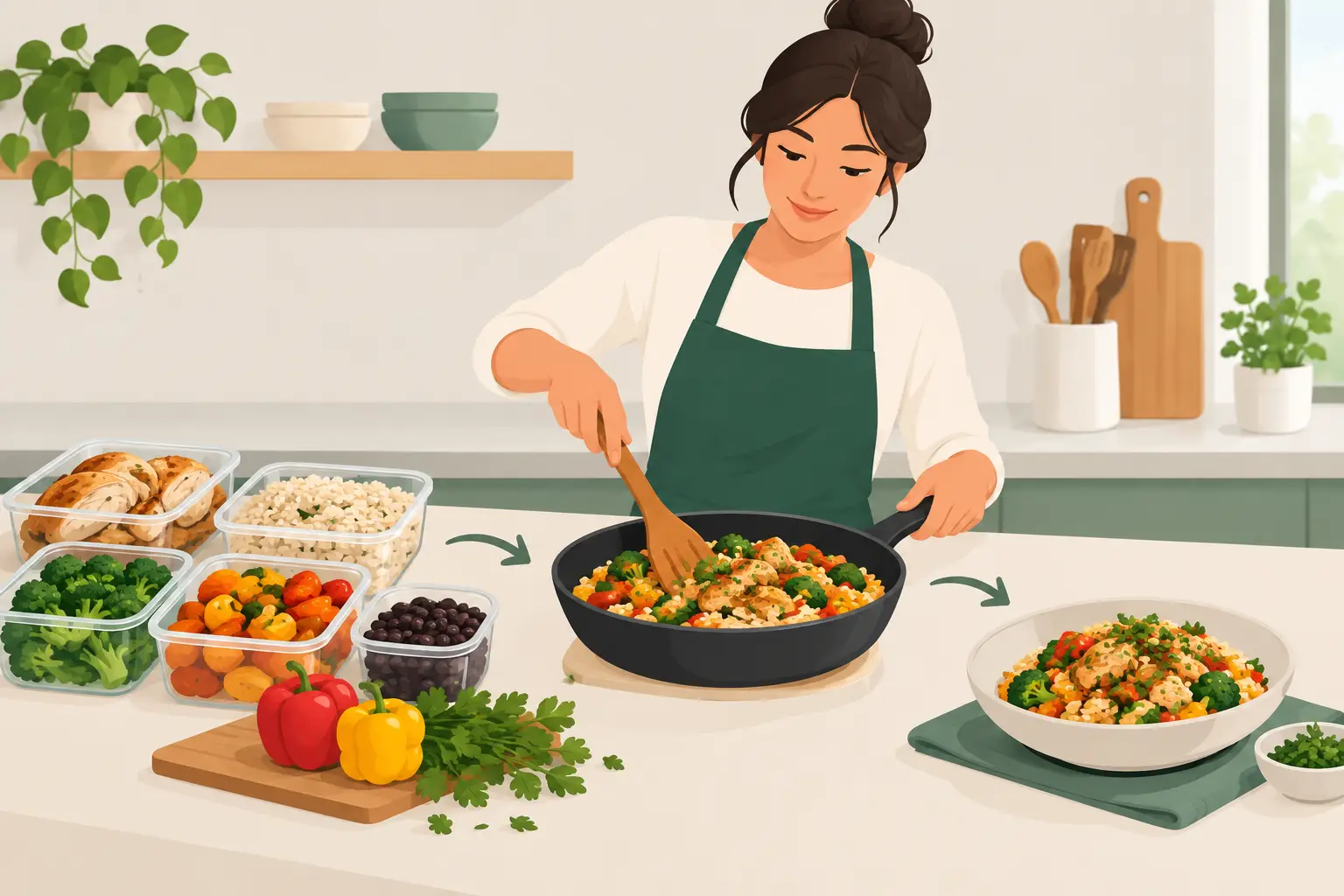
That container of rice, half an onion, and a few roasted vegetables are not a failed meal plan. They are the start of your next dinner. Learning how to cook with leftovers means seeing ingredients by their role - something filling, something flavorful, something fresh - rather than waiting for them to match a recipe exactly.
Leftovers save more than food. They save the money already spent at the grocery store, the time needed to prep dinner, and the mental energy of deciding what to make at 6 p.m. The goal is not to force every scrap into a complicated dish. It is to build a few reliable habits that make using what you have feel easier than ordering takeout.
Start with a quick leftover inventory
Before choosing a meal, take two minutes to check the refrigerator. Put the ingredients that need attention first at eye level: wilted greens, cooked proteins, cut fruit, opened jars, and anything nearing its use-by date. Then look for building blocks.
Most leftover meals come together from four roles: a base, a protein, vegetables, and a flavor booster. Your base might be rice, pasta, potatoes, bread, tortillas, or beans. Protein could be chicken, tofu, eggs, lentils, or last night's meatballs. Vegetables include cooked vegetables, raw produce, or even a bag of frozen peas. Flavor boosters are sauces, cheese, herbs, pickles, broth, spices, or a squeeze of lemon.
You do not need every category for every meal. A bowl of beans, roasted vegetables, and salsa is dinner. So is toast topped with leftover chicken and a fried egg. The useful question is not, “What recipe uses all of this?” Ask, “What can these ingredients become together?”
How to cook with leftovers by choosing a format
A meal format gives mismatched ingredients a destination. This is more practical than searching for a perfect recipe, especially when you have small amounts of several things.
Turn grains and vegetables into a skillet meal
Leftover rice, quinoa, couscous, and cooked potatoes are ideal for a fast skillet dinner. Heat a little oil, cook any raw aromatics first, then add vegetables and protein. Add the grain last so it can warm through and pick up flavor without turning soft.
For fried rice, use cold rice rather than freshly cooked rice. Its drier texture browns better and stays separate in the pan. Add soy sauce gradually, since leftover proteins and vegetables may already be seasoned. Finish with an egg, scallions, hot sauce, or sesame oil if you have it.
This same method works with roasted potatoes. Crisp them in a skillet, add leftover sausage or chickpeas, fold in greens until wilted, and top with eggs or shredded cheese. It is flexible by design.
Make soup when the leftovers are small
Soup is one of the best answers when you have a little of everything but not enough of anything. Start with onion, garlic, celery, or any vegetables that need using. Add broth, water with bouillon, canned tomatoes, or coconut milk. Then stir in cooked beans, grains, pasta, meat, or vegetables near the end.
The trade-off is texture. Delicate cooked vegetables can become mushy if they simmer too long, so add them only long enough to heat through. Pasta and rice will continue absorbing liquid in the fridge, which makes leftover soup thicker the next day. Keep extra broth on hand if you plan to reheat it.
A tortilla, bread, or handful of crackers can turn a simple soup into a complete meal. So can a spoonful of yogurt, grated cheese, herbs, or lemon juice. Small finishing touches make leftover soup taste intentional rather than accidental.
Use eggs to bind almost anything
Eggs are a practical bridge between leftovers and a fresh meal. A frittata, scramble, breakfast taco, or savory pancake can use cooked vegetables, small pieces of meat, herbs, cheese, and potatoes.
For a frittata, warm the fillings in an oven-safe skillet first. Pour beaten eggs over them, cook until the edges set, then finish gently in the oven. Avoid adding watery vegetables straight from the fridge. Drain them, or cook off excess moisture first, so the eggs do not become watery.
A scramble is even more forgiving. Reheat cooked ingredients before adding eggs, especially if they came directly from the refrigerator. Season at the end because cheese, bacon, sauces, and roasted vegetables can bring more salt than expected.
Build bowls, wraps, and toast when time is short
Not every leftover needs more cooking. Grain bowls, wraps, salads, and loaded toast are useful when you need dinner with minimal cleanup.
Combine a base with chilled or reheated protein, vegetables, and a punchy sauce. A bowl can be Mediterranean with chickpeas, cucumber, feta, and lemon. It can be taco-inspired with rice, black beans, corn, salsa, and avocado. It can be a warm salad with roasted vegetables, greens, and a mustard vinaigrette.
Wraps and sandwiches work especially well with roasted vegetables, shredded meat, beans, and sauces. If the filling is moist, place greens or cheese against the bread or tortilla first to create a small barrier. It helps prevent a soggy lunch.
Give leftovers a new flavor direction
The fastest way to avoid repetitive meals is to change the seasoning profile, not just the shape of the food. Plain roasted chicken can become a taco filling with cumin, chili powder, lime, and salsa. It can become a noodle bowl with ginger, soy sauce, and sesame oil. It can also work in a creamy soup with herbs and lemon.
Choose one direction, then commit to it. A few reliable combinations make this simple: tomato and Italian herbs; soy sauce, ginger, and garlic; cumin, lime, and chili; or lemon, olive oil, and feta. You do not need a full spice cabinet. One sauce or acid plus one aromatic can make familiar ingredients taste different.
Be careful with strong flavors that may clash. Leftover barbecue chicken can work beautifully in quesadillas, but it may overpower a delicate pasta sauce. When in doubt, taste a small portion before seasoning the whole batch.
Handle leftovers safely before you reinvent them
Creative cooking only works when leftovers are stored and reheated safely. Refrigerate cooked food within two hours of cooking, or within one hour if the temperature is above 90°F. Divide large portions into shallow containers so they cool faster, and store them in the refrigerator rather than leaving a large pot on the counter.
Most cooked leftovers are best used within three to four days. If you will not use them in that window, freeze them while they are still in good condition. Labeling containers with a date takes seconds and prevents the familiar mystery-container problem.
When reheating, bring leftovers to 165°F if possible, especially meat, poultry, egg dishes, soups, and casseroles. Stir soups and skillet meals so the center heats evenly. Reheat only the portion you plan to eat, since repeated warming and cooling can affect both safety and quality.
Your senses matter, but they are not a safety test. Food can carry harmful bacteria without looking or smelling unusual. If you cannot remember how long something has been in the refrigerator, or it sat out too long, throwing it away is the better call.
Make leftover cooking part of your weekly rhythm
The easiest system is to plan one or two “use-it-up” meals before grocery shopping. This clears space, highlights what you already own, and helps you buy less of what might otherwise be forgotten. A Friday fried rice, Sunday soup, or midweek bowl night creates a dependable outlet for odds and ends.
It also helps to store food with a future meal in mind. Keep rice, beans, roasted vegetables, and proteins in separate containers when possible. They will be easier to mix into bowls, soups, or skillets than a single fully assembled meal. Sauces and crunchy toppings should stay separate until serving for the best texture.
If meal decisions still feel like the hard part, an ingredient-first tool such as Quicine can help turn what is already in your kitchen into realistic meal ideas. The point is not to cook perfectly. It is to make the next good decision with the food you have.
Tonight, start with one container that has been waiting in the fridge. Add one fresh element, choose a format, and make it useful again.