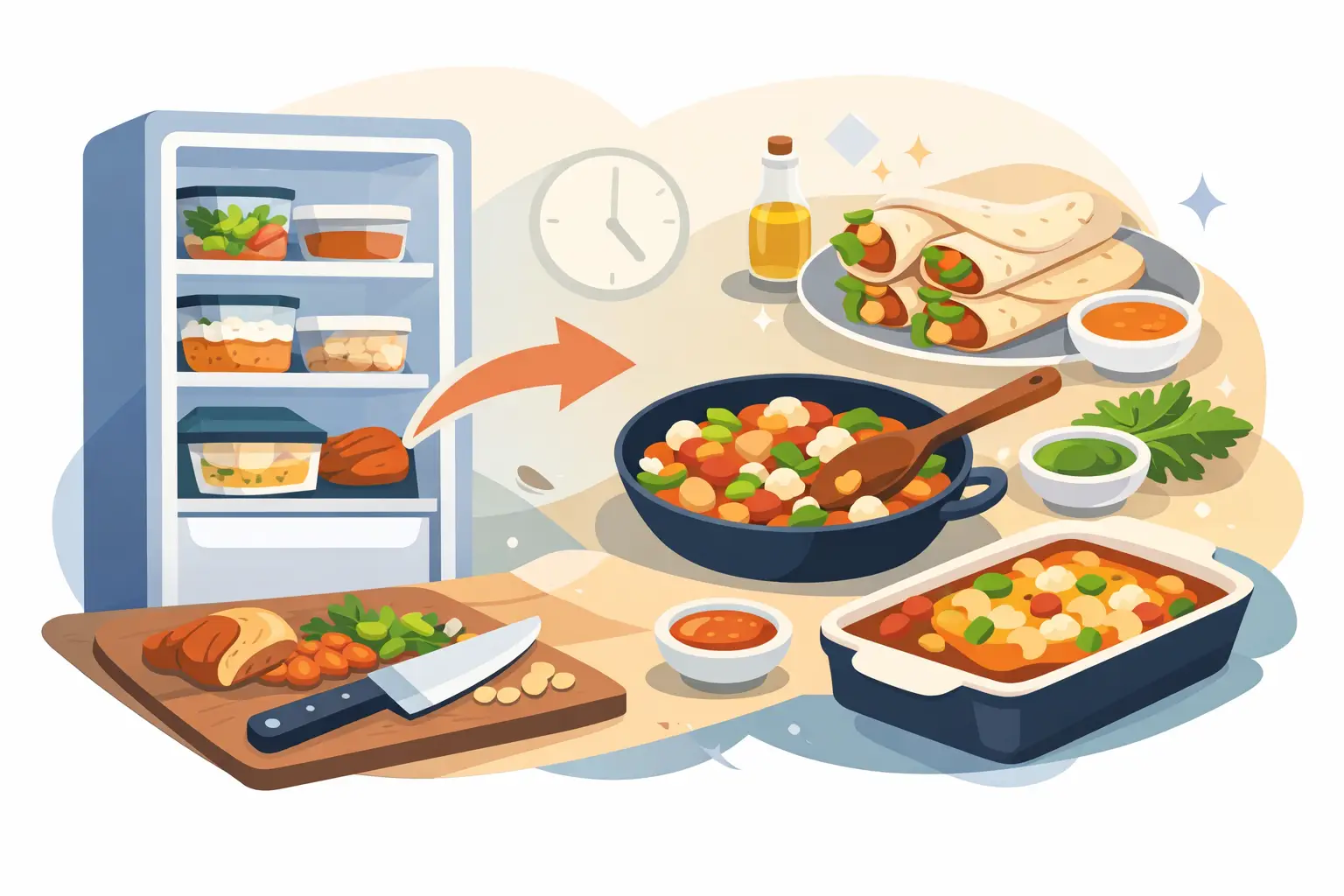
That container of rice, half an onion, and two chicken thighs in the fridge are not a failed meal plan. They are the start of one. The best leftover recipes do not try to disguise yesterday’s dinner. They give cooked ingredients a new job, so dinner feels intentional without requiring another grocery run.
This approach saves more than food. It reduces the daily question of what to cook, stretches the groceries you already paid for, and helps you use perishables while they are still at their best. The key is to think in building blocks rather than complete, fixed meals.
Start With a Quick Leftover Check
Before cooking, take two minutes to sort what you have. Put leftovers into three groups: cooked staples such as rice, pasta, potatoes, and beans; cooked proteins such as chicken, ground meat, tofu, or fish; and produce that needs attention, including wilting greens, soft peppers, mushrooms, or herbs.
Then add one flavor direction. A jar of salsa can point you toward tacos or a skillet bowl. Soy sauce, sesame oil, and eggs suggest fried rice. Tomato sauce and cheese can turn vegetables and pasta into a baked dish. This is faster than searching for an exact recipe match because it starts with what is already in your kitchen.
Freshness comes first. Most cooked leftovers should be refrigerated within two hours, kept in a shallow container so they cool quickly, and used within three to four days. If you are unsure how long something has been in the fridge, or it smells or looks off, skip it. Saving food is useful. Taking a food-safety gamble is not.
Leftover Recipes Work Best With a New Format
A repeat meal can feel boring when every element stays the same. Change the format, texture, or seasoning, and the same ingredients can feel noticeably different. Leftover roasted vegetables become crisp-edged quesadilla filling. Cooked chicken becomes a gingery soup instead of another plate with the same sides. Rice becomes a savory pancake rather than a reheated scoop.
Turn grains into a skillet meal
Cold rice is especially good for fried rice because its surface is drier than freshly cooked rice. That means it can brown in a hot pan instead of turning soft. Cook a handful of chopped vegetables in oil, add the rice, and let it sit briefly before stirring. Fold in an egg, leftover chicken or tofu, and a quick sauce of soy sauce, garlic, and a little vinegar or lime juice.
The same idea works with quinoa, farro, couscous, or even leftover stuffing. They may not create classic fried rice, but they can become a satisfying skillet bowl with vegetables, beans, and a fried egg. Use what is available rather than buying a special ingredient to make the dish feel official.
For a crisp alternative, mix rice or other cooked grains with an egg, grated cheese, chopped scallions, and enough flour or breadcrumbs to help it hold together. Pan-fry small patties until golden. Serve them with yogurt, hot sauce, or a squeeze of lemon. This is a useful move when you have small amounts that are not enough for a full bowl.
Give proteins a supporting role
Leftover protein does not need to carry the whole meal. In fact, using it as one component often makes it go further. Shred roast chicken into broth with noodles and spinach. Add cooked ground beef to tomato sauce with lentils for a more substantial pasta dinner. Flake cooked salmon into a potato hash with herbs and a mustardy dressing.
Tacos, quesadillas, grain bowls, and lettuce wraps are particularly flexible because each can absorb small amounts of different ingredients. A few spoonfuls of beans, a handful of roasted vegetables, and leftover meat can become a balanced dinner when wrapped in a tortilla and finished with salsa. If you do not have tortillas, make the filling into a skillet bowl or pile it over toast.
Be mindful when reheating. Heat cooked meat and poultry until steaming hot throughout. Seafood is more delicate, so reheat it gently and use it soon after the original meal. When an ingredient is close to its limit, choose a recipe that cooks it thoroughly rather than serving it cold.
Make vegetables the main event
Soft vegetables often look less appealing than crisp ones, but they are still highly useful in cooked dishes. Mushrooms, zucchini, spinach, peppers, broccoli, and roasted vegetables can go into frittatas, soups, pasta sauces, curries, and savory pancakes. A little browning in a hot pan concentrates flavor and makes them feel less like leftovers.
One reliable option is a fridge-cleanout frittata. Cook onions and vegetables in an oven-safe skillet, add any cooked potato or protein, then pour over beaten eggs seasoned with salt and pepper. Sprinkle with cheese if you have it and bake until set. It works for breakfast, lunch, or a low-effort dinner with salad or toast.
Another is blended vegetable soup. Simmer cooked vegetables with broth, beans, or a leftover baked potato until hot, then blend until smooth. The potato or beans add body, while a spoonful of yogurt, pesto, or grated cheese can finish the bowl. This method is especially helpful for vegetables that are still safe but no longer crisp enough for a salad.
Build Flavor Without Starting From Scratch
Leftovers need contrast more than complexity. A rich casserole may need acid from lemon, vinegar, pickled onions, or hot sauce. A mild rice bowl may need crunch from toasted nuts, breadcrumbs, seeds, or raw cabbage. A dry protein may benefit from broth, salsa, yogurt sauce, or a fried egg with a soft yolk.
Keep a few adaptable flavor helpers on hand: eggs, canned beans, broth, tortillas, shredded cheese, frozen vegetables, lemons or limes, and one or two sauces you genuinely use. These are not ingredients for elaborate pantry projects. They are practical connectors that turn scattered leftovers into a complete meal.
It also helps to avoid adding too much salt before tasting. Leftover food may have already been seasoned, and sauces such as soy sauce, jarred salsa, cheese, and broth can add more salt quickly. Taste after combining everything, then adjust with acidity, herbs, spice, or salt as needed.
A Simple Decision System for Busy Nights
When you open the fridge, begin with the ingredient that will spoil first. If spinach is fading, make that the priority. If you have cooked rice and vegetables but no protein, add eggs or beans. If you have several small portions of cooked food, choose a format designed for mixing, such as soup, fried rice, pasta, tacos, or a frittata.
Not every leftover belongs together. Creamy pasta and spicy chili may both be good, but combining them can create a meal nobody wants. Let flavor families guide you. Italian-style ingredients work well in pasta bakes, soups, or frittatas. Mexican-inspired leftovers suit tacos, bowls, and quesadillas. Roasted vegetables can travel across almost any category with the right sauce.
If you will not use something in time, freeze it before it becomes a question mark. Portion cooked grains, shredded meat, soup, and sauces in meal-size amounts. Labeling containers with the date makes the freezer more useful and cuts down on mystery meals later. Some foods, like delicate salads or creamy sauces, do not freeze well, so use those first.
Make Leftovers Part of the Plan
The easiest leftover recipes begin before dinner is served. When making rice, grains, roasted vegetables, or chicken, cook a little extra with a second meal in mind. Keep plain components separate when possible, since they are easier to remix than a fully dressed dish.
A personal kitchen assistant like Quicine can make this habit simpler by starting with the ingredients you have, not a long shopping list. But the useful shift is small: treat leftovers as ingredients with a deadline, not as meals you are obligated to repeat.
Tomorrow’s dinner may be hiding in a container you almost forgot. Give it a new format, add one fresh element, and let your fridge do more of the planning.