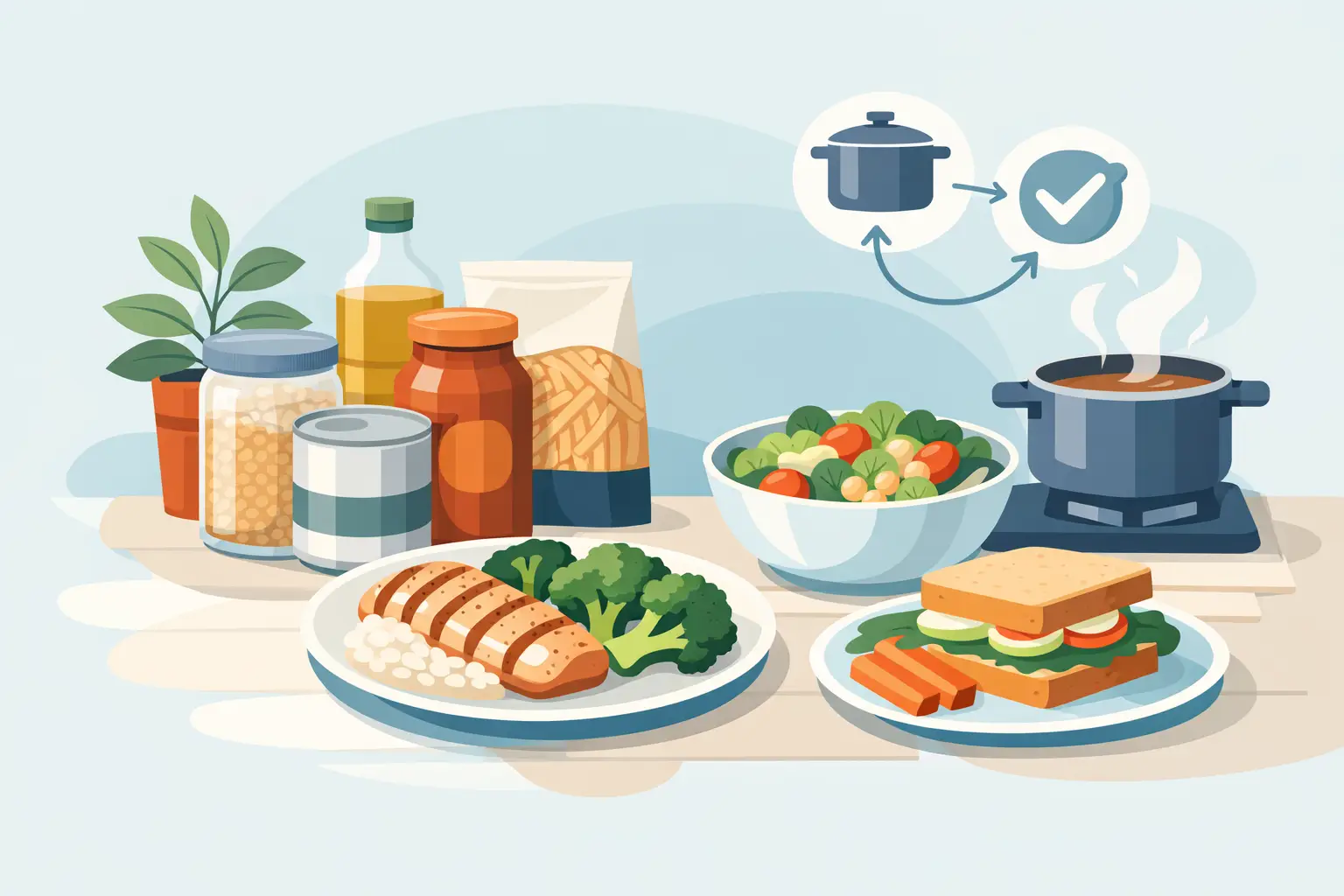
A good meal plan with pantry staples does not begin with a brand-new grocery list. It begins with the can of beans behind the rice, the half-used jar of pasta sauce, and the vegetables that need attention before Friday. That shift makes weeknight cooking faster, lowers food waste, and helps your groceries work harder.
The goal is not to eat the same bowl of beans and rice all week. It is to create a flexible plan with a few dependable building blocks, then change the flavor, texture, and format from meal to meal. One can of chickpeas can become tacos on Monday, a crisp salad topping on Wednesday, and a blended soup on Saturday. Planning this way gives you options without asking you to stock a picture-perfect pantry.
Start with a quick use-first inventory
Before planning meals, take five minutes to look at what needs to be used first. Check the refrigerator for wilt-prone greens, ripe fruit, cooked leftovers, open dairy, and fresh proteins. Then scan the pantry for grains, canned goods, pasta, broth, sauces, and seasonings.
You do not need a detailed spreadsheet. Make three simple mental groups: use soon, use later, and always useful. The use-soon group drives the first half of the week. Pantry foods and freezer items fill the gaps and give those perishables somewhere to go.
For example, a bag of spinach, two bell peppers, a few eggs, canned black beans, rice, tortillas, pasta, diced tomatoes, and shredded cheese already point to several meals. The fresh items are not side characters. They are the ingredients that decide the order of the plan.
This is also where realistic planning matters. If Tuesday is packed with meetings, choose a 15-minute dinner that uses canned beans and a bagged salad, not a recipe that requires chopping six vegetables. A plan only reduces stress if it matches your actual week.
Build a meal plan with pantry staples in layers
The easiest plans use a simple structure: a base, a protein, vegetables, and a flavor direction. Pantry staples usually handle the base and much of the flavor. Fresh or frozen ingredients make the meal feel complete.
Your base might be rice, pasta, oats, tortillas, potatoes, couscous, or canned beans. Protein can come from beans, lentils, tuna, eggs, tofu, chicken, or leftover meat. Vegetables can be fresh, frozen, canned, or a combination. The final layer is what keeps meals from tasting repetitive: salsa, soy sauce, curry powder, garlic, tomato paste, broth, peanut butter, lemon juice, hot sauce, or a favorite seasoning blend.
A small set of ingredients can move in different directions:
- Rice, black beans, peppers, salsa, and cheese become burrito bowls.
- The same beans and peppers folded into tortillas become quesadillas or tacos.
- Rice cooked in broth with frozen vegetables and an egg becomes a quick fried-rice-style skillet.
- Beans, diced tomatoes, broth, and spices become soup, served with toast or tortillas.
The ingredient list overlaps, but the meals do not feel identical. That is the real advantage of pantry-led planning: you buy less because each item has more than one job.
A five-dinner framework that stays flexible
Instead of assigning every ingredient to one fixed recipe, plan five dinner formats. Formats are easier to adapt when a vegetable runs out, plans change, or you discover a leftover container in the back of the fridge.
Night one: Use the most perishable ingredients
Make a skillet, pasta, sheet-pan dinner, or stir-fry that uses delicate produce first. Spinach, mushrooms, herbs, ripe tomatoes, and opened salad greens belong here. Pair them with a pantry base such as pasta, couscous, or canned beans.
Try pasta with canned tomatoes, garlic, spinach, and white beans. If you have Parmesan or another cheese, use it. If not, finish with olive oil, black pepper, and a squeeze of lemon. The point is not to replicate a restaurant dish. It is to turn ingredients with a short window into a satisfying meal.
Night two: Make a bowl meal
Grain bowls are useful because every component can be adjusted. Use rice, quinoa, farro, or even leftover pasta as the base. Add beans, eggs, tuna, tofu, or leftover chicken. Then use roasted, sautéed, or raw vegetables and a sauce.
A sauce can be as simple as salsa, yogurt mixed with spices, bottled dressing, or peanut butter loosened with warm water and soy sauce. This is a good night for ingredients that are still fresh but no longer at their peak. Slightly soft peppers, carrots, or broccoli are great cooked into a bowl.
Night three: Plan for leftovers on purpose
Leftovers work best when they are treated as an ingredient, not an obligation. Reserve a portion of cooked rice, beans, roasted vegetables, or protein from the first two nights. On night three, turn those pieces into something new.
Leftover roasted vegetables can go into a frittata. Extra rice can become fried rice. Beans and cooked vegetables can fill tacos. Pasta can be baked with a little sauce and cheese. A different format and seasoning are usually enough to make yesterday's dinner feel intentional.
Keep food safety in view. Refrigerate cooked food promptly in shallow containers when possible, and use leftovers within a few days. If you know you will not get to them, freeze them while they are still in good shape instead of waiting until they feel like a rescue mission.
Night four: Use a freezer and pantry backup
Some nights call for the lowest-effort option. A freezer-and-pantry meal protects your plan when you get home late or the fresh produce is gone. Think lentil soup with frozen vegetables, canned tomato pasta, chickpea curry over rice, or tuna melts with a side of peas.
This is not a failure to cook from scratch. It is smart kitchen management. Keeping a few dependable backups means you are less likely to order food while ingredients at home wait to spoil.
Night five: Make a clean-out meal
End the week with a meal designed for odds and ends. Soup, fried rice, grain bowls, tacos, pizza-style flatbreads, and omelets are all good clean-out formats. They welcome small amounts of vegetables, open sauces, and leftover proteins.
The key is to add ingredients in the order they need cooking. Start with onions, carrots, or dense vegetables. Add tender greens near the end. Stir in cooked grains or beans once everything is hot. This keeps a clean-out meal from becoming a pot of mismatched textures.
Shop only for the gaps
After you map out the week, make a short grocery list for what is missing, not for every possible recipe. You may need eggs, yogurt, fresh fruit, a salad vegetable, or one protein. You may also need a flavor helper that stretches several meals, such as lemons, cilantro, or a jar of salsa.
Be careful with buying ingredients that serve only one meal. A special sauce or produce item can be worth it if you genuinely want it, but give it a second job before it goes in your cart. Cilantro can flavor tacos and soup. Greek yogurt can become breakfast, a bowl topping, and a sauce. Rotisserie chicken can cover sandwiches, grain bowls, and soup.
This approach is especially useful when budgets are tight. Pantry staples are often cost-effective, but they still create waste if they sit unused because the meals around them feel too complicated. Buy the supporting ingredients that make your existing food easy to eat.
Keep the pantry useful, not oversized
A practical pantry does not need every specialty ingredient. It needs a few categories you know how to use: a grain or starch, canned proteins, canned tomatoes or broth, cooking oil, a few sauces, and seasonings you enjoy. Frozen vegetables and fruit deserve a place in this system too. They are not just backups. They can make a plan more reliable when fresh produce is limited.
Choose staples based on your habits. If your household loves Mexican-inspired meals, keep beans, tortillas, rice, salsa, and cumin around. If pasta is your reliable weeknight option, stock pasta, canned tomatoes, tuna, white beans, and a few seasonings. The best pantry is personal. It should make your usual meals easier, not pressure you into cooking someone else's idea of dinner.
A kitchen assistant such as Quicine can help when you have the ingredients but not the next move. Enter what is on hand, prioritize what needs using, and let the available food guide the meal instead of starting another broad recipe search.
The next time dinner feels undecided, do not begin by asking what sounds perfect. Open the fridge, choose one ingredient to use first, and build outward from there. A simple plan made from food you already own is often the one you will actually cook.