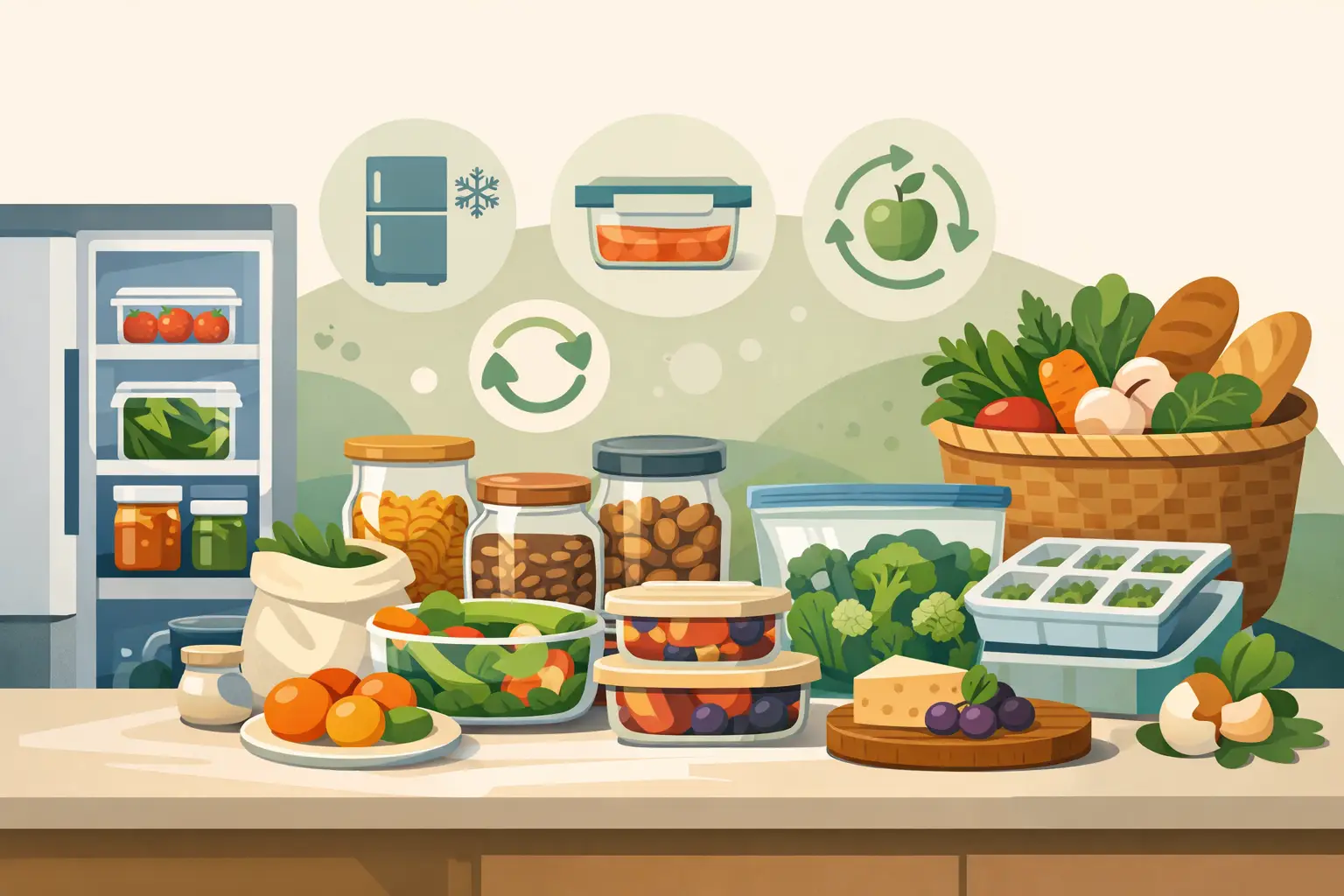
A useful home food storage guide starts before anything goes into the fridge. The bag of spinach that disappears behind yogurt, the half onion without a plan, the berries left in a sealed container while damp - most household food waste is not about buying the wrong food. It is about losing track of what you bought and storing it in ways that shorten its life.
A few small systems can make your groceries easier to see, use, and enjoy. The goal is not a picture-perfect refrigerator. It is a kitchen that gives you a clear answer when dinner starts: here is what needs using first.
Start With a Five-Minute Grocery Reset
Put away groceries with a little intention rather than fitting items into the first open spot. Before restocking, pull older items toward the front. Newer items go behind them. This simple first-in, first-out habit works for milk, eggs, sauces, snacks, canned goods, and freezer meals.
Take a quick look at what is already open or close to its best quality. A nearly empty jar of salsa, two carrots, and leftover rice may not look like a meal yet. But they are a useful prompt for tacos, fried rice, a grain bowl, or soup later in the week.
If you shop once a week, give the most perishable foods a visible home. Keep berries, leafy greens, herbs, cooked leftovers, and ready-to-eat proteins at eye level. Items with a longer runway, such as unopened drinks or sturdy vegetables, can live lower down or farther back.
Use Your Fridge by Temperature, Not Convenience
Not every shelf in a refrigerator stays equally cold. The back of the lower shelves is usually colder, while the door changes temperature every time it opens. Organizing around those differences helps food last longer and keeps safety decisions simpler.
The coldest spots are for raw and highly perishable food
Store raw meat, poultry, and seafood on a plate or in a container on the bottom shelf. This limits the risk of juices dripping onto ready-to-eat food. Keep milk, yogurt, eggs, and other dairy products in the main body of the fridge, where temperatures are steadier than the door.
Your refrigerator should stay at 40°F or below. If it tends to run warm, an inexpensive fridge thermometer can solve a problem that no amount of container organizing will fix.
The door is for the most stable items
Use the door for condiments, jams, pickles, butter, and drinks. These items generally handle temperature swings better than milk, eggs, or soft cheese. It may feel natural to use the built-in egg compartment, but a carton on a main shelf is usually the better choice.
Give leftovers a front-row seat
Leftovers are often the first food to be forgotten and the easiest food to turn into a low-effort meal. Store them in clear, shallow containers and label them with the date if you will not use them within a day or two.
Shallow containers cool food faster than a deep pot. Refrigerate cooked food within two hours, or within one hour if the room is hotter than 90°F. Most leftovers are best used within three to four days. When in doubt, do not rely on smell alone - some harmful bacteria do not create an obvious odor.
Store Produce for How It Behaves
Produce is not one category. Some fruits release ethylene gas that speeds ripening in nearby foods. Some vegetables need humidity to stay crisp. Others lose flavor and texture in the refrigerator.
Keep apples, bananas, avocados, pears, peaches, and tomatoes away from especially ethylene-sensitive produce such as leafy greens, broccoli, cucumbers, and herbs when possible. You do not need a complicated produce map. A little separation is enough to prevent a bag of greens from aging faster than expected.
Leafy greens last longer when they are dry, loosely wrapped, and stored with a paper towel to absorb extra moisture. Wash them when you are ready to use them, or dry them thoroughly if you prefer to prep ahead. Moisture left on leaves encourages faster decay.
Berries are another common loss point. Sort out any crushed or moldy berries as soon as you get home, then refrigerate the rest unwashed in a breathable container lined with a paper towel. Washing right before eating is usually safest for freshness. One moldy berry can spread quickly, so checking the container once midweek is worth it.
Keep potatoes, onions, garlic, and winter squash in a cool, dark, dry place with airflow. Do not store potatoes and onions together. Their gases and moisture can cause each other to spoil faster. Tomatoes, bananas, and whole avocados are generally best on the counter until ripe; then you can refrigerate ripe avocados or tomatoes to slow further softening if needed.
The crisper drawers are useful, but not magic
High-humidity drawers suit leafy greens, broccoli, carrots, and other vegetables that wilt. Low-humidity drawers are better for fruits that produce ethylene, including apples and pears. If your drawers have no settings, use one primarily for vegetables and one for fruit.
The real advantage of crisper drawers is containment. They help you group produce, notice what you have, and prevent loose items from rolling into the back of the fridge.
Make the Pantry Easy to Scan
A crowded pantry creates duplicate purchases and abandoned ingredients. Group food by how you use it: breakfast, snacks, baking, pasta and grains, canned goods, and cooking basics. This does not require matching containers or elaborate labels. A few clear zones are enough.
Keep everyday staples at hand level. Put backstock, occasional baking ingredients, and bulk purchases higher or lower. If you buy large bags of flour, rice, nuts, or cereal, transfer what you can use soon into airtight containers and keep the rest sealed tightly in a cool, dry place.
Dates on shelf-stable food need context. “Best by” usually refers to quality, not an automatic safety deadline. A can that is badly dented, bulging, leaking, or rusted should be discarded. Otherwise, use your senses and follow storage guidance after opening. Labeling open jars and packages with the date takes seconds and removes the guesswork later.
Treat Your Freezer as a Meal Bank
Freezing is one of the most practical ways to protect food from your future schedule. The key is freezing food while it still looks and tastes good, not after you have already decided you probably will not use it.
Freeze bread in slices, ripe bananas for smoothies, grated cheese, chopped vegetables, cooked beans, broth, and portions of leftover soup or sauce. Flatten soups, stews, and sauces in freezer-safe bags before freezing. They stack neatly and thaw faster than bulky containers.
Air is the enemy of freezer quality. Press out excess air from bags, use containers with minimal empty space, and label everything with the item and date. Frozen food remains safe at 0°F, but flavor and texture gradually decline. A labeled freezer is not about following strict rules; it is about making good food recognizable before it becomes a mystery block.
Plan one freezer-first dinner each week. Think pasta with frozen sauce, quesadillas with leftover chicken, or a soup built from frozen vegetables and broth. This keeps your freezer useful rather than crowded.
Create a “Use First” Zone
The most effective storage tool may be a small bin, tray, or shelf labeled in your mind as “use first.” Put soft fruit, open packages, partial vegetables, leftovers, and foods approaching their best-quality date there.
Check that zone before planning dinner or making a grocery list. It turns food management into a quick visual habit instead of a memory test. Quicine can help turn those ingredients into meal ideas when you know what needs attention but do not know what to make.
A use-first zone also makes flexible cooking easier. Wilted spinach can still go into eggs or soup. Soft bell peppers can become fajitas or pasta sauce. Stale bread can become croutons, breadcrumbs, or a savory breakfast bake. Food does not need to look perfect to be useful.
Build Storage Around Your Real Routine
The best setup depends on your household. A family that cooks most nights may need large leftover containers and a clearly divided fridge. A busy professional who eats lunch away from home may benefit more from portioned freezer meals and a small produce routine. If you share a kitchen, visible zones matter more than a system only one person understands.
Do not aim to preserve every ingredient for the maximum possible time. Aim to make the next meal easier. Keep the foods you reach for visible, freeze what your week will not support, and give the overlooked ingredients one clear place to be noticed. That is how a calmer kitchen starts paying you back.